Naproxen Dosage for Horses: Weight Chart, Free Calculator & the Safe Way to Use This Powerful NSAID
Written & Reviewed By: Medshorse Team
Last Updated: October 2026
A horse that is stiff, sore and short-striding after a hard week does not care about pharmacology. You do, though, because the wrong NSAID dose can turn a sore horse into a colicky one.
Naproxen dosage for horses is 10 mg per kg of body weight (about 4.5 mg per lb), given by mouth twice daily for up to 14 consecutive days, according to the FDA-approved Equiproxen label. For a 1,000 lb horse, that is roughly 4,500 mg per dose, or about nine 500 mg tablets. Your vet should always confirm the plan first.
Disclaimer: This article is for general education and is not veterinary advice. Product names mentioned, including Naproxen, belong to their respective owners, and MedsHorse is not affiliated with them. Always follow your veterinarian’s instructions and the current product label.
This guide gives you the label dose, a weight chart, a working calculator, the research behind the numbers and the red flags that mean you should call your vet. It does not replace a veterinary exam, and the reasons why will be clear by the end.
What Is Naproxen, and How Does It Work in Horses?
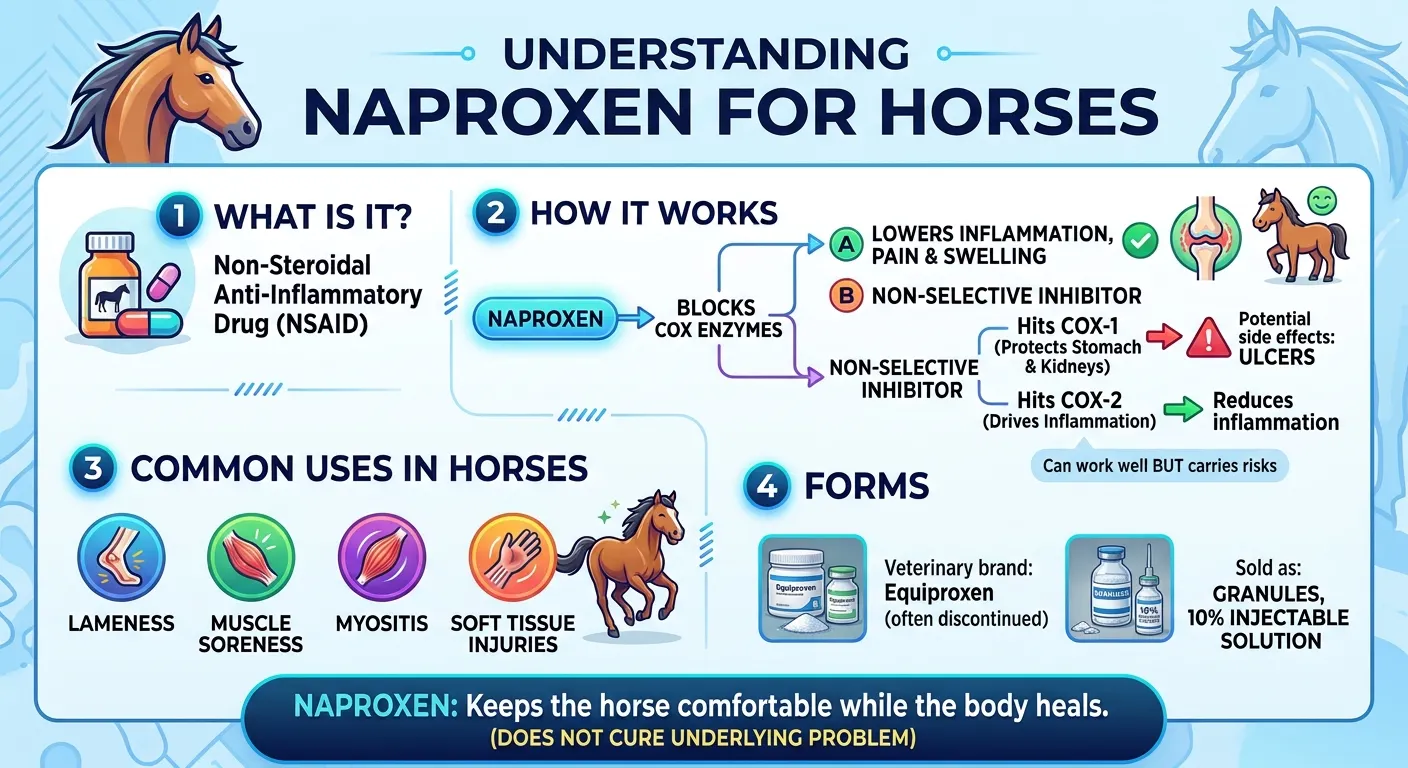
Naproxen is a non-steroidal anti-inflammatory drug (NSAID) that blocks COX enzymes, which lowers the inflammation, pain and swelling that come with sore joints and muscles.
It is a non-selective COX inhibitor, so it hits both COX-1 (which protects the stomach lining and kidneys) and COX-2 (which drives inflammation). That is why it can work well and also why it can cause ulcers.
You may know it by the human brand names Aleve and Naprosyn. In horses, the veterinary brand was Equiproxen, sold as granules and as a 10% injectable solution. Vets have long used naproxen for lameness, muscle soreness, myositis and soft tissue injuries.
It does not cure the underlying problem. It keeps the horse more comfortable while the body heals.
Is Naproxen Approved for Horses?
Yes and no, and this trips up a lot of owners. Equiproxen is an FDA-approved equine product, but a review from the national HBPA notes it has not been on the market for years. Vets and horsemen who still want naproxen generally turn to the human-approved tablets instead.
Either way, it is a prescription drug. The Equiproxen label states that federal law restricts it to use by or on the order of a licensed veterinarian, and that it is not for horses intended for food. Treat any tablet bottle in your tack room accordingly.
Naproxen Dosage for Horses: What the Label and Research Say
The Equiproxen Label Dose
The label dose is 10 mg/kg by mouth every 12 hours for up to 14 consecutive days. If the vet starts with an injection, the label calls for 5 mg/kg intravenously first, followed by the same oral maintenance dose.
The granules are 50% naproxen and are meant to be top-dressed in the feed. The injectable is a lyophilized powder mixed to 100 mg/mL, and only a veterinarian should give it.
What Pharmacokinetic Studies Found
The 10 mg/kg figure is not a guess. Italian researchers tested it repeatedly. A study in the Journal of Equine Veterinary Science concluded that 10 mg/kg given intravenously or orally appears appropriate to produce an anti-inflammatory effect lasting 12 to 24 hours.
A 2005 study of five healthy racehorses found oral bioavailability of about 89% and a half-life of roughly 6.5 hours.
Another group looked at horses older than 18 years given 10 mg/kg daily for five days. Peak blood levels arrived about 2.5 hours after dosing, the drug did not build up with repeated doses, and the horses showed no clinical or lab changes.
Gastric endoscopies after treatment showed no damage to the stomach lining. That is reassuring for short courses, though it was a small, controlled study and not a license for long-term use.
Why You Will See Different Numbers Online
Not every source agrees. One equine reference lists 10 mg/kg by mouth every 12 to 24 hours. A veterinary pain-management article in EquiManagement quotes a board-certified practitioner who suggests 8 mg/kg by mouth once every 24 hours for adult horses.
Both are within the same ballpark as the label, and the differences reflect vet judgment about the horse, the problem and the risk of ulcers.
Here is the practical takeaway. The twice-daily 10 mg/kg dose is the only regimen backed by a labeled dosing schedule. Anything lower or less frequent is a decision your vet makes, not one to improvise at the barn.
Naproxen Dosage Chart for Horses by Weight
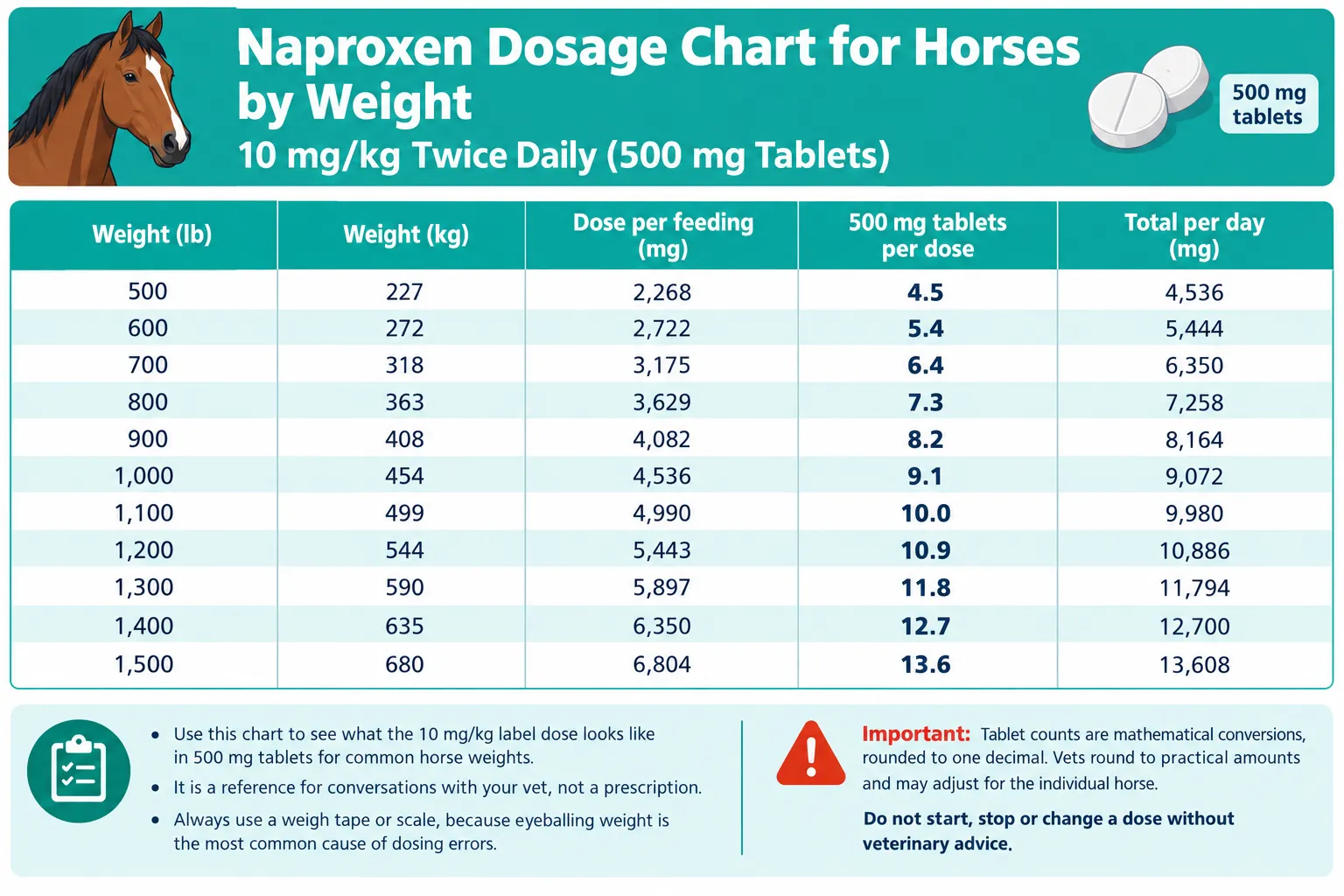
Use this chart to see what the 10 mg/kg label dose looks like in 500 mg tablets for common horse weights. It is a reference for conversations with your vet, not a prescription. Always use a weigh tape or scale, because eyeballing weight is the most common cause of dosing errors.
Naproxen Dosage Calculator for Horses
Enter your horse’s weight and the calculator converts it to milligrams and tablets. Use it to double-check the number your vet gave you, not to replace it.
How to Calculate the Dose by Hand
- Get a real weight. Use a scale or weigh tape. A horse that is 100 lb heavier than you guessed gets a dose that is about 10% too low, and the reverse is just as true.
- Convert pounds to kilograms. Divide pounds by 2.2. A 1,100 lb horse is about 500 kg.
- Multiply by 10. 500 kg x 10 mg/kg = 5,000 mg per feeding.
- Divide by tablet strength. 5,000 mg ÷ 500 mg = 10 tablets per feeding, given every 12 hours.
- Check it with your vet. Say the number out loud to them. Decimal and unit mistakes are easy to make and hard to undo.
How to Give Naproxen to a Horse

Naproxen is given by mouth, usually as tablets or granules mixed into feed, and the injectable form is for veterinarians only. The label for the granules calls for top-dressing the feed. Ask your vet whether tablets can be crushed and mixed in, and with what, because some horses will refuse the bitter taste and a half-eaten dose is an unknown dose.
- Space doses about 12 hours apart, such as 7 a.m. and 7 p.m.
- Watch the feed bucket until it is empty so you know the full dose went in.
- If you miss a dose, give it when you remember, unless the next one is almost due. Then skip it. Never double up.
- Keep fresh water available at all times. Kidney health matters with every NSAID.
What Is Naproxen Used For in Horses?
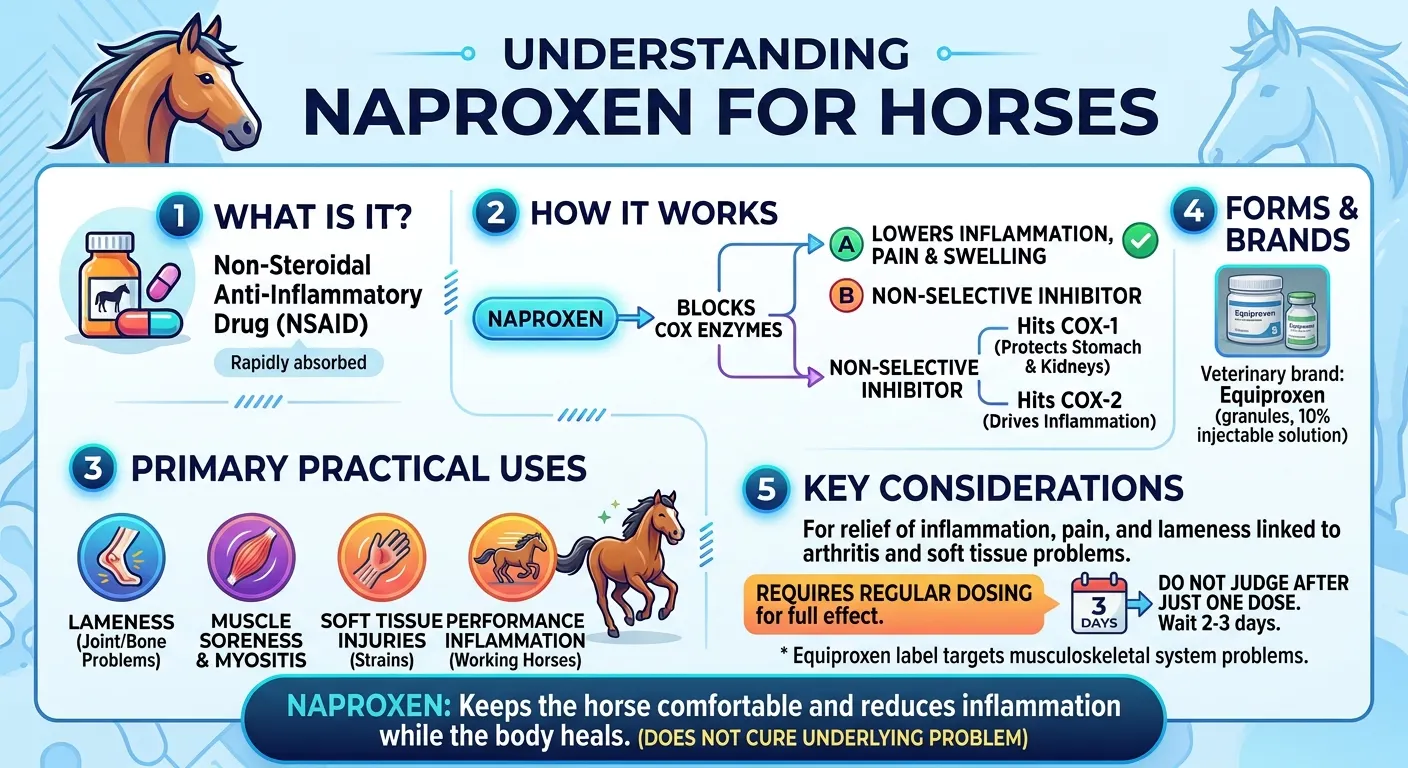
The Equiproxen label lists relief of inflammation, pain and lameness linked to arthritis, plus myositis and other soft tissue problems of the musculoskeletal system. In everyday practice that means:
- Lameness from joint or bone problems
- Muscle soreness and myositis
- Soft tissue injuries such as strains
- Training-related inflammation in working and performance horses
Naproxen is absorbed quickly, but you may need several days of regular dosing before you see its full effect. Do not judge it after one feeding, and do not raise the dose because the horse looks no better by lunchtime.
Naproxen vs Bute, Banamine and Equioxx
No head-to-head study proves naproxen is better or worse than bute, Banamine or firocoxib. The EquiManagement article points out that few direct NSAID comparisons exist and that individual horses respond differently. If one NSAID does not work, vets often try another, never two at once.
Want to see how the alternatives are dosed? Our guides cover bute dosage for horses, Banamine dosage for horses, Equioxx dosage for horses and the firocoxib dosage for horses in detail. If your horse is on a long-term NSAID plan, the Previcox dosage for horses guide explains how the same active ingredient works in tablets, paste and injection.
Naproxen Side Effects and Overdose Signs in Horses
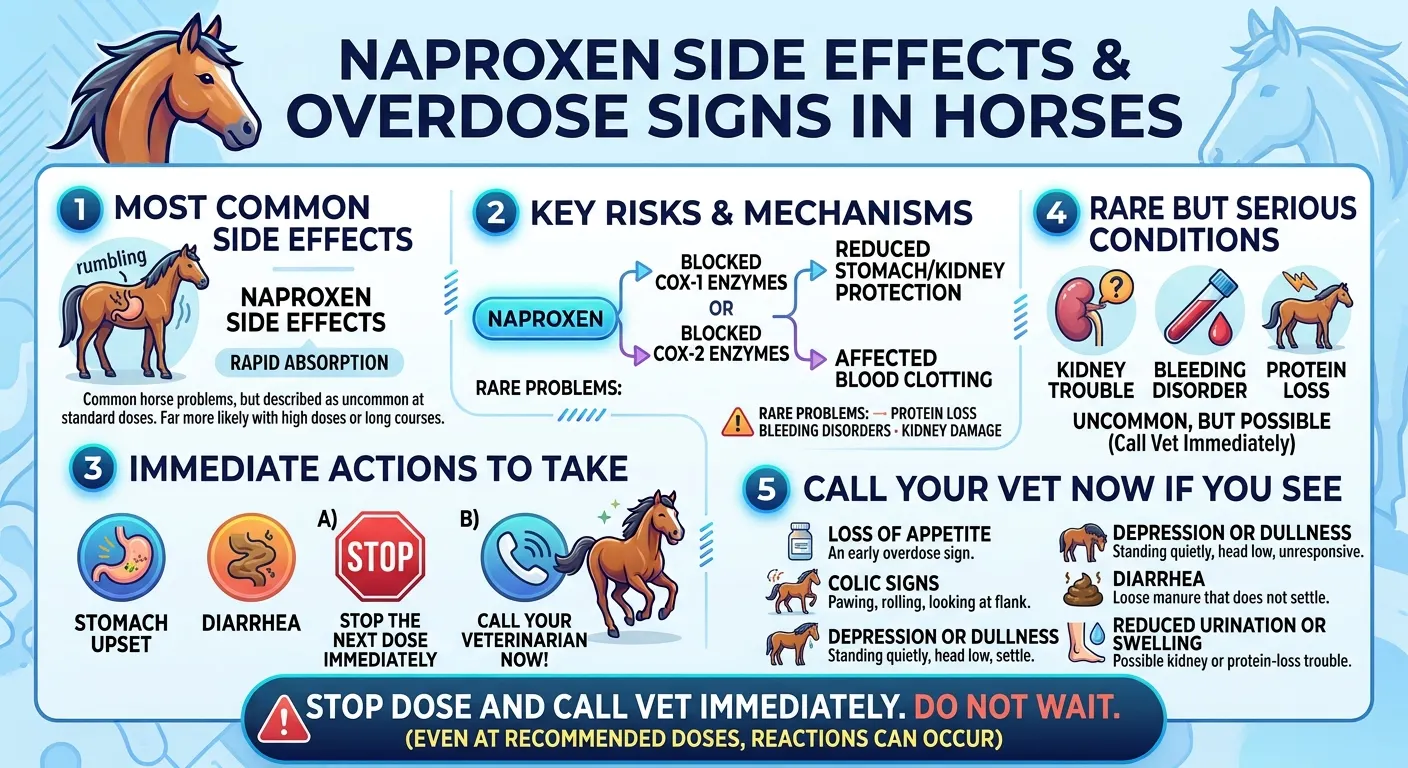
The most common naproxen problems in horses are stomach upset, diarrhea and ulcers. Reactions are described as uncommon, but they can happen at any dose and are far more likely if the dose is too high or the course runs too long. Rare problems include protein loss, bleeding disorders and kidney damage.
Ulcer risk is the reason many vets pair NSAIDs with stomach protection. If your vet recommends it, our guides on omeprazole dosage for horses, misoprostol dosage for horses and sucralfate dosage for horses explain how each one works.
Which Horses Should Not Get Naproxen?
Naproxen should be avoided, or monitored very closely, in horses with certain conditions or on certain drugs. Tell your vet about every item below before the first dose.
- Gastrointestinal problems such as a history of ulcers, colic or diarrhea.
- Kidney or liver disease.
- Known NSAID hypersensitivity.
- Other NSAIDs or corticosteroids on board. Combining them raises ulcer risk.
- Furosemide. Naproxen may reduce its diuretic effect.
- Anticoagulant therapy.
- Pregnant, lactating or breeding mares. Raise this with your vet before dosing.
- Horses intended for food. The label says not to use it in these animals.
Naproxen, Drug Testing and Competition Rules
Naproxen is a regulated or prohibited substance in most sanctioned competitions. It also clears slowly. Kentucky’s Equine Drug Research Council has advised horsemen to stop naproxen at least five days before a race, citing its long detection window.
An HBPA review adds that stall contamination can keep trace levels showing up in tests.
Rules differ by discipline and by state or country. Check your governing body’s current medication rules before you dose a horse you plan to show or race, and ask your vet to build the schedule backward from the event date.
Keep Naproxen Away From Dogs and Cats
The barn is full of curious noses. Naproxen can cause severe illness and death in dogs, and cats may be even more vulnerable because they clear it poorly. A dropped tablet in the aisle is a real emergency for a barn dog.
Store the bottle where only you can reach it, and call a vet or pet poison hotline straight away if a pet swallows any.
Common Naproxen Mistakes Horse Owners Make
- Guessing the weight. A tape or scale takes two minutes and prevents a 10 to 20% error.
- Treating Aleve like Equiproxen. Aleve is naproxen sodium, a different salt with a different strength per tablet. The tablet counts in this chart do not transfer.
- Stacking NSAIDs. Adding bute or Banamine on top of naproxen multiplies ulcer and kidney risk.
- Running past 14 days. The label stops there for a reason.
- Masking pain and working the horse. Naproxen eases discomfort. It does not repair the injury underneath, so a pain-free horse can still hurt itself.
- Forgetting the competition clock. Dosing close to an event can end in a positive test.
FAQs
What is the naproxen dosage for horses?
The FDA-approved Equiproxen label dose is 10 mg per kg of body weight (about 4.5 mg per lb) by mouth twice daily for up to 14 consecutive days. If a vet starts with an injection, the label calls for 5 mg/kg intravenously first. A veterinarian should confirm the exact plan for your horse.
How many 500 mg naproxen tablets does a 1,000 lb horse need?
A 1,000 lb horse weighs about 454 kg, so the 10 mg/kg label dose works out to roughly 4,536 mg per feeding, or about 9 tablets of 500 mg. That is a math conversion for reference only. Your vet decides the actual number and any rounding.
How often can you give a horse naproxen?
The label schedule is every 12 hours, twice daily, for up to 14 consecutive days. Some veterinarians use once-daily dosing, with one published suggestion of 8 mg/kg every 24 hours for adult horses. Follow your vet’s instructions exactly and do not extend the course on your own.
How long does naproxen take to work in horses?
Naproxen is absorbed promptly, and studies show peak blood levels about 2.5 to 3.3 hours after an oral dose. The full clinical response may take several days of regular dosing, so do not raise the dose if your horse looks the same after the first feeding.
How long does naproxen last in a horse?
Published studies report a half-life of roughly 6 to 7 hours. Researchers concluded that 10 mg/kg given orally or intravenously appears appropriate to provide an anti-inflammatory effect lasting 12 to 24 hours, which is why vets dose it once or twice a day.
Is naproxen safe for horses?
When a veterinarian prescribes it at the correct dose for a healthy horse, naproxen is generally well tolerated, and adverse reactions are described as uncommon. Ulcers, diarrhea and stomach pain can still occur, and rare kidney damage and bleeding problems have been reported. Horses with stomach, kidney or liver disease need extra caution.
Can I give my horse Aleve?
Do not treat your horse with Aleve on your own. Aleve contains naproxen sodium, a different salt with a different strength per tablet than plain naproxen, so the tablet counts for naproxen do not transfer. Only a veterinarian who has examined your horse should decide whether any naproxen product is appropriate.
Is naproxen better than bute for horses?
No head-to-head study shows naproxen is better or worse than bute. Phenylbutazone is still the most widely used equine NSAID because it is inexpensive and comes in several forms. Individual horses respond differently, so vets often switch NSAIDs if one fails to work.
Can naproxen be given with bute, Banamine or steroids?
No. Naproxen should not be combined with other NSAIDs or with corticosteroids, because the combination raises the risk of stomach ulcers and other serious side effects. If one NSAID is not working, ask your vet about switching rather than adding a second.
What are the side effects of naproxen in horses?
The most common side effects are gastrointestinal: stomach pain, diarrhea and ulcers. Rare reactions include protein loss, bleeding disorders and kidney damage. Naproxen may also reduce the diuretic effect of furosemide. Call your vet if your horse stops eating, seems dull or shows colic signs.
What are the signs of naproxen overdose in horses?
Early signs of toxicity include loss of appetite, colic and depression. Overdose makes the usual side effects more severe. If you suspect your horse got too much, call your veterinarian immediately and do not give another dose.
Is naproxen legal for show or racing horses?
Naproxen is a regulated or prohibited substance in most sanctioned competitions, and it clears slowly. Kentucky’s Equine Drug Research Council has advised stopping it at least five days before a race. Check your governing body’s current medication rules and plan withdrawal time with your vet.
Can naproxen be used in horses intended for food?
No. The Equiproxen label states that it is not for use in horses intended for food. Federal law also restricts the drug to use by or on the order of a licensed veterinarian.
Is naproxen toxic to dogs and cats?
Yes. Naproxen can cause severe illness and death in dogs, and cats may be even more vulnerable because they have a limited ability to clear it. Store horse medication where pets cannot reach it, and call a vet or pet poison hotline immediately if a pet swallows any.
What should I do if I miss a dose of naproxen?
Give the missed dose as soon as you remember. If it is almost time for the next dose, skip the missed one and return to the regular schedule. Never give a double dose, and ask your vet if you are unsure.
Key Takeaways
- The label dose is 10 mg/kg by mouth twice daily for up to 14 consecutive days.
- A 1,000 lb horse is about 4,536 mg per dose, or roughly nine 500 mg tablets.
- Naproxen is prescription only and not for horses intended for food.
- Never combine it with other NSAIDs or corticosteroids.
- Appetite loss, colic or dullness means call your vet immediately.
- It lingers: plan competition withdrawal with your vet.
- Keep every tablet away from dogs and cats.
Your Next Step
Weigh your horse, write down the dose your vet prescribes, and compare it with the chart above. If the numbers do not match, ask why before you give a single tablet. A good vet will be glad you checked.
Sources and Further Reading
- Cagnardi et al. (2011), Pharmacokinetics and effects of alkalization during oral and intravenous administration of naproxen in horses, Journal of Equine Veterinary Science
- Della Rocca et al. (2014), Naproxen in the horse: pharmacokinetics and side effects in the elderly, Research in Veterinary Science
- bAItari.vet drug reference: naproxen (Equiproxen label text from FDA and DailyMed)
- EquiManagement: Using the Right Medications to Manage Chronic Pain in Horses (Stacey Oke, DVM, 2024)
- Jacobs et al. (2022), Non-steroidal anti-inflammatory drugs in equine orthopaedics (PubMed)
- EquiMed: naproxen drug reference
- National HBPA: Medication Migration (naproxen status and testing issues)
This article is educational and does not replace veterinary advice. Naproxen is a prescription drug. Doses must be set by a licensed veterinarian who has examined your horse.