
Do Rider Exercises for Equestrians in the Saddle to Sit Deeper and Steadier
You settle into the saddle, and your shoulders creep up toward your ears. Your hips feel locked, your lower leg swings, and you grip with your knees to feel secure. Ten minutes into the ride, your body is working against you instead of with your horse.
These Rider Exercises for Equestrians fix that from the seat itself. They are short drills you do in the saddle, mostly at the halt and the walk, and they loosen the tight spots that keep you perched on top of your horse instead of sitting deep inside the saddle.
The drills work because riding balance is built in the saddle, not beside it. Circles and twists free up your hips and shoulders, while the no-stirrups work trains your seat to follow the horse instead of fighting it.
By the end of this guide, you will have a full in-saddle routine that takes about 15 minutes and fits inside a normal warm-up. Every drill is beginner level, and every one can be skipped or shortened if your horse is fresh.
Work through the routine on a calm, steady horse in an enclosed arena, and pair it once or twice a week with a horse rider workout for strength between rides. The British Horse Society rider fitness advice covers the same ground from a coaching point of view.
What You Need
- A calm, steady horse that stands quietly
- An enclosed arena or fenced schooling area
- A helper on the ground for the halt drills
- A fitted riding helmet, fastened
- A saddle that fits you and the horse
- Stirrups set at your normal riding length
- Comfortable riding clothes and boots with a small heel
At a Glance
- Circle your arms and roll your shoulders at the halt
- Twist your upper body gently from side to side
- Lift your knees away from the saddle to open your hips
- Stand in your stirrups and sink your heels down
- Walk a large circle without stirrups
- Circle your ankles with your feet out of the stirrups
- Ride in two-point position at the walk
Before and After: What Changes
Before
- Shoulders hunched and tense
- Hips locked, seat perched on top of the saddle
- Lower leg swinging at the walk and trot
- Balance held by gripping with the knees
After a few weeks of practice
- Shoulders down, back, and soft
- Seat sitting deep in the lowest part of the saddle
- Leg long, quiet, and wrapped around the horse
- Balance coming from your seat, not your grip
Circle Your Arms and Roll Your Shoulders at the Halt
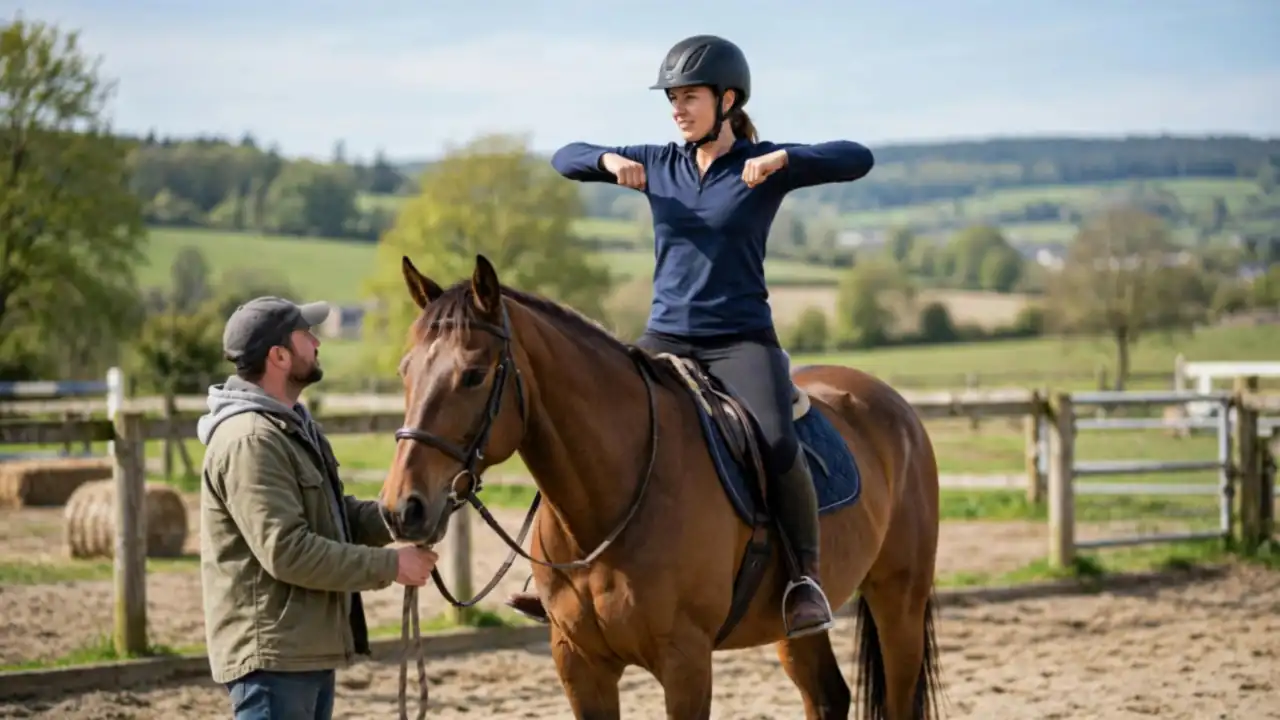
Halt in the middle of the arena with your helper holding the horse, reins resting on the neck. Lift both arms out to the sides at shoulder height and draw slow circles in the air, about the size of a dinner plate.
Work for 30 seconds forward, then 30 seconds backward. Stiff shoulders pull your whole upper body forward, so this first drill sets the tone for everything after it. Finish by shrugging your shoulders up to your ears, holding for 3 seconds, and letting them drop.
Twist Your Upper Body Gently from Side to Side

Place one hand on the pommel and the other on the back of the saddle behind you, still at the halt. Turn your chest and head slowly toward the hand behind you until you feel a mild stretch through your waist.
Hold for 5 seconds, come back to centre, and repeat on the other side. Do 4 twists each way. Keep your seat bones planted evenly as you turn; if one side of your seat lifts, you have twisted too far. A waist that can rotate lets your hips follow the horse while your shoulders stay facing forward.
Lift Your Knees Away from the Saddle to Open Your Hips
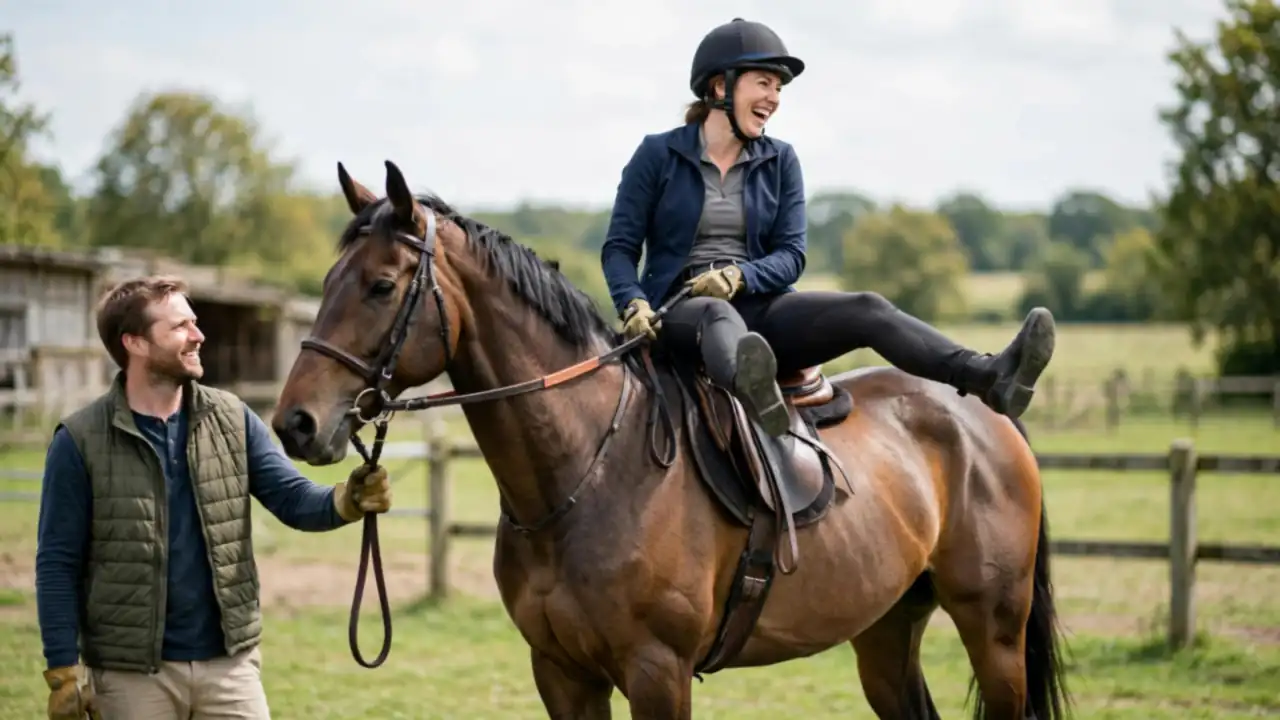
Feet out of the stirrups for this one, helper still at the horse’s head. Draw both knees up and out to the sides, like a jockey sitting very short, so the fronts of your hips open wide.
Hold the position for 10 seconds, breathing out slowly, then lower your legs and let them hang long. Repeat 3 times. Tight hips perch you on top of the saddle; open hips let your seat drop into it. If you are still choosing your first schoolmaster, read up on the best horse breed for beginners before you buy.
Stand in Your Stirrups and Sink Your Heels Down

Feet back in the stirrups, helper now walking beside the horse. As the horse walks on, rise up out of the saddle and stand in your stirrups, holding a strand of mane or a neck strap.
Let your weight drop through your heels for 20 seconds of walk, then sit softly back down. Repeat 3 times. This loads your lower leg and teaches it to stay put under you. The common slip here is standing by pushing on the stirrup and stiffening the knee; keep the knee soft and let the ankle do the flexing.
Walk a Large Circle Without Stirrups to Deepen Your Seat
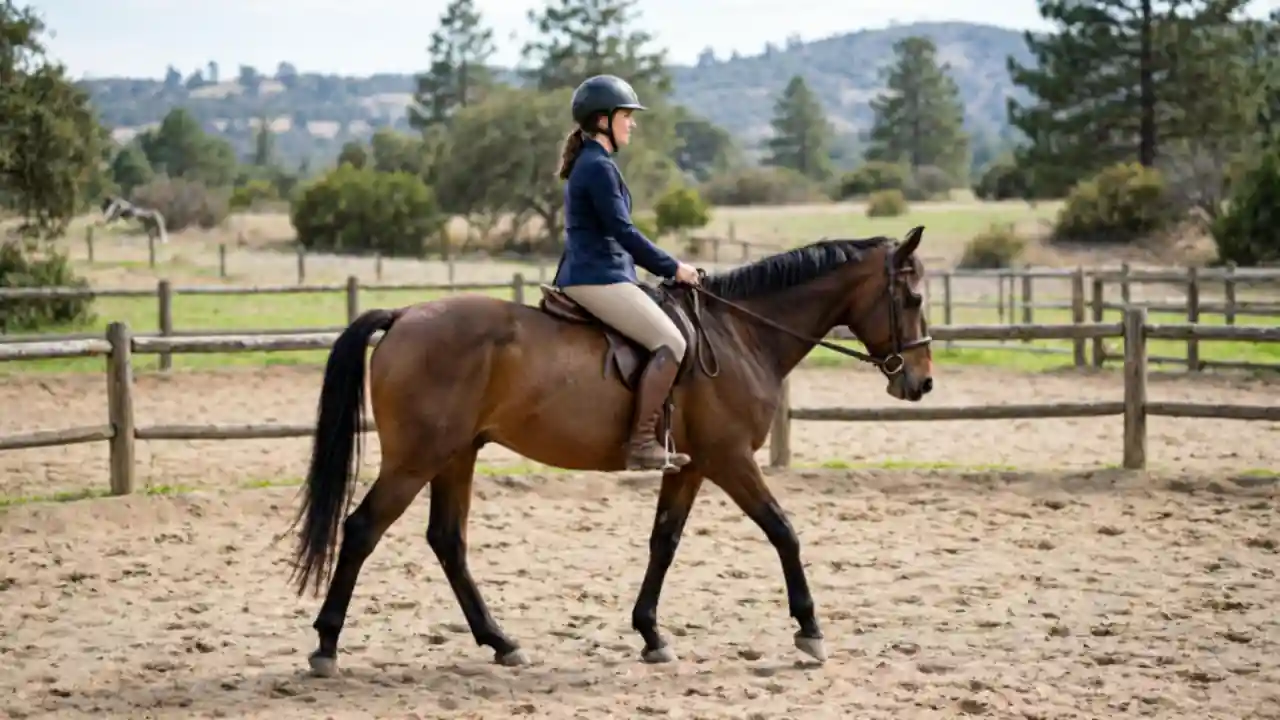
Cross your stirrups over the front of the saddle, or slip your feet out and let them rest against the horse’s sides. Walk a 20 metre circle, keeping your legs long and your toes pointing forward rather than down.
Ride 2 circles in each direction. Without stirrups to stand on, your seat has to do the balancing, and most riders feel their seat drop deeper within the first circle. Keep this drill at the walk in an enclosed arena; trot work without stirrups is a later step, not a starting one.
Pro Tip: If your lower leg starts to swing, think of your weight sinking into your heels even though there are no stirrups. The picture in your head changes the leg faster than gripping ever will.
Circle Your Ankles with Your Feet Out of the Stirrups
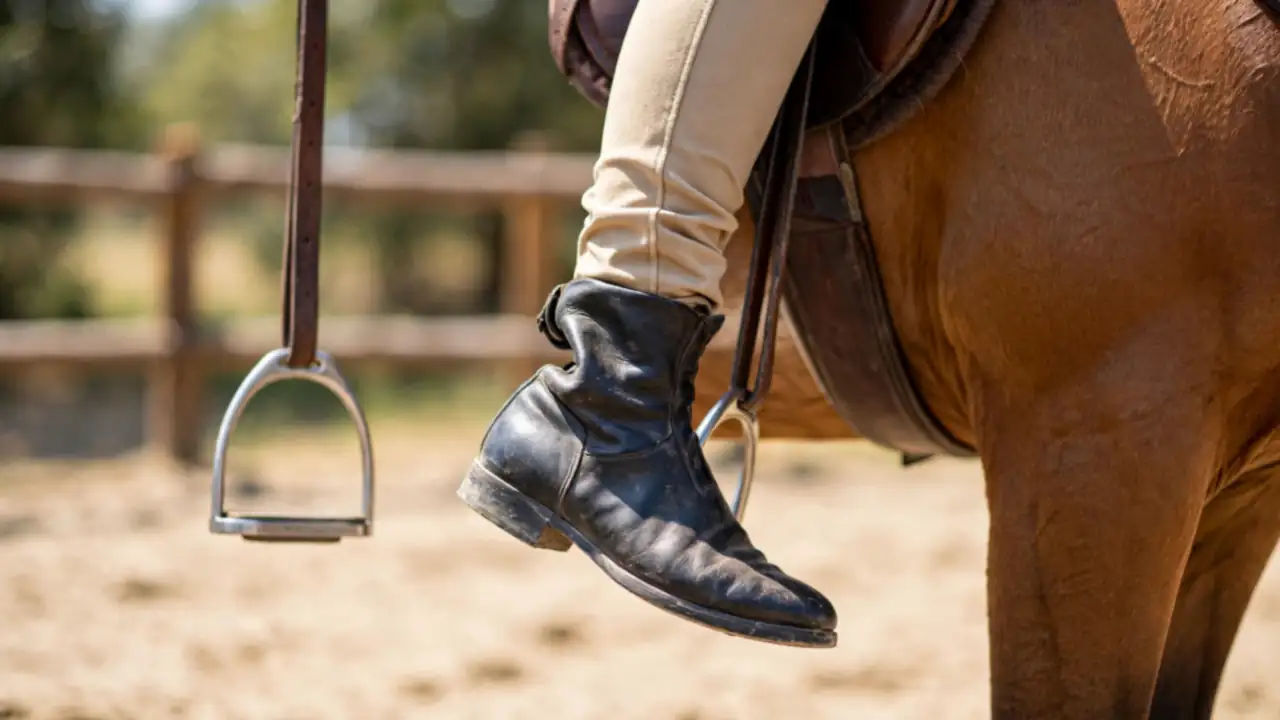
Back at the halt, take both feet out and draw slow circles with your toes, as if stirring a pot with each foot. Locked ankles make a stiff leg, and a stiff leg cannot absorb the horse’s movement.
Circle 6 times in each direction on each foot. Then point your toes down, flex them up toward your shin, and repeat that 6 times too. Riders often find this drill loosens the whole lower leg, which ties into wider habits covered in our guide to the qualities of a good horse owner.
Ride in Two-Point Position at the Walk for One Full Circle
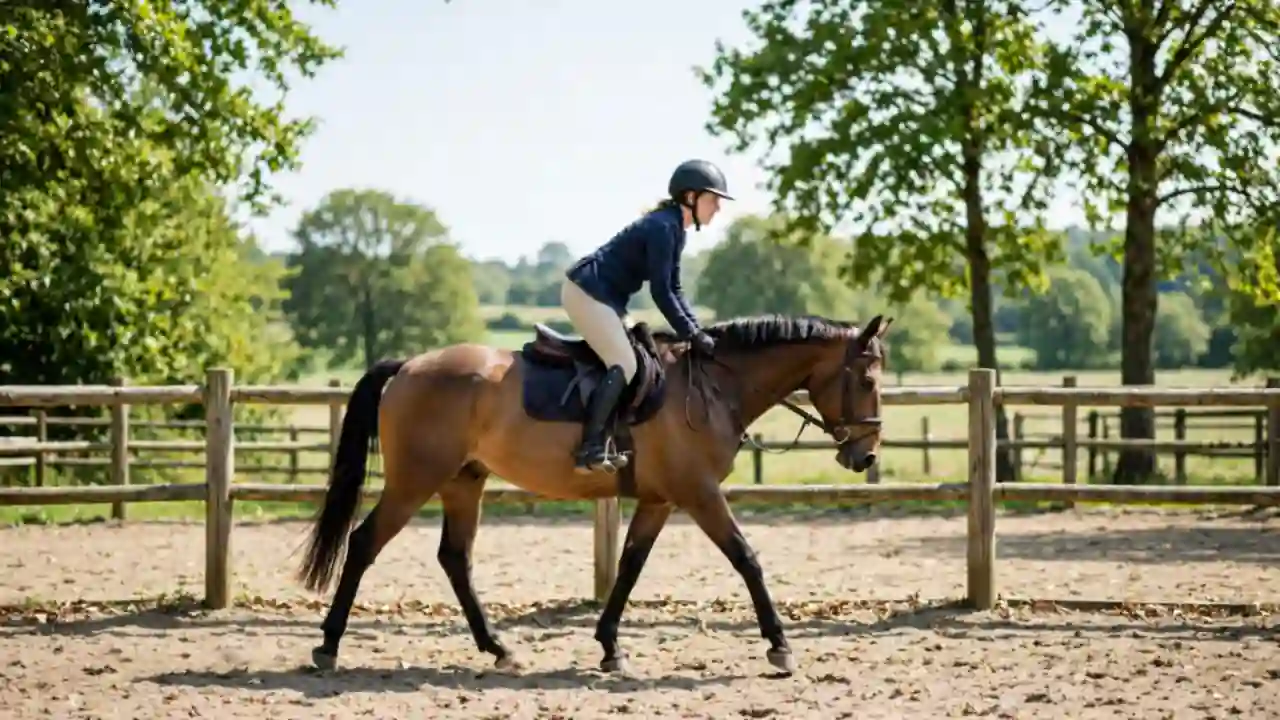
Put your feet back in the stirrups and rise into two-point: seat lifted clear of the saddle, upper body tilted slightly forward from the hips, hands resting low on the neck. Walk one full 20 metre circle like this, then sit and rest for one circle.
Repeat for 3 circles in total, changing direction once. Your seat must hover, not rest; if you are sitting again, your legs have stopped working. Two-point at the walk is where the steady lower leg from Step 4 and the deep seat from Step 5 come together: balanced, forward, and quiet.
Common Mistakes to Avoid
Doing the drills on a fresh or unsettled horse
These exercises ask you to let go, twist, and take your feet out. Save them for a calm horse on a quiet day, and start after a few minutes of normal walking so the horse has settled too.
Skipping the helper for the halt drills
Both hands leave the reins in Steps 1 to 3. A helper at the horse’s head keeps the horse standing still, so you can relax instead of worrying about walking off.
Forcing stretches past comfort
A stretch should feel like a mild pull, never pain. Pushing a twist or a knee lift further each time builds stiffness, not suppleness.
Trying trot versions in week one
Every drill in this routine is built for the halt and the walk. Add trot only when the walk version feels boring, and add one drill at a time.
Frequently Asked Questions
How often should I do these in-saddle exercises?
Two or three rides a week is plenty. The routine fits inside your warm-up, so it adds no extra trip to the barn.
Can I do these exercises on any horse?
Use a calm, steady horse that stands quietly and walks on a loose rein. A young, fresh, or nervous horse is the wrong partner for drills that take your hands off the reins.
Is riding without stirrups safe for a beginner?
At the walk, in an enclosed arena, on a quiet horse, short stretches are a standard school exercise. Keep it to walk, keep the circles large, and take your stirrups back the moment you feel tense or tired.
Do I need a helper every time?
A helper matters most for Steps 1 to 3, where both hands are off the reins at the halt. Once your horse stands like a rock and you know the drills, many riders do the walking steps with no helper.
When will I feel a difference in my riding?
Most riders feel looser shoulders and a deeper seat within two to three weeks of regular practice. The lower leg usually steadies last, so give it a month of steady work.
Quick Reference Card
You need: a calm horse, an enclosed arena, a helper for the halt drills, a helmet, and stirrups at your normal length.
The routine (about 15 minutes):
- Arm circles and shoulder rolls at the halt, 30 seconds each way
- Trunk twists, 4 each side, hold 5 seconds
- Knee lifts to open the hips, 3 holds of 10 seconds
- Stand in the stirrups at the walk, 3 holds of 20 seconds
- Circle without stirrups, 2 circles each way
- Ankle circles and flexes, 6 each way
- Two-point at the walk, 3 full circles
You now have a full set of Rider Exercises for Equestrians that fits inside any warm-up.
Your shoulders sit lower, your seat sits deeper, and your leg stays where you put it.
Run the routine on your next two or three rides this week, and note which drill feels hardest; that one deserves an extra round.
Save this guide on Pinterest so it is waiting for you at the barn.
