
Do a Horse Rider Workout to Build Core Strength, Balance, and a Steadier Seat
You climb into the saddle, pick up the reins, and within a few minutes your legs start to wobble. Your seat tips forward at the trot, your lower back aches, and holding your balance takes so much effort that there is little left for guiding your horse.
A short Horse Rider Workout done at home builds the core strength, steady legs, and balance that riding asks for, and it needs no horse and no gym.
This routine works because it trains the same muscles you use in the saddle. Planks and squats build the deep core and leg strength that keep your seat quiet. Balance drills teach your body to stay centred when things move under you.
By the end of this guide you will have a full off-horse workout you can repeat two or three times a week. The whole routine takes about 25 minutes, the moves are beginner friendly, and each one can be made gentler or harder to match your body.
Rider fitness is a normal part of good horse care too, and the British Horse Society shares advice on staying fit for riding.
What You Need
- An exercise mat, or a soft flat patch of ground
- A sturdy chair, fence rail, or wall for balance support
- A phone or kitchen timer
- A water bottle
- A small towel
- Comfortable clothes you can bend and stretch in
At a Glance
- Warm up your hips, shoulders, and core
- Hold a plank for core strength
- Do bodyweight squats for stronger legs
- Stand on one leg for balance
- Practise your two-point position
- Stretch your hip flexors and legs
- Walk slowly to cool down
Before and After: What Changes
Before
- Your seat tips forward at the trot
- Your legs tire within a few minutes
- Your lower back aches after rides
- Balance takes constant effort
After a few weeks of practice
- Your seat stays steadier and quieter
- Your legs last the whole ride
- Balance holds take less effort
- Mounting and dismounting feel more controlled
You are also building the habits behind the qualities of a good horse owner: patience, a steady routine, and care for your own body as well as your horse’s.
Warm up your hips, shoulders, and core for five minutes
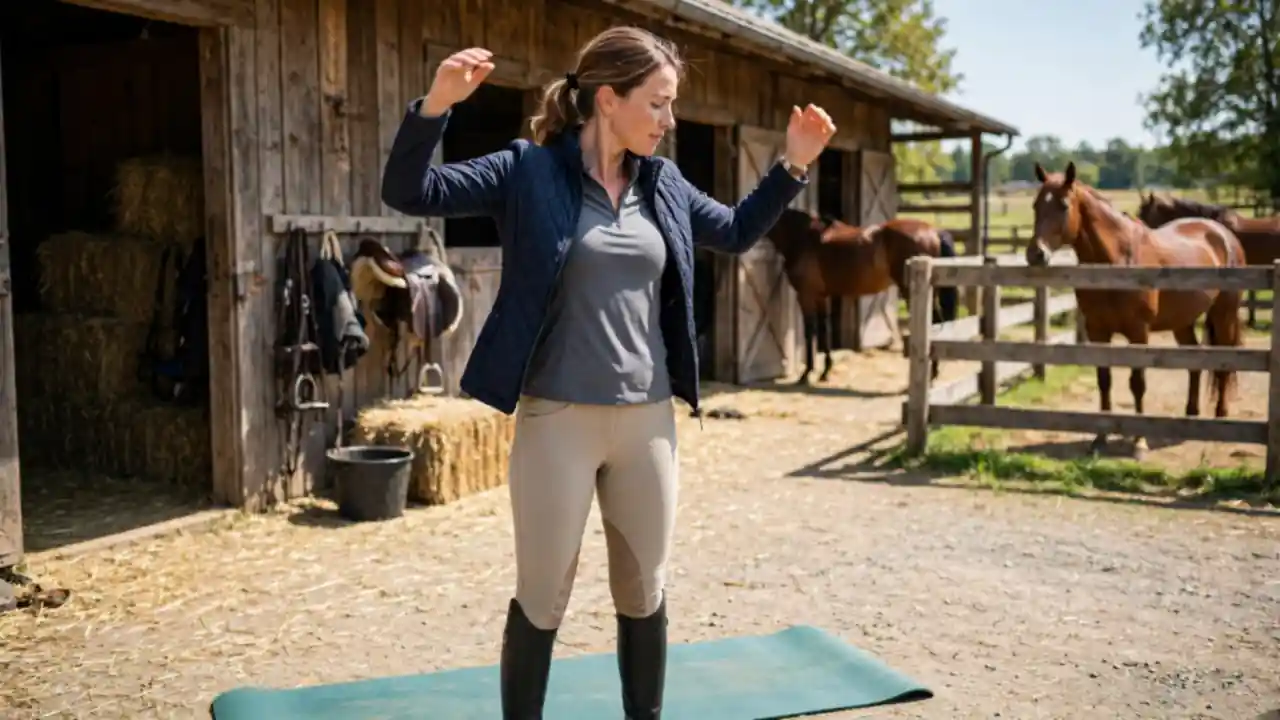
Cold muscles pull and tire fast, so give your body time to loosen up before the main moves. March in place for 1 minute, then roll your shoulders in slow circles for 30 seconds each way.
Circle your hips 10 times in each direction, then twist your upper body gently from side to side 10 times. Finish with slow, deep breaths while you reach both arms overhead.
Your joints should feel warm and loose, not strained. If a move pinches or hurts, make the circle smaller and keep going at a pace that feels smooth.
Hold a plank to build core strength for the saddle
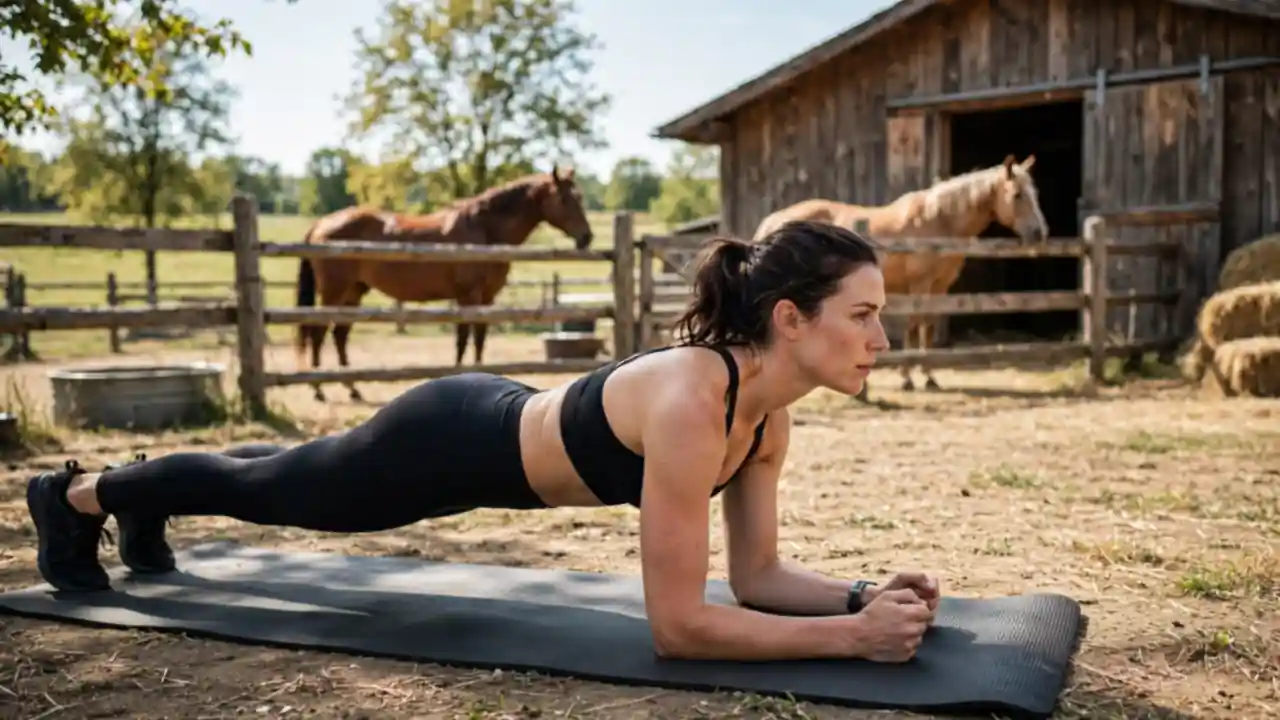
Place your forearms on the mat with your elbows under your shoulders and step your feet back until your body forms one straight line from head to heels. Squeeze your stomach muscles as if you are about to be tickled, and keep your hips level.
Hold for 20 to 30 seconds, rest for 30 seconds, and repeat 3 times. A sagging back means your core has switched off, so drop your knees to the mat and finish the hold from there.
Pro Tip: Set your phone on the ground a few steps away and film one hold from the side. A quick look at the video shows whether your back stays in one straight line or sags in the middle.
Perform bodyweight squats to strengthen your legs
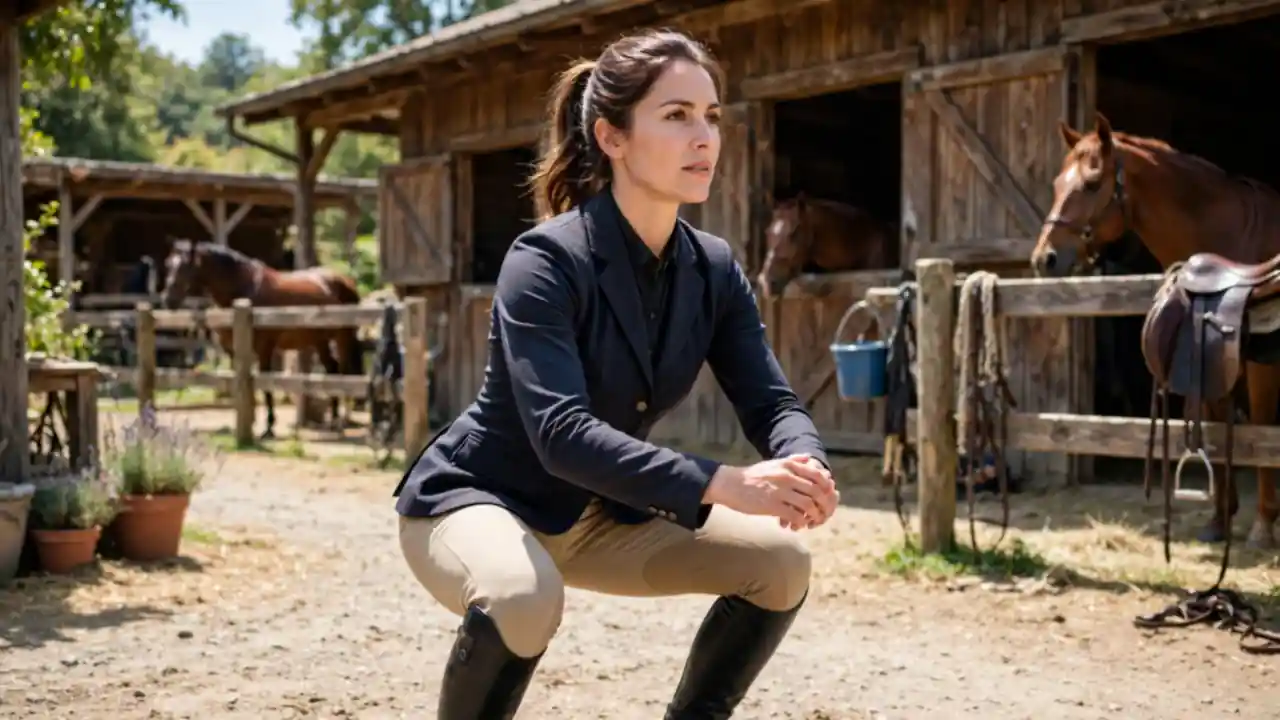
Stand with your feet about shoulder width apart, toes pointing forward. Push your hips back and bend your knees, as if sitting into a low chair behind you, keeping your chest lifted and your heels down. Press through your whole foot to stand.
Do 10 to 12 reps, rest 1 minute, and complete 2 sets. Keep your knees in line with your toes on every rep.
Stand on one leg to train your balance
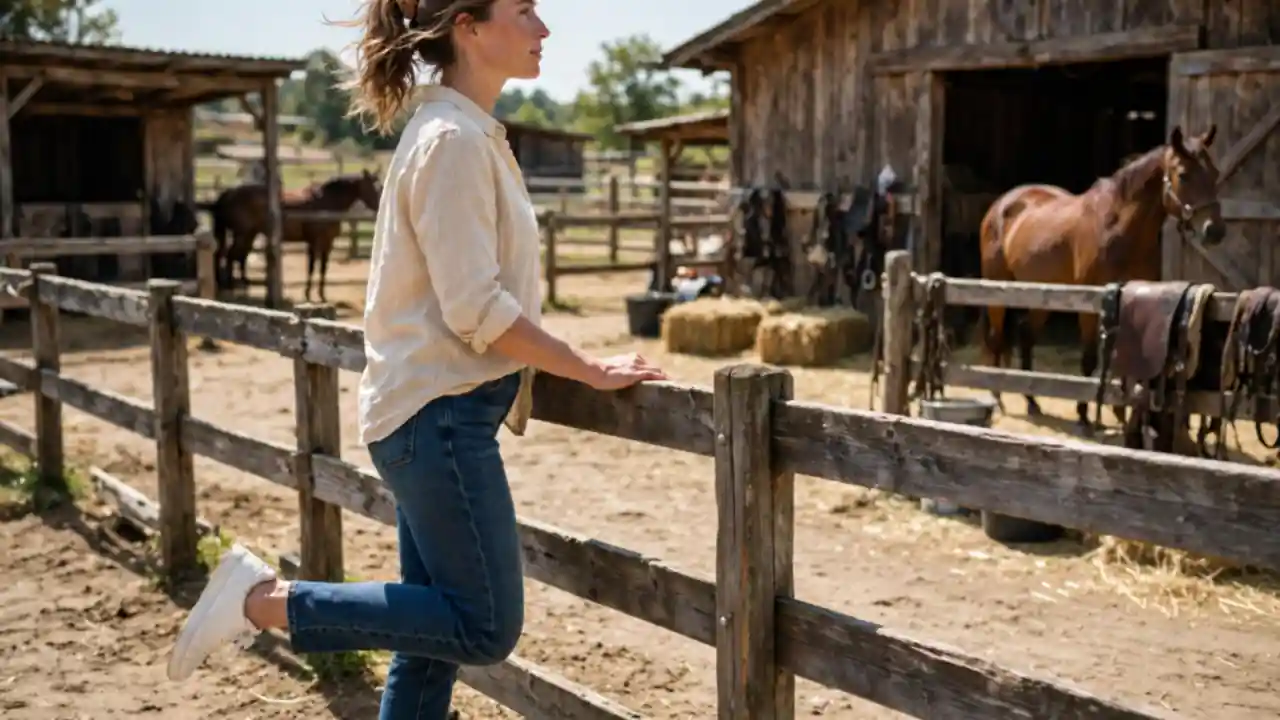
A fence rail or the back of a sturdy chair gives you a safety net for this drill. Stand tall beside your support, rest one hand on it lightly, and lift one foot a few inches off the ground.
Hold for 20 seconds, then switch sides, and repeat for 3 rounds on each leg. Fix your eyes on one still spot ahead of you and keep your standing knee soft.
The NHS also lists gentle balance exercises for adults that pair well with this drill.
Heads Up: Never do balance drills on wet, muddy, or slippery ground, and keep your chair or rail within reach until every hold feels steady. A fall on hard ground can end your riding for weeks.
Practise your two-point position away from the horse
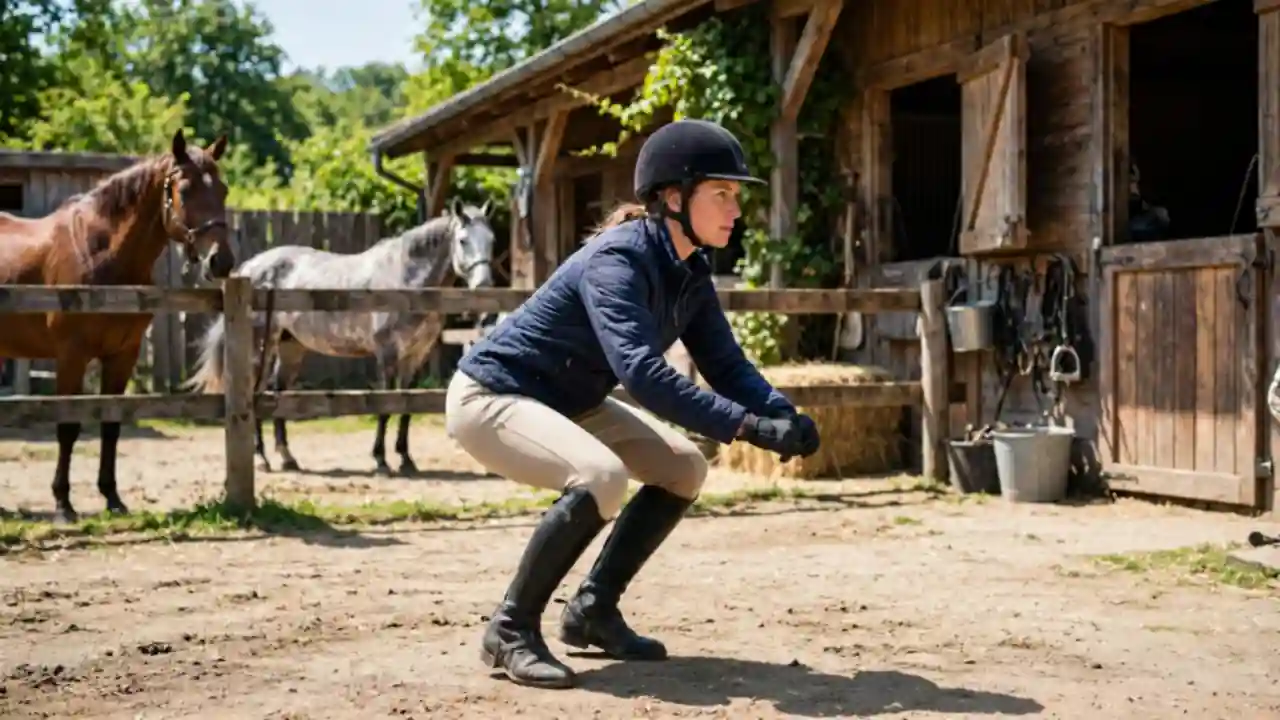
Riding position feels odd on the ground, and that is exactly why practising it at home helps. Stand with your feet flat and hip width apart, bend your knees, and push your hips back while your seat hovers, as it does over the saddle at a rising trot.
Keep your back flat and your weight through your heels. Hold for 15 to 20 seconds, stand tall to rest, and repeat 4 times.
In the saddle, watch your horse too: if you have wondered why do horses foam at the mouth at the bit, our guide explains the usual causes.
Stretch your hip flexors and legs after the main moves
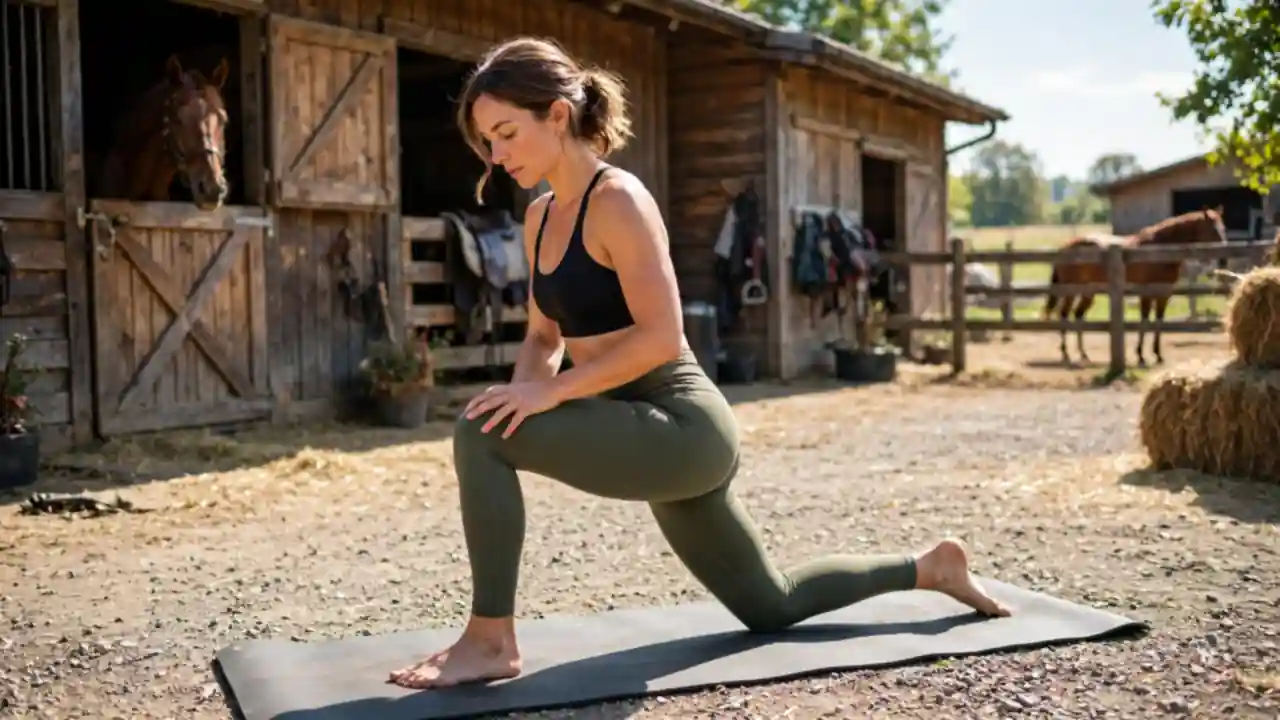
Tight hip flexors pull your seat out of line in the saddle. Step one foot forward into a lunge, tuck your tailbone under, and lean in until you feel a stretch at the front of the back hip. Hold 30 seconds per side.
Then sit down, stretch your legs out, and reach toward your toes for 30 seconds. Breathe out slowly and never bounce.
Walk slowly to cool down and steady your breathing
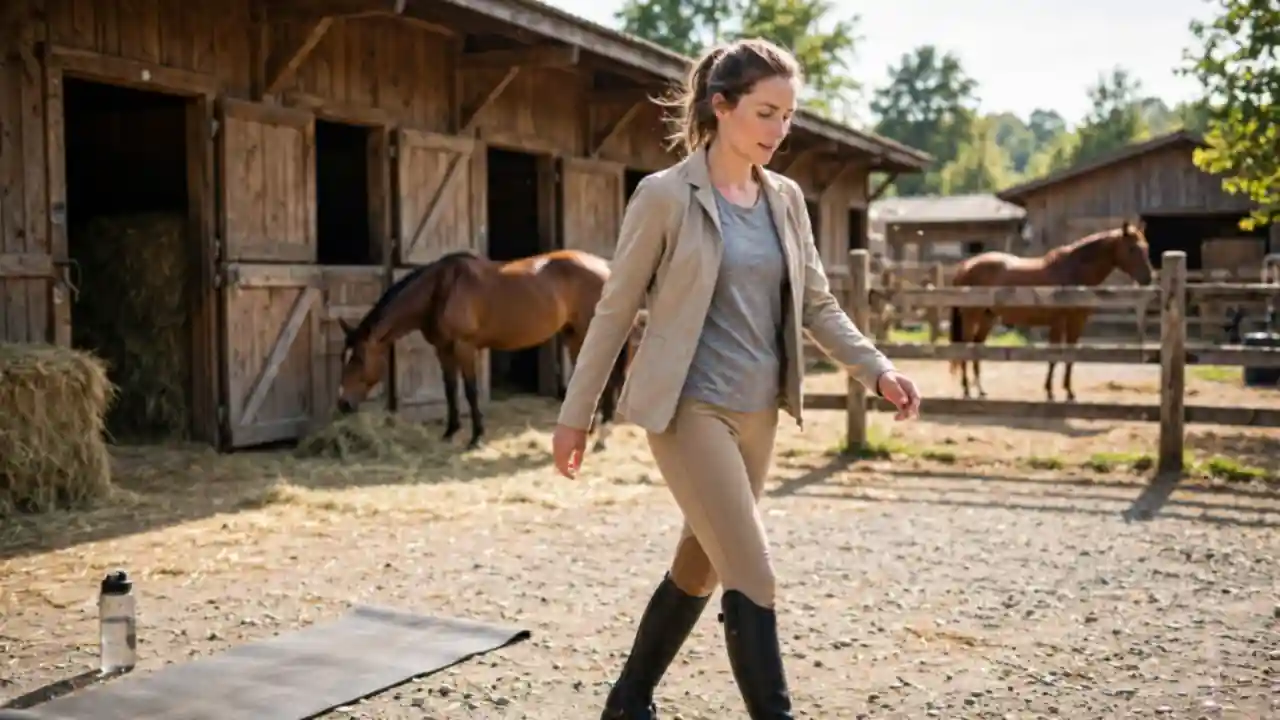
Slow walking brings your heart rate and breathing back down after the work. Walk around your space at a gentle pace for 3 to 5 minutes, letting your arms swing.
Take 5 slow breaths, breathing in through your nose and out through your mouth. Sip some water, and note which moves felt hardest, because those are the ones to repeat next time.
Common Mistakes to Avoid
- Holding your breath. Breath holding makes every hold feel harder. Breathe in and out in a slow, steady rhythm through each move.
- Rushing the reps. Fast squats and short planks build very little control. Slow down and finish every rep in full.
- Skipping the warm up. Cold hips and shoulders tire fast and ache the next day. Give the warm up its full 5 minutes.
- Training on hard or uneven ground. A wobbly surface turns a balance drill into a fall risk. Pick a flat, soft spot with support within reach.
Frequently Asked Questions
How often should I do this workout?
Two or three times a week suits most beginners. Leave at least one rest day between sessions so your muscles can recover.
Do I need a gym or special kit?
No. A mat, a chair or fence rail for support, a timer, and a water bottle cover everything in this routine.
Will this help my riding?
It trains the core, legs, and balance that riding uses, so most riders find their seat feels steadier over time. It supports your lessons, it does not replace time in the saddle.
My legs shake during the balance drill. Is that normal?
Yes, shaking is common while your balance improves. Keep one hand on your support, shorten the hold, and build up the seconds over a few sessions.
I am a complete beginner. Where should I start?
Start with two sessions a week and the shorter holds, then build up in small steps. If you are still choosing your first horse, our guide to the best horse breed for beginners will help you pick a calm match.
What if my knees ache during squats?
Make the squat shallower, slow down, and check that your knees track over your toes. If pain is sharp or keeps coming back, stop and talk to a doctor or physio before you carry on.
Quick Reference Card
You need: a mat, a chair or fence rail, a timer, a water bottle, a towel, comfortable clothes.
- Warm up hips, shoulders, and core — 5 minutes
- Plank hold — 20 to 30 seconds, 3 times
- Bodyweight squats — 10 to 12 reps, 2 sets
- One-leg balance — 20 seconds per side, 3 rounds
- Two-point position hold — 15 to 20 seconds, 4 times
- Hip flexor and leg stretches — 30 seconds each
- Slow walk cool down — 3 to 5 minutes
You now have a short home routine that builds the strength and balance riding asks for.
Repeat it two or three times a week and the moves will start to feel familiar.
Your next step is to take the same steady seat into your next ride.
If this Horse Rider Workout helped you, save it to your Pinterest board so you can find it before your next session.