Metformin Dosage for Horses: Dosage Chart, Calculator & Safety Guide for Insulin-Resistant Horses
Written & Reviewed By: Medshorse Team
Last Updated: October 2026
Your vet says your horse has insulin dysregulation, and metformin comes up. Then you notice the dose is a lot of tablets.
The metformin dosage for horses is usually 15 to 30 mg per kg of body weight, given by mouth twice a day. That works out to roughly 15 to 30 tablets of 500 mg per dose for an average 500 kg (1,100 lb) horse. Metformin is not approved for horses, so your vet sets the final dose.
This guide covers how the dose is calculated, a weight chart, a calculator, how to time it, side effects, and what to try if metformin is not enough.
Safety note: Metformin is an extra-label (off-label) human drug in horses. The numbers below reflect ranges reported in veterinary literature and used in practice. They are not a prescription. Confirm the exact dose, product and schedule with your veterinarian.
Disclaimer: This article is for general education and is not veterinary advice. Dormosedan is a registered trademark of Orion Corporation, distributed by Zoetis under license. MedsHorse is not affiliated with Zoetis. Always follow your veterinarian’s instructions and the current product label.
Quick Facts: Metformin for Horses
What Is Metformin and Why Is It Used in Horses?
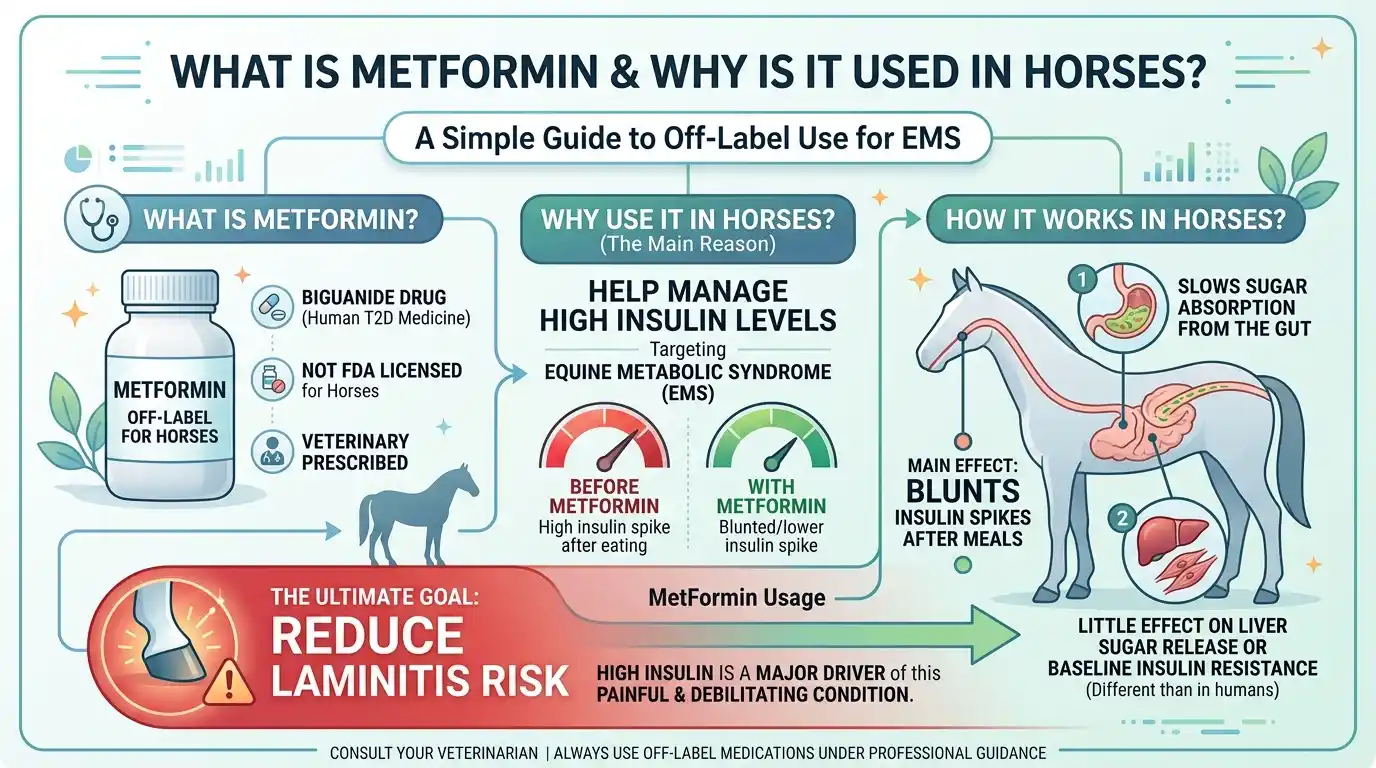
Metformin is a biguanide drug made for human type 2 diabetes. In horses, vets use it off-label to help manage high insulin in equine metabolic syndrome (EMS). It is not licensed for horses by the FDA.
In people, metformin lowers the sugar the liver releases and improves how cells respond to insulin. In horses, researchers think its main effect is slowing sugar absorption from the gut. That would explain why it may blunt the insulin spike after a meal more than it fixes baseline insulin resistance.
Why bother? High insulin is a major driver of laminitis, one of the most painful and career-ending problems in horses. Anything that lowers insulin spikes is worth a conversation.
Metformin Dosage for Horses: How Much Should You Give?
The commonly used range is 15 to 30 mg/kg orally every 12 hours. Many vets start at the lower end and increase if the horse tolerates it and testing supports it.
Quick formula:
- Weight in lb ÷ 2.2 = weight in kg
- kg × dose (mg/kg) = mg per dose
- mg ÷ 500 = number of 500 mg tablets per dose
Example (500 kg horse at 15 mg/kg): 500 × 15 = 7,500 mg, which is 15 tablets of 500 mg per dose, twice a day.
Metformin Dosage Chart for Horses by Weight
| Horse weight (kg) | Approx. lb | 15 mg/kg per dose | Tablets (500 mg) | 30 mg/kg per dose | Tablets (500 mg) |
|---|---|---|---|---|---|
| 200 | 440 | 3,000 mg | 6 | 6,000 mg | 12 |
| 300 | 660 | 4,500 mg | 9 | 9,000 mg | 18 |
| 400 | 880 | 6,000 mg | 12 | 12,000 mg | 24 |
| 450 | 990 | 6,750 mg | 13.5 | 13,500 mg | 27 |
| 500 | 1,100 | 7,500 mg | 15 | 15,000 mg | 30 |
| 600 | 1,320 | 9,000 mg | 18 | 18,000 mg | 36 |
Each dose is given twice daily. Amounts are per dose, not per day.
Metformin Dosage Calculator for Horses
Metformin Dosage Calculator for Horses
Estimate metformin dose by body weight
Calculated Dose
Weight used: 0 kg
Durham et al. (2010) used 15 mg/kg and saw improved insulin sensitivity within a week, but the effect faded by about a month. Other studies found no benefit at that dose.
Current thinking is 30 mg/kg, two or three times daily.
This tool is for information only. Always consult your veterinarian before giving metformin to your horse.
© medshorse.com
Why a Weigh Tape Matters
Dosing is by weight, so guessing is risky. Use a weight tape at minimum, or a livestock scale if you can. Horses with EMS are often overweight, and owners tend to underestimate their weight.
How and When to Give Metformin
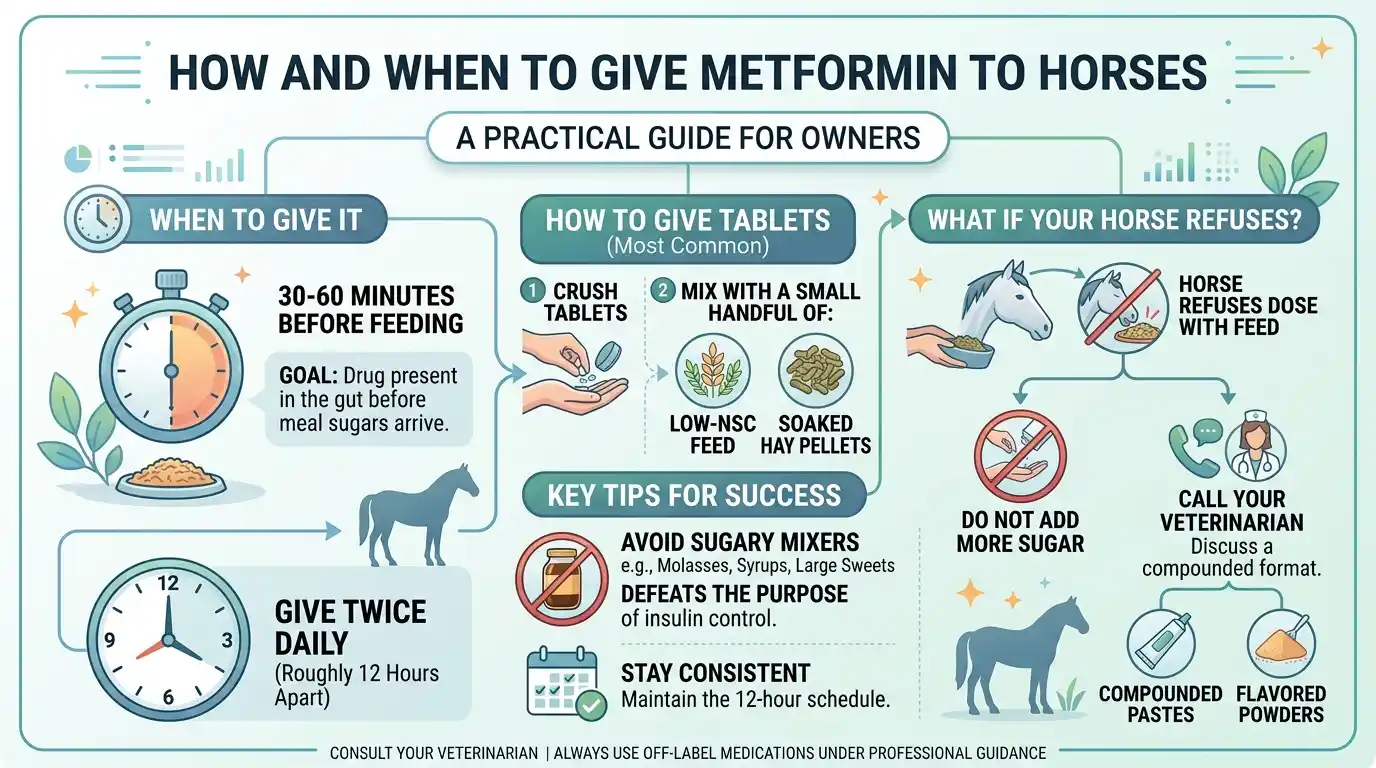
Metformin is usually given about 30 to 60 minutes before feeding. The goal is to have the drug present in the gut when sugars from the meal arrive.
Many owners find this part harder than the math. Here is what tends to work:
- Crush tablets and mix with a small handful of low-NSC feed or soaked hay pellets.
- Ask your vet about a compounded flavored paste or powder if your horse refuses tablets.
- Avoid sugary mixers like molasses or large amounts of syrup. They defeat the purpose.
- Give it on a consistent schedule, roughly 12 hours apart.
- If the horse refuses food with the drug, do not add more sugar. Call your vet about a different format.
Does Metformin Actually Work in Horses?
The honest answer is that results are mixed. Early work in the UK reported improved insulin measurements in some insulin-resistant horses and ponies. Later studies found little effect on baseline insulin sensitivity, and some found benefit mainly in reducing post-meal insulin spikes.
The main reason is poor oral bioavailability. Pharmacokinetic work in horses found that only a small fraction of an oral dose reaches the bloodstream, well under 10%. That is why the doses are so large compared with people.
What this means for you:
- Metformin may help some horses and do little for others.
- It should never replace diet and exercise changes.
- Your vet should recheck insulin after a few weeks to see whether it is worth continuing.
Which Horses Are Candidates for Metformin?
Metformin is mainly considered for horses with confirmed EMS or insulin dysregulation, especially if diet and exercise alone have not brought insulin down enough.
It is not usually the first step. A typical order looks like this:
- Test (resting insulin, oral sugar test or similar).
- Diet change: low-sugar hay, soaking if needed, no grain, no lush pasture.
- Weight loss and controlled exercise, if the horse is sound.
- Add medication if needed.
Important: Metformin does not treat PPID (Cushing’s disease). That is managed with pergolide (Prascend). A horse can have both conditions, so ask your vet whether PPID has been ruled out.
Side Effects and Risks of Metformin in Horses
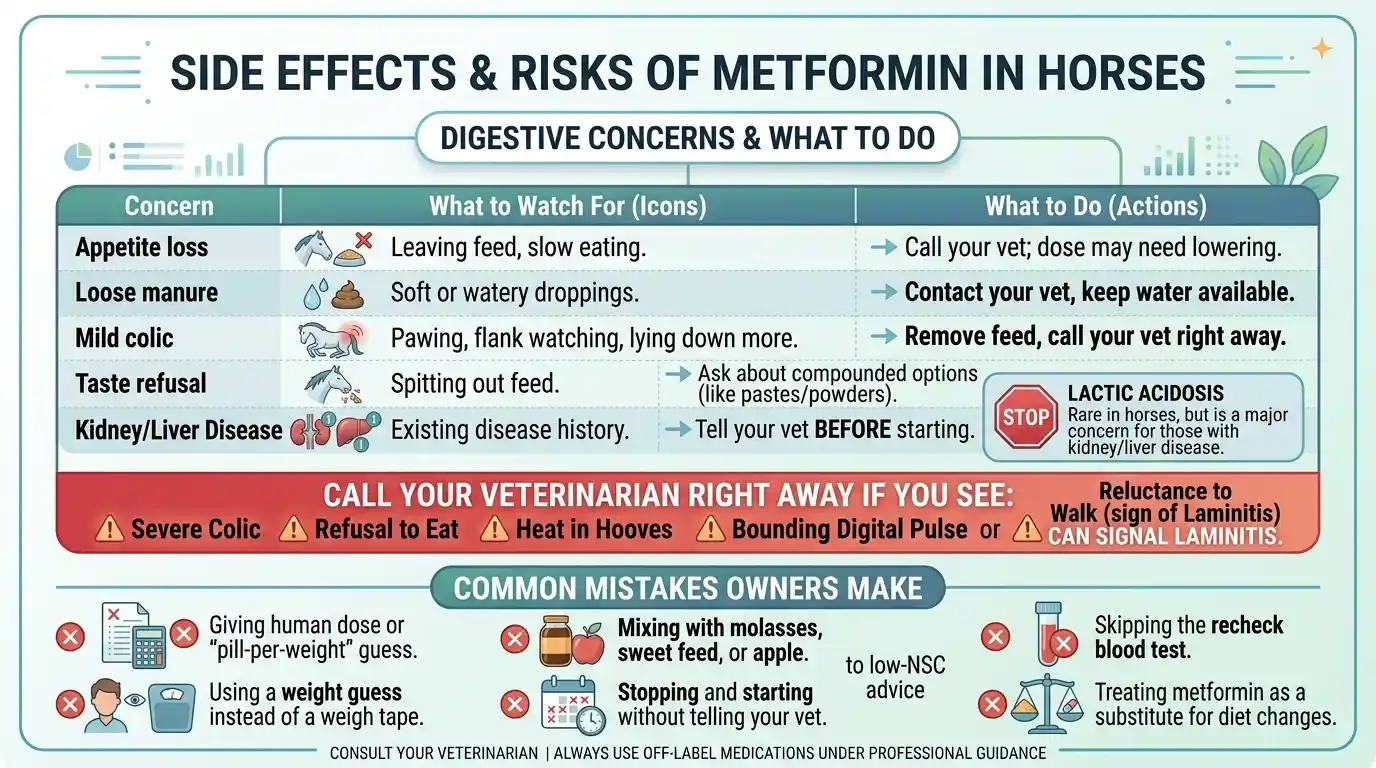
The most common problems are digestive: reduced appetite, loose manure or mild colic signs. Starting low and increasing gradually can reduce these.
| Concern | What to watch for | What to do |
|---|---|---|
| Appetite loss | Leaving feed, slow eating | Call your vet; dose may need lowering |
| Loose manure | Soft or watery droppings | Contact your vet, keep water available |
| Mild colic | Pawing, flank watching, lying down more | Remove feed, call your vet right away |
| Taste refusal | Spitting out feed | Ask about compounded options |
| Kidney or liver disease | Existing disease history | Tell your vet before starting |
Lactic acidosis is a known concern with metformin in people with kidney problems. It appears to be very rare in horses, but horses with kidney or liver disease should not get metformin without a vet’s guidance.
Call your vet right away if you see: severe colic, refusal to eat, heat in the hooves, a bounding digital pulse, or reluctance to walk. Those can signal laminitis.
Common Mistakes Owners Make
- Giving a human dose or a “pill-per-weight” rule of thumb instead of a mg/kg calculation
- Using a weight guess instead of a weigh tape
- Mixing with molasses, sweet feed or lots of apple
- Stopping and starting without telling the vet
- Skipping the recheck blood test
- Treating metformin as a substitute for a diet change
Metformin Alternatives and Companion Strategies
For many horses, the most powerful tools are not drugs.
- Diet: Hay tested for NSC, soaked if needed, no grain.
- Exercise: Regular, controlled exercise when the feet allow it.
- Weight loss: Even modest loss improves insulin sensitivity.
- Levothyroxine: A vet-prescribed thyroid hormone used short term in some horses to help weight loss and insulin sensitivity.
- Magnesium: Some early research suggests supplementation may help insulin sensitivity in certain horses. See our magnesium dosage guide for safe feeding amounts.
- Gut support: Some owners add fiber such as psyllium husk as part of a feeding plan, though evidence for insulin effects is limited.
If your horse is already sore from laminitis, talk with your vet about pain control before reaching for anything on the shelf. Our guides to bute for horses dosage and Equioxx dosage for horses explain how common anti-inflammatories are dosed.
Note that corticosteroids can raise insulin and trigger laminitis in susceptible horses, so read our dexamethasone guide and tell your vet if your horse is insulin resistant before using any steroid.
Another important reminder: 9 foods you should never feed your horse can include items that spike sugar, which matters a lot for EMS horses.
Metformin vs. Other Options at a Glance
| Option | Role | Needs vet? |
|---|---|---|
| Low-NSC diet | Foundation of management | Recommended |
| Exercise and weight loss | Improves insulin sensitivity | If lame or laminitic |
| Metformin | May blunt post-meal insulin spikes | Yes |
| Levothyroxine | Short-term aid to weight loss | Yes |
| Magnesium | Possible supportive role | Advisable |
Metformin for Horses: Step-by-Step Safe Use Checklist
- Confirm EMS or insulin dysregulation with a vet-run test.
- Ask whether PPID has been checked.
- Weigh your horse with a tape or scale.
- Get a written dose in mg/kg and the tablet or powder strength.
- Plan to give it about 30–60 minutes before feeding.
- Use low-sugar mixers only.
- Book a recheck to measure insulin after several weeks.
- Know the laminitis warning signs and your vet’s emergency number.
Using Metformin in Competition Horses
Rules differ by organization. Metformin is a human prescription drug, so check your governing body’s medication rules (such as USEF or FEI) and ask your vet about withdrawal guidance before entering a show. Do not assume it is permitted.
Key Takeaways
- Typical dose: 15–30 mg/kg orally every 12 hours, set by your vet.
- Give it about 30–60 minutes before feeding.
- Absorption is low, so results are variable. Recheck insulin to see if it is working.
- Diet, exercise and weight loss matter more than any pill.
- Watch for appetite loss, loose manure, colic signs and laminitis.
- Never dose from a chart alone.
FAQs
What is the metformin dosage for horses?
The commonly used range is 15 to 30 mg per kg of body weight by mouth every 12 hours. For a 500 kg horse that is 7,500 to 15,000 mg per dose. Your vet sets the exact dose because metformin is used off-label in horses.
How many 500 mg metformin tablets does a horse need?
At 15 mg/kg, a 500 kg horse needs about 15 tablets per dose, and at 30 mg/kg about 30 tablets per dose, given twice daily. Use a weigh tape for accuracy and confirm the amount with your vet.
Is metformin FDA-approved for horses?
No. Metformin is a human drug and is used extra-label in horses. A veterinarian needs to prescribe it and set the dose.
What is metformin used for in horses?
Vets use it to help manage insulin dysregulation and equine metabolic syndrome, mainly to reduce insulin spikes after meals in horses at risk of laminitis.
Does metformin work for horses?
Results are mixed. Some studies show benefit and others show little effect on baseline insulin sensitivity. Only a small share of an oral dose is absorbed, so response varies between horses. Insulin should be rechecked to see if it is helping.
When should I give metformin to my horse?
It is usually given about 30 to 60 minutes before feeding, twice a day about 12 hours apart, so the drug is in the gut when sugars from the meal arrive.
What are the side effects of metformin in horses?
The most common are reduced appetite, loose manure and mild colic signs. Lactic acidosis is a concern in kidney disease but appears to be very rare in horses. Call your vet if you notice these signs.
Can I give my horse human metformin?
Vets do prescribe human-grade metformin tablets, but only with a prescription and a weight-based dose from your vet. Do not guess the dose.
How long does metformin take to work in horses?
There is no fixed timeline. Vets commonly recheck insulin after several weeks to see whether the horse is responding. Diet and exercise changes should start at the same time.
Can metformin treat Cushing’s disease in horses?
No. Cushing’s disease, also called PPID, is managed with pergolide. A horse can have both PPID and EMS, so ask your vet whether both have been tested.
How do I get my horse to eat metformin?
Crush tablets into a small amount of low-sugar feed or soaked pellets. Avoid molasses or lots of syrup. If your horse refuses it, ask your vet about a compounded flavored powder or paste.
Should metformin replace diet changes for an insulin-resistant horse?
No. A low-sugar diet, exercise and weight loss are the foundation of management. Metformin is an add-on that may help some horses.
Is metformin allowed in horse competition?
Rules vary by organization. Check your governing body, such as USEF or FEI, and ask your vet about withdrawal times before entering a show.
Next Steps
Ask your vet for an insulin test if you have not had one, request a written mg/kg dose, and set a recheck date. In the meantime, start the diet changes, since they help whether or not metformin ends up in the plan.
Sources and Further Reading
- Durham AE et al., Equine Veterinary Journal (2008), metformin and insulin sensitivity in insulin-resistant horses and ponies
- Hustace JL et al., American Journal of Veterinary Research (2009), effect of metformin on insulin sensitivity in horses
- Tinworth KD et al., Veterinary Journal (2010), pharmacokinetics of metformin in horses
- Equine Endocrinology Group recommendations on EMS (equineendocrinologygroup.org)
- PubMed Central (PMC6430910), open-access review on metformin in equine medicine
- Your veterinarian and regional equine veterinary association