Dexamethasone Dosage For Horses: Calculator, Chart & Safe Guide
Dexamethasone is a powerful corten that’s used in horses for inflammation control and in some instances to suppress the immune system. The approved dose is 5–10 mg/horse first day followed by 5 mg/horse, as needed (not based on weight).
In this guide you will learn about the correct Dexamethasone dosage For Horses, side effects, drug interactions and the laminitis risk that every horse owner should know prior to using it.
Dexamethasone Dosage Calculator For Horses
For Horses — based on FDA-approved and reported off-label dosing data
Dosage Summary
© medshorse.com
Quick Facts
- Type of drug: synthetic glucocorticoid (corticosteroid)
- Trade names: Azium
- Potency: Approximately 25 times more potent than the horse’s own cortisol
- Anti-inflammatory: FDA-approved dose: 5-10 mg/horse day 1, 5 mg/horse daily.
- Ceiling (off-label) (immunosuppressive): Up to 50mg per horse per day (vet-directed only)
- Routes: Oral, intramuscular (IM), intravenous (IV)
- Some improvement may be seen in 1–2 hours: better results may be seen after 24 hours.
- 1 safety issue: Laminitis, particularly in Cushing’s horses (PPID) and equine metabolic syndrome (EMS)
- In competition: Not banned but controlled medication per FEI and USEF rules
What Is Dexamethasone?
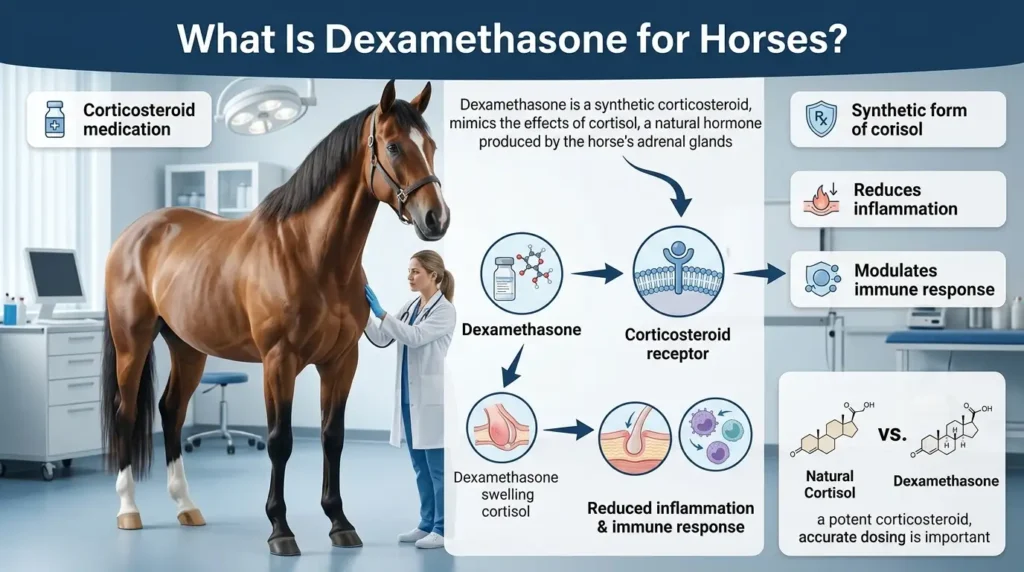
Dexamethasone for horses dosage is a man-made corticosteroid, or synthetic form of cortisol, the corticosteroid made by your horses adrenal glands. It does this by reducing the inflammatory and immune response of the body, which is why vets will turn to it at all times from a bad breakout of a hive to chronic airway disease.
The difference between dexamethasone for horses and the horse’s natural cortisol is strength. It is designed to be more effective at binding to the same receptors and has about 25 times the anti-inflammatory effect as cortisol at the same dose level. That’s the strength for which precision in measurements is of paramount importance — a margin of error makes a big difference.
What Is Dexamethasone Used For in Horses?
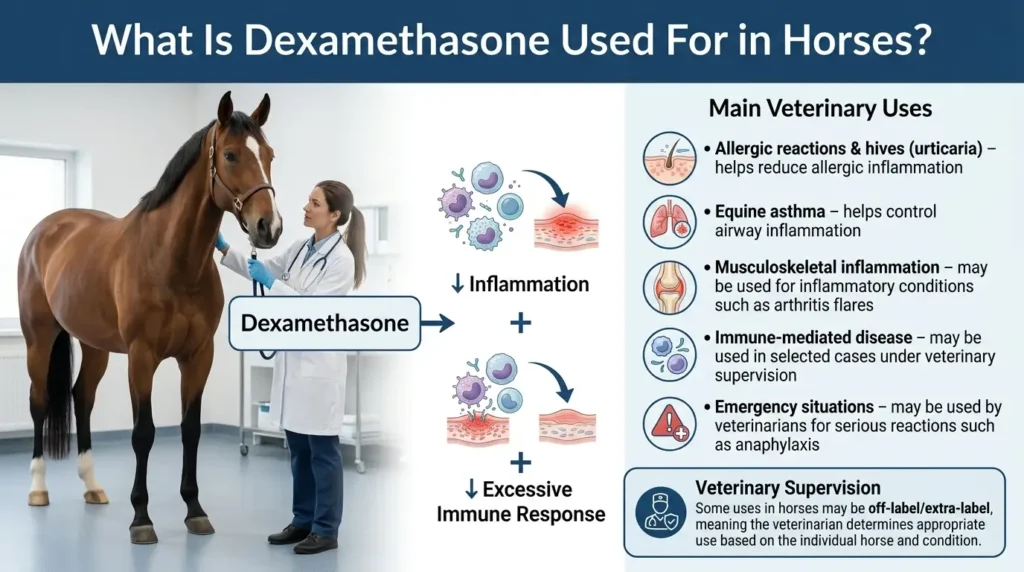
There are two general reasons why vets might prescribe dexamethasone: to reduce inflammation, and to help control an overactive immune response. In real-life, this is a broad spectrum of conditions:
- Often the most urgent / visible use is allergic reactions and hives (urticaria).
- Equine asthma (heaves / recurrent airway obstruction) and other inflammatory lung disease
- Inflammation in the musculoskeletal system including arthritis flares
- Immune-mediated diseases such as some types of anaemia, in which the horse’s immune system is targeting his own cells (off label use).
- Emergencies, such as anaphylactic reactions, shock or spinal cord trauma, when vets may administer higher doses for a short time
There is a specific pattern of use for anti-inflammatory that is FDA approved. Immunosuppressive use does not, it’s used off-label (also called extra-label), which is using a dose that’s not on the label, but vets use their clinical judgment and experience to decide on a dose.
Dexamethasone Dosage Chart for Horses
This is the section that most owners are coming here for, so let’s be specific as to where these numbers are coming from.
FDA-approved anti-inflammatory dose (oral)
| Day of treatment | Dose (per horse) | Frequency |
| Day 1 (loading dose) | 5–10 mg | Once |
| Day 2 onward (maintenance) | 5 mg | Once daily, as required |
Note that the dose is given per horse and not per pound or per kg. It is a design of the approved label and is not by accident. A 950 lb pony-type horse is dosed in the 5-10 mg range on the label, as is a 1700 lb draft horse — it is based on the individual horse’s response and condition, NOT a weight formula.
It’s not like other medications such as phenylbutazone where the dose depends on the weight, and it is the number one confusion factor when dosing a dexamethasone.
Off-label immunosuppressive dose
No immunosuppressive dose has been approved in horses. This is an off label use of doses up to 50 mg per horse/day. This is not an approved label use, so the dose, duration and tapering time will need to be prescribed by the veterinarian — this is a maximum dose and not a target dose.
A note on competition/therapeutic-use caps
There are other organisations such as USEF which have their own maximum dosage advice for horses that are in the competition, and this is different to the clinical dosages listed above. USEF guidelines limit intravenous dexamethasone to 0.5 mg per 100 lb of body weight over a 24-hour period (5 mg/1,000 lb horse) and are attached to strict rules regarding the timing of use in relation to competition.
This competition cap is intended for medication-control and not as a general veterinary dosage recommendation — it is different from the clinical anti-inflammatory dosage above.
How Dexamethasone Is Given
There are three types of dexamethasone for horses:
- Oral — the most common way to receive the treatment on a continuous basis at home by the owner. Well absorbed from gastrointestinal tract.
- Intramuscular (IM) – occasionally taught to owners for horses that cannot be relied upon to take an oral dose, but many vets still like to be responsible for giving the dose IM.
- Intravenous (IV) – almost always administered by a vet, usually for quicker effect in more critical situations.
Most horses will have some improvement within 1-2 hours of route; more obvious clinical improvement at 24 hours (acute disease, e.g., hives; chronic, e.g., respiratory disease).
Dexamethasone Risks & Side Effects in Horses
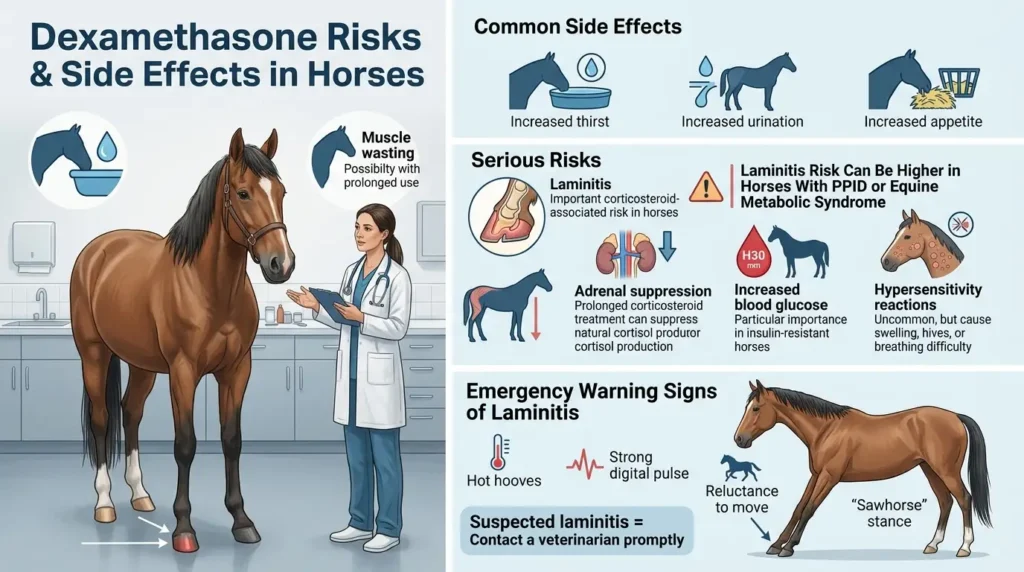
While short courses at label doses are not considered to be a problem, dexamethasone is not a low-risk drug, particularly if used repeatedly or at high dose.
Common, usually mild:
- Increased thirst (polydipsia)
- Increased urination (polyuria)
- Increased appetite
More serious, requiring veterinary attention:
- One of the main concerns of any corticosteroid in horses is that of laminitis. It can be serious and in extreme cases it can be career or life-threatening. The risk increases rapidly in horses with Cushing’s disease (PPID) or equine metabolic syndrome.
- Wasting of the muscles if used for an extended period
- Adrenal suppression — people who have taken steroids for a long period of time may find that their adrenal glands do not make as much cortisol (natural steroid) as they should, so it is best to reduce the dose slowly.
- High blood glucose which is a problem in already insulin resistant horses.
- Uncommon but possible allergic (hypersensitivity) reactions to the drug itself, which may include swelling, hives, or trouble breathing
If you see signs of heat in the hooves, a strong digital pulse, reluctance to move and a “sawhorse” stance (weight rocked back onto the hind legs, front legs stretched forward), call your vet right away as these are classic signs of early laminitis.
Drug Interactions & Precautions
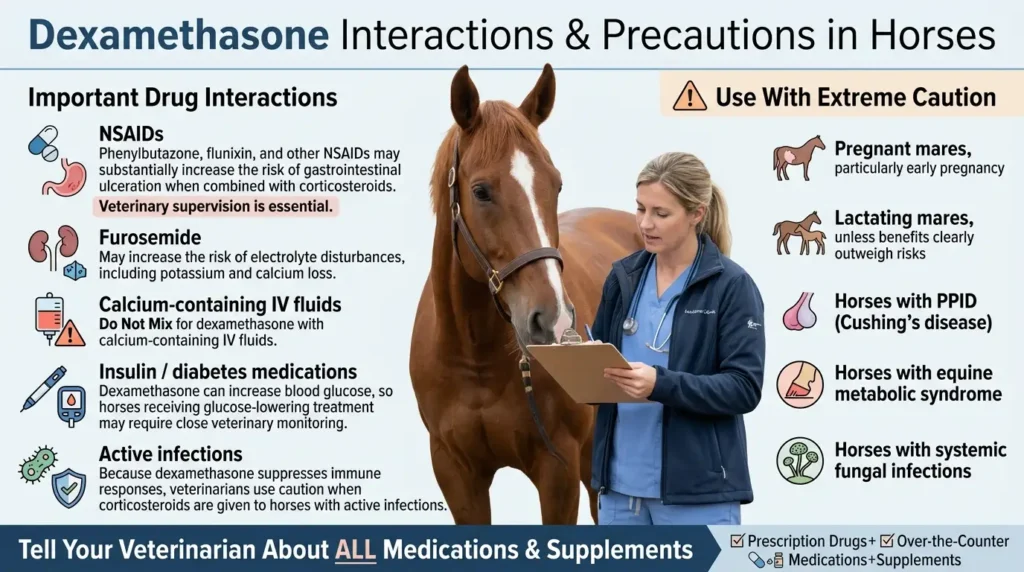
Dexamethasone is not used alone — when used with other medications the risk profile changed.
- The largest interaction to be aware of is NSAIDs (phenlybutazone, flunixin, etc.). There is a high risk of stomach ulcers when these two drug classes are used together because they both affect the stomach’s protective prostaglandins. This mixture should only occur under veterinary supervision.
- Furosemide (a diuretic): May enhance the loss of potassium and calcium with dexamethasone.
- Dexamethasone should NOT be mixed with calcium-containing IV fluids.
- Insulin or diabetes-related medication: Dexamethasone dose can cause an increase in blood glucose levels; close monitoring or insulin or diabetes medication dosage may be necessary for horses being treated with insulin or insulin-resistant diabetes.
- Antibiotic therapy for active infection: Dexamethasone has an inhibitory effect on immune response, so veterinarians are careful when administering it concurrently to horses undergoing antibiotic therapy for an active infection.
Avoid or use with extreme caution in:
- Pregnant mares particularly in early pregnancy (potential for developmental harm) and lactating mares, unless the benefit is clearly greater than the risk
- Horses with Cushing’s disease (PPID) or equine metabolic syndrome, because of the potential for an increased risk of laminitis.
- Horses with systemic fungal infection
List all medications (including supplements) that your horse is taking before you begin dexamethasone treatment.
Dexamethasone and Competition Rules
Dexamethasone horse medication is a controlled medication and is not classified as a free use drug except for legitimate therapeutic purposes, which is allowed in most equestrian disciplines. It is regulated by both FEI and USEF, with detection windows, caps on dose amounts, and rules governing timing of its administration in relation to competition (e.g. USEF’s rules allow no injection administration in the hours preceding competition and mandates documentation when administered near a competition (by means of a medication report form).
As per FEI guidance, a standard IV dose should be detectable for about 48 hours, but vets usually add an extra margin for error, as it can differ from horse to horse.
The take-home message: If your horse is a competitor, consult your vet and the governing body’s rulebook before giving dexamethasone close to a competition day. Rules may change regularly – do not use last year’s numbers.
Dexamethasone vs. Alternatives
| Option | Best for | Trade-offs |
| Dexamethasone | Fast, potent control of inflammation or immune response | Highest laminitis risk among commonly used options; needs careful tapering |
| Prednisolone | Similar conditions with a gentler risk profile | Less potent; may need higher/more frequent dosing for the same effect |
| NSAIDs (flunixin, meloxicam) | Pain and inflammation without steroid-related risks | Not immunosuppressive; own GI ulcer risk, especially long-term |
| Environmental management (dust-free bedding, soaked hay) | Supporting allergy/asthma horses alongside medication | Doesn’t replace medication for active flare-ups |
Myth vs. Fact
Myth: You don’t need to do that with dexamethasone, but you do with Bute.
Fact: FDA approved anti-inflammatory dose is a range per horse (5-10 mg) and not per pound.
Myth:“If my horse accidentally receives an extra dose, it will be seriously harmed.
Fact: One dose of too much dexamethasone is not likely to cause a lot of harm, but it’s not something that you should do all the time, and you should let your vet know about it.
Myth: “Dexamethasone is not allowed in competition.
Fact: This is not a banned medication, but one that has to be controlled and allowed for therapeutic purposes — with controls on the timing of its use around competition.
You May Also Like to Read:
- Bute Dosage For Horses: Calculator, Chart & Safe Guide
- Adequan Dosage For Horses: Calculator, Chart & Safe Guide
FAQs
What does dexamethasone do for horses?
It is used to help reduce inflammation and to suppress an overactive immune response – often used for allergic reaction, hives, equine asthma, arthritis flare-ups, and certain immune mediated disorders.
What is the dose of dexamethasone I can give my horse?
When using for anti-inflammatory effects, the manufacturer’s recommended dose is 5–10 mg/horse on day 1 followed by 5 mg/horse as needed to achieve desired effect. It does not involve weight-based dosing. Always check with your veterinarian for particular dosage and length of treatment.
Does a horse’s dosage depend on his weight for dexamethasone?
No — as with many equine medications, the FDA approved anti-inflammatory dose is not a mg/kg dose.
How quickly does Dex work on a horse?
Many will improve in 1-2 hours, and more obviously in 24 hours, or sooner depending upon the condition.
Does Dexamethasone dosage induce laminitis in horses?
Yes. Horses at the greatest risk of developing laminitis from dexamethasone or other cortisone drugs are those with Cushing’s disease (PPID) or equine metabolic syndrome.
What is the maximum length of time a horse can be on dexamethasone?
For acute problems short courses are common. If used for longer periods, the dose needs to be reduced over time and not stopped suddenly, otherwise the adrenals will be suppressed.
Is it OK to administer dexamethasone and bute (phenylbutazone) or other NSAIDs together?
Only under veterinary supervision. Dexamethasone and NSAIDs are generally contraindicated together as they will increase the risk of gastric ulcers.
Can Dexamethasone be used in pregnant mares?
In general, it should be avoided or used only with great caution, unless a veterinarian decides that the benefits are greater than the risk, especially earlier in pregnancy.
What are the side effects of dexamethasone in horses?
The more common and mild effects are increased thirst and urination. More severe complications include laminitis, muscle wasting (long term use) and adrenal suppression.
Can you use dexamethasone in horse racing?
It is a controlled medication as defined by organizations such as FEI and USEF — it can be legitimately used for therapeutic purposes, but there are restrictions on withdrawal times, competition days, etc.
What’s the difference between the anti-inflammatory and immunosuppressive dose?
The anti-inflammatory dose (5-10mg per horse) is lower and approved by the FDA. The immunosuppressive dose (up to 50mg/horse/day) is higher, and is used off-label, entirely at a vet’s discretion.
Can dexamethasone be given orally, or does it have to be injected?
It can be dosed via three routes — orally, intramuscularly or intravenously — and is well absorbed orally, so oral dosing is often used for continuous treatment at home.
What should I watch for while my horse is on dexamethasone treatment?
Monitor appetite, water consumption, urination, general demeanor, and hoof temperature/lameness. If your horse develops any new or worsening symptoms, call your vet immediately.
Is there an alternative to dexamethasone for horses?
Yes — prednisolone (a milder corticosteroid), NSAIDs for pain and inflammation management (such as flunixin or meloxicam), and environmental management for allergy-related issues may be options your veterinarian considers.
What should I do if I give my horse the wrong dose of dexamethasone?
It is not likely to be significantly harmful if administered in excess, but you should call your veterinarian and keep a close eye on your horse for laminitis or any allergic reaction, and avoid repeating the error.
Final Thoughts
Dexamethasone dosage for horses is a potent, truly valuable tool in equine medicine, but it is precisely because it is potent that dosage is important. The most important thing to keep in mind is that the FDA-approved anti-inflammatory dose is to be used per horse, not per pound, unlike other medications used and dosed by weight.
In addition to ensuring you calculate the dosage correctly, the actual work of being safe is done during the monitoring: keeping an eye out for early signs of laminitis, being mindful of combining dexamethasone with NSAIDs, and never changing the dosage of a medication without your veterinarian’s guidance. Sanity check a dose with the calculator above, but treat your vet’s directions for your horse as final.
This article is intended to provide information only and should not be a substitute for the professional advice of a veterinarian. Any decisions to treat your horse using a medicine should always be made in consultation with a licensed veterinarian.