Lutalyse Dosage for Horses: The Complete Chart, Calculator & Safety Guide
Lutalyse® Dosage Calculator for Horses
Recommended Administration
Clinical Note: Genital tract examination is recommended prior to and following treatment. Efficacy may vary seasonally. Mares in extended diestrus (including post-abortion, early fetal loss, or pseudopregnancy) typically respond with corpus luteum regression followed by return to estrus/ovulation.
Lutalyse (dinoprost tromethamine) approved by the FDA to be used in mares is a flat dose of 5 mg (0.1 mL of the 5 mg/mL solution) administered as a single subcutaneous injection. It isn’t adjusted by body weight. This tutorial is a step-by-step explanation of what this entails, how the injection is administered, what to anticipate and what safety measures every horse keeper and veterinary technologist must be aware of.
Lutalyse Dosage For Horses is a prescription medication and only a licensed veterinarian may decide whether this particular drug is suitable to a particular mare, at what dosage and at what frequency. Nothing here takes the place of that exam. This guide does is to translate the real manufacturer label in plain English to know what you should expect and what to ask.
What Is Lutalyse and Why Is It Used in Horses?
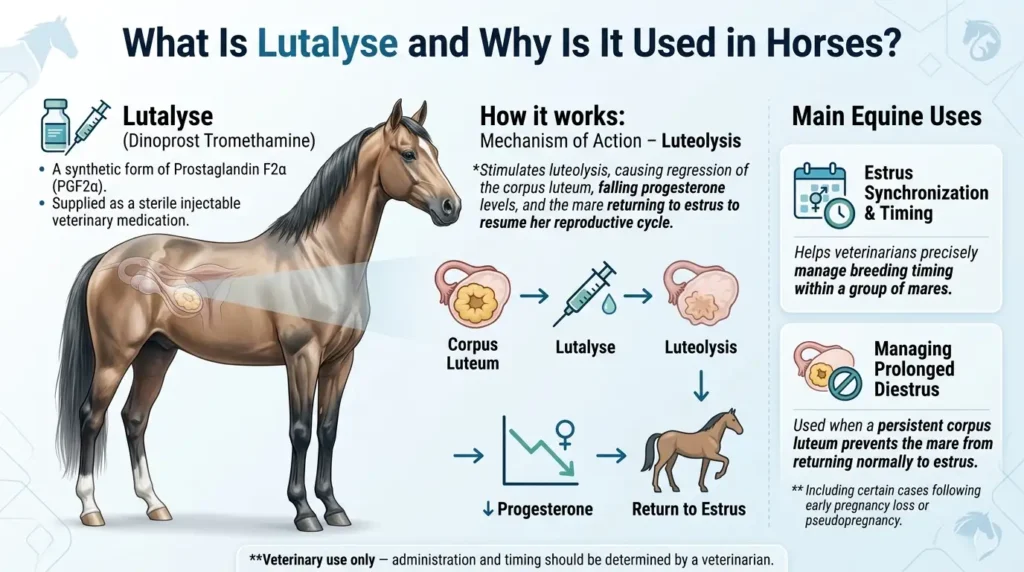
Dinoprost tromethamine is a brand name of a synthetic form of an endogenous hormone called prostaglandin F2 which is also known as Lutalyse. The dinoprost 5 mg with benzyl alcohol was dissolved in 1 ml of the solution, which is sterile injectable liquid produced by Zoetis.
Lutalyse in mares acts by stimulating the breakdown (luteolysis) of the corpus luteum – a temporary hormone-producing organ that develops on the ovary following ovulation. After the corpus luteum has regressed, the levels of the progesterone fall and the mare goes back into estrus (heat) and is able to cycle again to ovulation.
There are two equine scenarios when Vets use Lutalyse:
- Breeding a mare can be more precisely induced so that it can be timed.
- Treating prolonged diestrus – when a mare is not displaying normal heat cycles due to a persisting corpus luteum, such as following early pregnancy loss or after losing pregnancy due to pseudopregnancy.
It is also commonly employed in cattle (estrus synchronization, pyometra treatment, abortion, and induced calving) and in swine (inducing farrowing), although this guide is exclusive to horses.
Lutalyse Dosage for Horses (Official Label Dose)
Standard Dosage Chart
| Use in Horses | Dose | Route | Frequency |
| Induce estrus / treat extended diestrus in mares | 5 mg (1 mL of 5 mg/mL solution) | Subcutaneous (SC) injection only | Single dose, per veterinary protocol |
The whole labelled equine dosage is that one line. No tiered chart based on weight, breed or body condition appears on the manufacturer label, the approved dose in all mares is 1 mL, administered under the skin, without going deep into the muscle.
Is the Dose Based on Body Weight? (Myth vs. Fact)
A lot of confusion of horse-owners sneaks in here, as well as some incorrect content on blogs.
Myth: Lutalyse dosage is proportional to the body weight of the mare, a draft mare requires more than a pony.
Fact: The label approved by the FDA of the US, the label of Health Canada and the UK Veterinary Medicines Directorate SPC all indicate that the labeled equine dose is a fixed 5 mg (1 mL) independent of the size of the mare. This is in contrast to cattle dosing (25 mg/5 mL, also flat) and human or small-animal medicine, where weight-based dosing (mg/kg) is the standard.
In certain clinical situations, a veterinarian may determine an extra-label dosage change- but this is a professional judgment call made and overseen by the prescribing veterinarian, not one to be calculated at home using a formula.
Quick facts callout:
- Concentration: 5mg/ml dinoprost tromethamine.
- Normal dosage in the mares: 1 mL (5 mg)
- Routing: Subcutaneous only in horses.
- Vial sizes: 30 mL and 100 mL
- Prescription status: Rx only (federal law limits to licensed veterinarians)
How Lutalyse Is Given to Horses
Injection Site and Technique
Lutalyse for horses should be administered to horses intracutaneously, beneath the skin and not the muscle (this is important, as the cattle and swine dose is intramuscular). The injection is usually given in the neck or other part of loose skin by a vet or trained technician, with a clean, one-use needle and syringe and aseptic technique to minimize the chances of injection-site infection.
The veterinarian should investigate the reproductive tract of the mare before and after treatment. This is not all heat cycles that are formed in this manner are fertile and ovulation may happen without any observable heat production (silent estrus), thus palpation, ultrasound, or hormone testing around the injection is useful in confirming the response.
Who Should Give the Injection
Lutalyse is prescription medication that is administered by, or with the guidance of a licensed veterinarian. Even the seasoned horse owners who are at ease when it comes to administering standard vaccines should have a vet present when it comes to deciding to use Lutalyse as it directly interferes with the reproductive system and the probability of pregnancy loss is real in case the mare accidentally slips into early pregnancy.
What to Expect After the Injection (Timeline)
The responses in mares usually begin approximately 10-15 minutes of the subcutaneous injection and disappear independently in about 30-60 minutes without any intervention. An average window appearance is as follows:
- 0 -15 minutes: Sweating, slight increase in heart rate and breath rate, slight abdominal pain or restlessness may occur.
- 15-30 minutes: symptoms can be mild incoordination or the mare lying down a few moments; the majority of mares carry on eating during this time.
- 30-60 minutes: Signs generally get better without treatment.
- Follow-up days: Return to estrus is typically observed within the following 2-4 days of treatment.
- Approximately 7-10 days: ovulation usually ensues, but it depends on the season and the particular mare.
Since the effectiveness of Lutalyse for horse dosage depends on whether the mare is in her seasonally polyestrous cycle, the response may not be consistent across the year and can depend on when the mare is administered Lutalyse, a fact that may be worth considering when you are attempting to time a breeding.
Benefits of Lutalyse for Horses
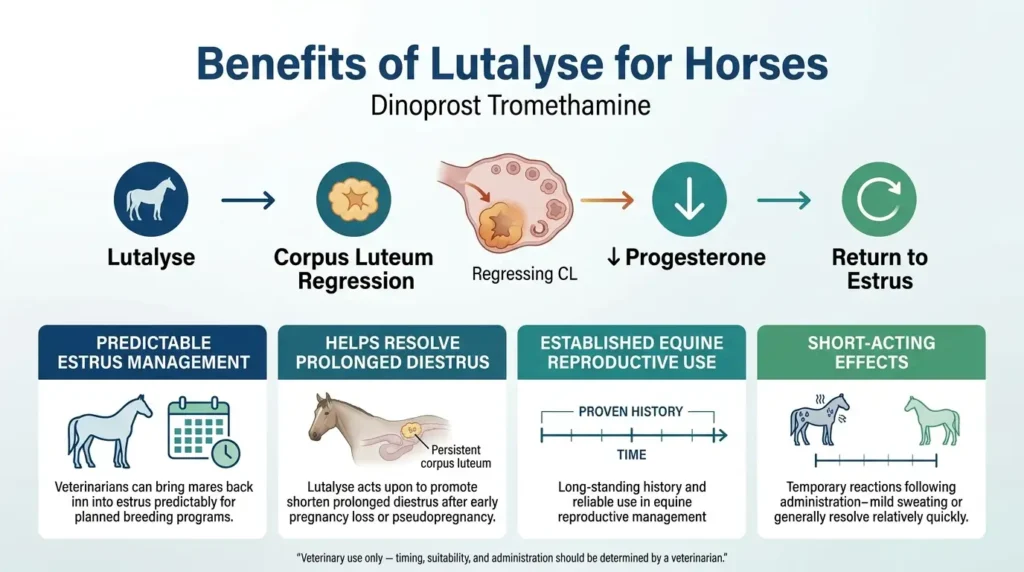
- Provides a predictable method of getting a mare into a fertile heat cycle through breeding programs.
- Helps shorten prolonged diestrus, such as with cases of early pregnancy loss or pseudopregnancy, in which the corpus luteum is prolonging beyond usual.
- Decades of use history – it was the first approved natural estrus-synchronization product in horses and is one of the oldest and most established products in equine reproduction.
- Short-acting: side effects on mares are temporary and disappear in an hour or so.
Side Effects of Lutalyse in Horses
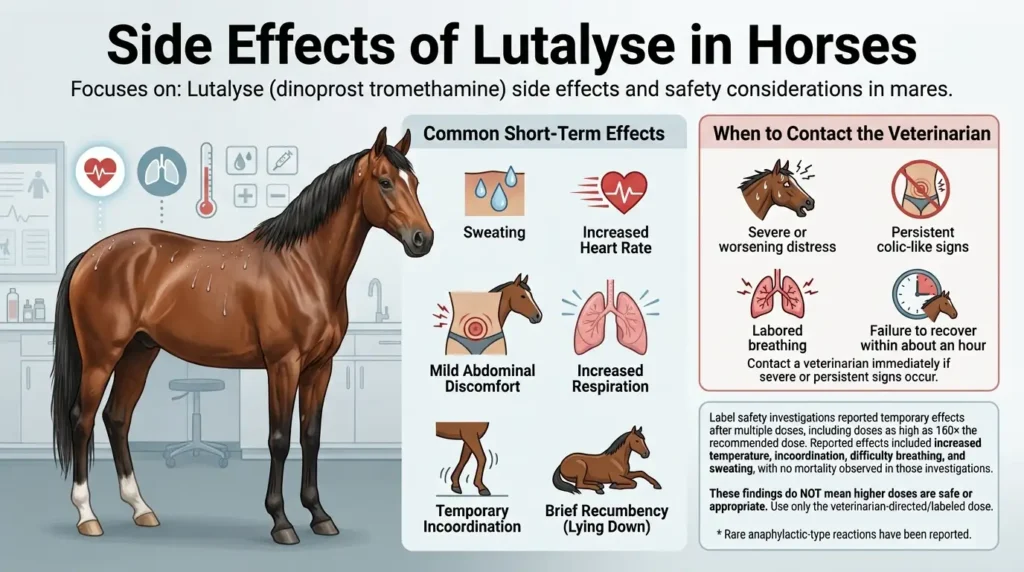
The majority of mares can withstand Lutalyse. The manufacturer labels its product and indicates safety data, which include:
- Sweating
- Increased heart rate
- Increased respiration rate
- Mild abdominal discomfort
- Transient incoordination
- Spending a short time lying down (recumbency).
- Very rarely, a type of anaphylactic-type reaction (reported but not confirmed in large-scale field use)
These are nearly short-term effects. When a mare becomes severely distressed, has colic-like symptoms that persist over more than an hour, appears to be labored in breathing or fails to recover in an hour, call your veterinarian immediately instead of waiting it out.
Overdose data: In label safety investigations, mares receiving multiple doses of the label dose (as many as 160 times the dose recommended) had temporary effects such as increased temperature, incoordination, difficulty breathing and sweating with no mortality.
This ought to be a comfortable safety margin at the experimented overdose levels, but this is no excuse to change the 1 mL labeled dose, it merely indicates how the drug was actually safety-tested.
Risks, Contraindications & Warnings
Risk of Abortion in Pregnant Mares
PGF2α is luteolytic – that is, that is precisely what it is that does the job and that is precisely why it is so perilous to administer to a pregnant mare who is not supposed to lose her pregnancy.
The label contains a warning that it can cause abortion in pregnant mares. Making sure the status of pregnancy is confirmed before treatment is an essential precaution which your vet will usually observe.
Other label contraindications and precautions:
- Never to be used intravenously in horses.
- Caution should be taken in the use of horses having a history of acute or chronic respiratory disease, as safety studies were not particularly performed in this population.
- Should not be fed to horses that are to be consumed by humans (food).
- There is seasonal variation in efficacy due to mares being seasonally polyestrous.
Drug Interactions
The most evident reported interaction in the veterinary labeling of Lutalyse is with non-steroidal anti-inflammatory drugs (NSAIDs). NSAIDs are able to suppress the production of prostaglandins, which is the same mechanism that Lutalyse relies on, and thus this group of medications should not be taken simultaneously.
In case your mare is taking an NSAID like phenylbutazone or flunixin, to treat pain or inflammation, inform your vet, and then get a Lutalyse injection to allow the timing to be moved.
| Drug/Class | Interaction Concern |
| NSAIDs (e.g., phenylbutazone, flunixin) | May inhibit prostaglandin synthesis, working against Lutalyse’s intended effect — avoid concurrent use |
| Other reproductive hormones (e.g., GnRH agonists) | Sometimes used together in structured protocols, but only under veterinary direction and specific labeling |
Lutalyse vs. Other Options for Mares
| Feature | Lutalyse (dinoprost) | Cloprostenol-based products (e.g., Estrumate) |
| Active compound | Natural PGF2α (dinoprost tromethamine) | Synthetic PGF2α analog (cloprostenol) |
| Equine route | Subcutaneous | Product-specific; check label |
| Equine label dose | Flat 1 mL (5 mg) | Varies by product — always check the specific label |
| Onset of side effects | Within ~10–15 minutes | Similar prostaglandin-class effects reported |
| Longest track record in horses | Yes — first approved natural product of its kind for equine use | Varies by brand |
Your veterinarian will choose between prostaglandin products based on your mare’s history, the goal of treatment, and label indications — this table is for general orientation, not a substitute for that decision.
Storage and Handling
Depending on the history of your mare, the desired effect of treatment and labeling cues, your veterinarian will select between some products of the prostaglandin family – the table is only a guide, not a replacement of that choice.
Storage and Handling
- Keep at controlled room temperature, which is approximately 68–77°F (20–25°C), and avoid freezing.
- After initial puncture, use the vial during the specified time frame by the manufacturer (check the label of your particular product, as this may also be different per market, usually about 12 weeks to the US product)
- Do not pierce a vial stopper over 20 times; due to this, the 100 mL bottle is normally used by cattle, the 30 mL bottle is used by mares.
- Wipe and disinfect the vial stopper each time a needle is put in and use a new sterile needle each time.
- Smooth flakes of particulate matter resembling fine silica may be present in stored solution – according to the manufacturer, this has no effect on potency or on sterility but always check the vial and talk with your vet or pharmacist in case of doubt.
Safe Use Checklist for Horse Owners
You May Also Like to Read:
- Fenbendazole Dosage For Horses: Calculator, Chart & Safe Guide
- Ventipulmin Dosage For Horses: Calculator, Chart & Safe Guide
FAQs
What is Lutalyse used for in horses?
Lutalyse dose is administered to induce estrus in mares and is used to shorten prolonged diestrus, where a persistent corpus luteum is blocking normal cycling in a mare – even following loss of pregnancy.
How much Lutalyse do you give a horse
Mares labeled dose is a fixed 5mg, which is 1 ml of the 5mg/ml solution, administered as a single subcutaneous injection – it is not weight adjusted.
Does Lutalyse have a body weight dosage in horses?
No. In contrast to most drugs, the approved equine label has a single dose (1 mL) of any size horse with a label, which is the same dose.
What is the route of administration of Lutalyse in a horse?
It is administered subcutaneously (under the skin) usually by a veterinarian or a person under veterinary supervision, by sterile technique.
What is the duration of action of Lutalyse in the mare?
The first physical responses can be observed in approximately 10-15 minutes and are resolved in an hour. Estrus recovery is normally observed in 2-4 days with ovulation usually occurring after a week to 10 days post treatment.
Which are the side effects of Lutalyse on horses?
Sweating, increased heart rate, increased breathing rate, occasional stomach ache, temporary clumsiness, and occasional lying down. They are normally short-lived and end in an hour.
What can I do in case a horse is over-dosed with Lutalyse?
In label safety trials, overdose of the mares to extremely high levels did not cause any deaths, but caused transient effects such as high temperature, incoordination, and difficulty breathing, which had not been previously seen in any other animal, but this should still cause an immediate call to your veterinarian.
Is it possible to administer Lutalyse intramuscularly to horses?
No. The equine label only specifies subcutaneous injection, not intramuscular which is the labeled route in cattle and swine but not in horses.
Does Lutalyse interact with other medications
The most evident interaction is with NSAIDs that may suppress the production of prostaglandins and act opposite to the desired effect of the drug. Inform your vet about the existing drugs prior to treatment.
Is it possible to purchase Lutalyse without a prescription?
No. Lutalyse is an Rx-only or prescription (RX) veterinary medication in the US, limited by federal law to be used or ordered by a licensed veterinarian.
Should I have a vet to administer the injection or can I do it myself?
Since Lutalyse is a prescription drug, concerns accurate dosing, carries a factual risk of an unknown pregnancy and is proven to be a hazard to some human handlers, Lutalyse should be administered by, or through the direct supervision of, a licensed veterinarian.
Final Thoughts
Lutalyse for horse is a long time proven science in equine reproductive management and its science is well established. Well established does not, however, mean do-it-yourself. The equine dose is straightforward, just 1 mL, subcutaneously, but all the information surrounding that one figure (establishing the pregnancy, interpreting the reaction of the mare, safe administration of the drug) rests on the expertise of the veterinarian and skill.
In case you intend to incorporate Lutalyse into a breeding program, a calculator is not the best next step to follow; instead, you should discuss the breeding history and current medication of your mare with your veterinarian and the breeding schedule. Always carry this guide; it will enable you to ask better questions and interpret answers.
The article is an educational article and is not used to substitute veterinary diagnosis, prescribing or supervision. Always use per the instructions of your veterinarian and the label of the product of Lutalyse you are using.