Benadryl Dosage For Horses: Calculator, Chart & Safe Dosing Guide
Benadryl Dosage Calculator for Horses
Estimate a Benadryl (diphenhydramine) dose based on your horse’s body weight.
Estimated Dose
Per dose: –
Total per day (): –
This is a general estimate based on a guideline of 0.5–1 mg per pound of body weight. Always confirm the exact dose and suitability with your veterinarian before administering.
Just like humans, horses can suffer from allergies, causing itchy, swollen skin and misery for the horse, and Benadryl Dosage For Horses is often the first thing that is rushed to the horse's stall. But horses are not just large dogs - their size and sensitivity, as well as the fact that the drug is being used “off label” in horses makes getting the dose right not an insignificant issue.
This guide explains exactly how dose of Benadryl to horses works, provides a complimentary calculator and weight chart, and has safety information that every horse owner should know before accessing the medicine cabinet.
This article should be used for educational purposes only and should not replace veterinary advice. Check with your veterinarian before administering any medication to your horse.
Key Takeaways
- Benadryl or diphenhydramine is an antihistamine that has been used off label in horses for treating hives, insect bite reactions and other allergies.
- The dosing rate is 0.5mg to 1mg per kg of bodyweight, 2-3 times per day, but should be verified by your vet for your horse.
- Benadryl is not a licensed drug for use in horses. All uses are "extra-label," which is legal only when under veterinary supervision.
- Sedation is the most common side effect. In a few rare cases, horses behave the other way round and get agitated or hyperactive.
- Under FEI competition rules Benadryl is a controlled medication and should be eliminated from your horse's system with an adequate withdrawal period prior to a show.
What is Benadryl for Horses?
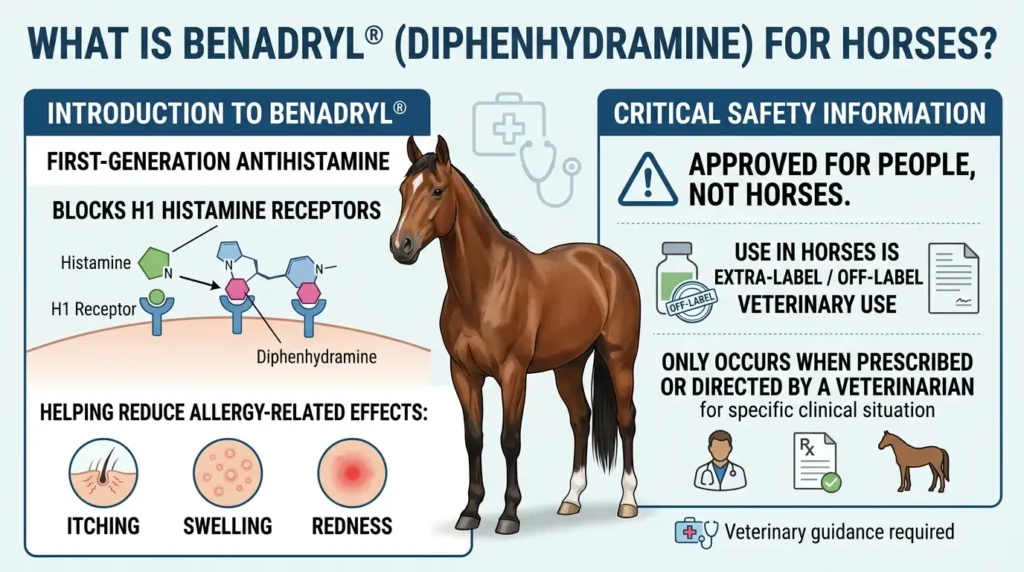
Benadryl® is the brand name of diphenhydramine, a first-generation antihistamine. It does this by blocking the H1 receptor in the body, which is the receptor that histamine binds to stimulate itching, swelling and redness in an allergic reaction.
Diphenhydramine is approved for use in people, not horses. If a vet has prescribed this for use on your horse, it is “extra-label” or “off label” use—a normal and legal part of veterinary medicine when there is no approved equine version of the drug and a vet prescribes it in the specific clinical situation he or she is facing.
How Diphenhydramine Works in the Horse Body
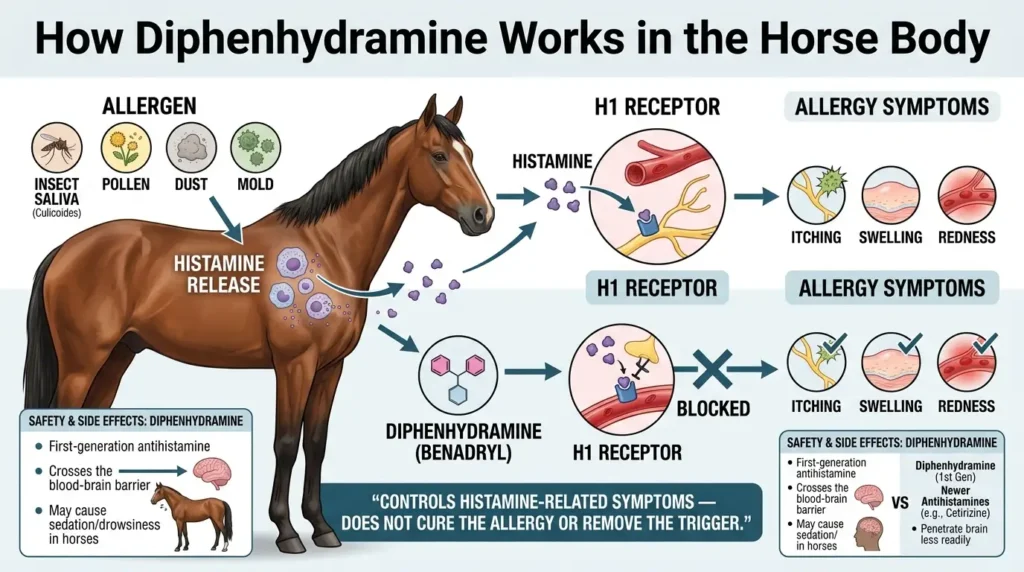
Histamine is released by a horse's immune system when it encounters an allergen (insect saliva, pollen, dust, mold). The swelling, redness and itch that you see is due to histamine binding to H1 receptors on blood vessels and nerve endings.
Diphenhydramine binds to those receptors and prevents histamine from binding, thereby short-circuiting the reaction. It does not cure the allergy or eliminate the trigger, it merely suppresses the symptoms of the allergy due to the histamine while it is present in the body.
Diphenhydramine is a first generation antihistamine that readily crosses the blood brain barrier. That's the same thing that makes Benadryl a popular human sleep aid and a predictable effect in horses is sedation. Less drowsiness with newer antihistamines, such as Cetirizine (Zyrtec), that do not penetrate the brain as easily.
Is Benadryl Safe for Horses?
Yes — in general, when dosed properly and under veterinary supervision, Benadryl for horses dosage is fairly safe in horses. It is a more readily available OTC antihistamine in equine practice – for just this reason.
However, "over-the-counter" does not imply "use it as you see fit. There are a couple of reasons why veterinary supervision is important:
- There is no horse formulation so extrapolating from human dosing and clinical experience is used for every dose.
- The dose for a 1000 lb horse is quite a bit more than a human dose, and so correct weight-based dosing is very important.
- Horses with other health issues, pregnant or lactating mares, and horses taking other drugs might require a completely different approach — or none at all — when it comes to Benadryl.
Your veterinarian can determine if what you are seeing is right for your horse, what form of Benadryl to use and if it's been used before, the correct dosage.
What Is Benadryl Used For in Horses?
Diphenhydramine for horses is the most commonly employed drug to control the symptoms of diseases in which histamine is a significant contributor to the reactions. It is most beneficial in the following clear-cut situations:
Hives (Urticaria)
One of the most frequent equine conditions that vets reach for an antihistamine is hives – raised fluid-filled bumps on the skin. Hives are caused by the release of histamine from cells, called mast cells, so Benadryl is most effective on these cells.
Insect Bite Hypersensitivity (Sweet Itch)
In response to biting insects, particularly to Culicoides midges, intense itching results along the mane, tail and belly. While you're taking care of the insect issue through fly control, Benadryl medicine can help break the itch-scratch cycle.
Seasonal and Environmental Allergies
Horses can be affected by the same type of histamine mediated skin and respiratory irritation resulting from exposure to pollen, dust and mold as humans. For mild seasonal flares, Benadryl might be helpful.
General Itching and Skin Irritation
If you're wondering why your dog itches in the absence of a clear cause, Benadryl may give her a bit of relief until you and your vet figure it out.
Important Limitation: horses do not always have allergic and inflammatory reactions that are primarily histamine mediated. It is not a cure on its own; in more severe cases (in which the skin disease is chronic, or equine asthma, or multi-mediator inflammation is occurring) Benadryl is not sufficient, and should therefore be used in conjunction with other treatments (such as corten or environmental changes or immune therapy).
Benadryl Dosage for Horses
The standard guideline vets and equine resources reference for Benadryl Dosage for horses is:
0.5 to 1 mg of diphenhydramine per pound of body weight, given 2 to 3 times per day.
It's a range because the correct dose is dependent on the weight of your horse, severity of the reaction, formulation used and clinical judgment of your veterinarian. Before administering Benadryl, consult your veterinarian about the specific dose and dosage for your pet; this is a general guideline only and should not replace veterinary advice.
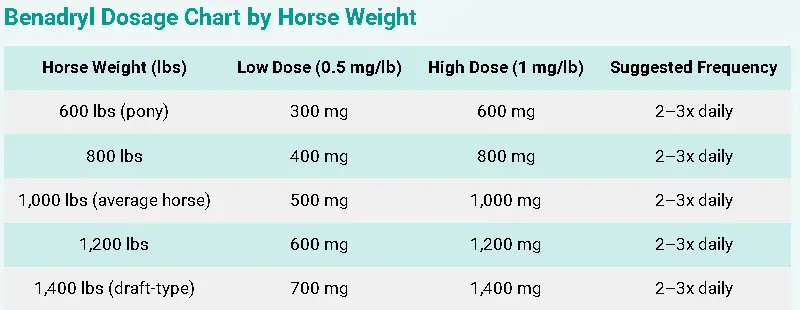
Benadryl Dosage Chart for Horses By Weight
| Horse Weight (lbs) | Low Dose (0.5 mg/lb) | High Dose (1 mg/lb) | Suggested Frequency |
| 600 lbs (pony) | 300 mg | 600 mg | 2–3x daily |
| 800 lbs | 400 mg | 800 mg | 2–3x daily |
| 1,000 lbs (average horse) | 500 mg | 1,000 mg | 2–3x daily |
| 1,200 lbs | 600 mg | 1,200 mg | 2–3x daily |
| 1,400 lbs (draft-type) | 700 mg | 1,400 mg | 2–3x daily |
These figures are based directly on the guideline of 0.5–1 mg/lb, given just as an example. Your vet might prescribe a different dosage depending on the health condition of your horse.
How to Administer Benadryl to a Horse
It's often a matter of which type of Benadryl you are using, and whether your horse is finicky about taking his meds.
- Mixing with feed. Crush tablets or capsules and mix in feed. Simple but some horses will catch on and won't eat it.
- Using a syringe. If it is a liquid Benadryl, fill the syringe with the amount of Benadryl and position the syringe toward the back of the mouth and slowly release the liquid. This is the most effective method to ensure full dosing.
- Hiding it in a treat. Horses that do not tolerate medicated feeds can have crushed tablets hidden in an apple or carrot.
- Top-dressing. Cover feed with crushed tablets or mix a small amount of molasses or applesauce with the crushed tablets to make it easier to mask the taste and ensure a full dose.
Either way, monitor your horse to ensure that they actually consumed their dose as it is difficult to determine how much medication your horse has eaten if they do not finish.
How Long Does Benadryl Take to Work in Horses?
Oral Benadryl typically works in about 30 minutes to an hour, but this varies from horse to horse, and may depend on whether it was fed with feed or not. The effects last several hours, which is one reason why it's dosed two to three times per day, instead of once.
Your vet can give you advice on whether this is a normal course of events or a sign of an ongoing problem that needs additional treatment, if this is what you are seeing with Benadryl for an acute response such as a sudden outbreak of hives.
Side Effects of Benadryl in Horses
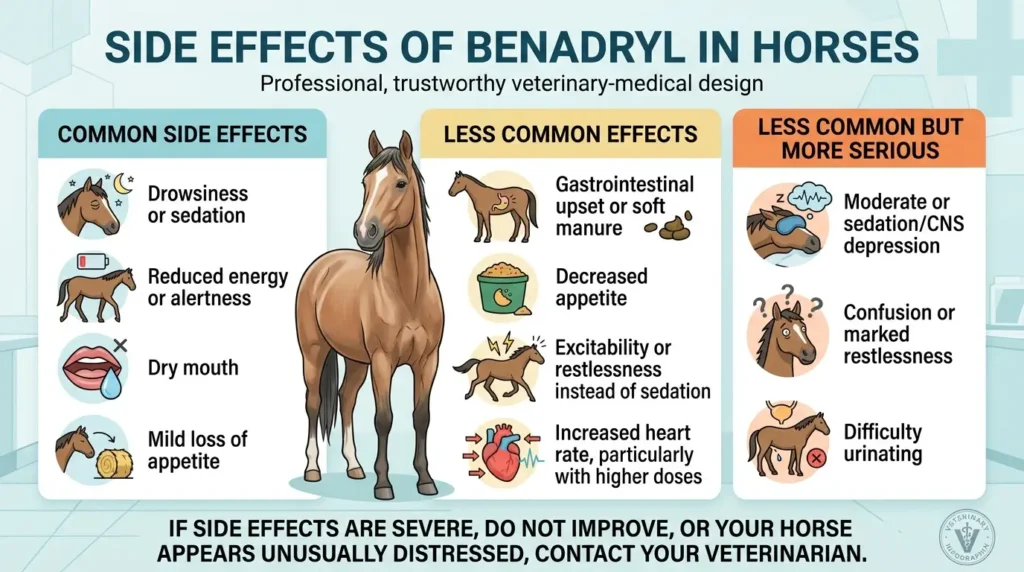
Although generally well tolerated, as Benadryl horse medication affects both the peripheral body tissue and central nervous system, side effects are predictable and occur in most people.
Common side effects:
- Drowsiness or sedation
- Less energy or alertness
- Dry mouth
- Loss of appetite (mild).
Less common effects:
- Gastrointestinal upset (soft manure, decreased appetite)
- Excitability or restlessness (paradoxical reactions) rather than sedation.
- Effects on the heart: An increase in heart rate, especially at higher doses
Less common but more serious reactions:
- Moderate or severe CNS depression or sedation
- Confusion or restlessness.
- Problem with urination (due to the anti-cholinergic side effects of Benadryl)
The side effects are usually minor and self-correcting as the drug works its way out of the horse's system. If side effects appear to be severe, are not improving or your horse seems unusually distressed, contact your vet.
Signs of Benadryl Overdose in Horses
So far, there isn't much documentation on overdose in horses, but given how the drug works, an overdose should exacerbate the normal effects of the drug. Watch for:
- Excessive sleepiness or dullness (more than normal sedation)
- Restlessness/agitation rather than sedation.
- Fast breathing or heart rate.
- Dry mouth, or trouble swallowing
- Muscle tremors
- Losing coordination (ataxia)
- Seizures (in severe cases)
If you find that you are suspecting an overdose, you should call your veterinarian right away. Do not wait to see if symptoms get better by themselves - an overdose can get worse very rapidly and your veterinarian will need to know exactly how much, and when.
Benadryl Drug Interactions in Horses
It's possible that diphenhydramine will interfere with other drugs your horse might be receiving. Before putting your horse on Benadryl, tell your veterinarian about all the drugs and supplements your horse is taking. Significant forms of interaction are:
| Interacting Drug Class | Example | Concern |
| CNS depressants | Sedatives, tranquilizers, anesthetics | Additive sedation, risk of excessive drowsiness or respiratory depression |
| Anticholinergic drugs | Atropine | Intensified dry mouth, urinary retention, GI slowing |
| MAO inhibitors | — | Risk of dangerous blood pressure changes or heightened sedation |
| Opioids / other pain relievers | — | Increased sedation, potential respiratory effects |
Just because an interaction isn't listed here doesn't mean it can't happen — this is not an exhaustive list. Your veterinarian is your best option for verifying Benadryl with your horse's medication list.
When NOT to Give a Horse Benadryl (Contraindications & Precautions)
Do not administer Benadryl dosage for horses, unless under direct veterinary advice, in these situations:
- History of an allergic reaction to diphenhydramine or any component of the formulation.
- Mares that are in foal or lactating – safety has not been well documented in these horses.
- Horses with heart problems, glaucoma, bladder problems or gastrointestinal disease — Benadryl's anticholinergic activity may exacerbate these conditions.
- The interaction risk is too high to even consider for horses already on other sedatives, antihistamines or anticholinergic medications.
- Long term use without supervision; Benadryl is only for short term symptom management. Long-term use without veterinary supervision can help to obscure another issue that requires a different treatment.
Benadryl vs. Other Antihistamines for Horses
| Medication | Sedation Level | Typical Use Case | Notes |
| Diphenhydramine (Benadryl) | High | Hives, acute allergic itching, insect bite reactions | First-generation; crosses into the brain easily |
| Cetirizine (Zyrtec) | Low | Ongoing allergy management, performance horses | Second-generation; less sedating |
| Hydroxyzine | Moderate–High | Skin allergies, hives, chronic itching | Often considered more consistently effective by some vets |
| Corticosteroids (e.g., dexamethasone, prednisolone) | None (not sedating) | More severe or complex allergic/inflammatory reactions | Stronger anti-inflammatory effect but carries its own risks, including laminitis, with long-term use |
Your vet might want to use a less sedating medication than Benadryl, such as cetirizine, to treat your horse if he or she needs further management on a day to day basis, particularly if he or she is in training or competition.
Benadryl and Competition Rules
As a competitor, this is important. According to FEI regulations, diphenhydramine is considered a controlled medication that is allowed to be used at home but not during competition unless it is stated. This classification is because antihistamines may affect a horse's clinical appearance which may cover up the problem at a competition.
Detection time is not the same as the withdrawal time. Detection time is the time in which the drug can actually be detected in the horse's body; withdrawal time is the time period that is set by your veterinarian for a safe margin before the horse is able to compete.
Always check your organisation's regulations and seek withdrawal advice from your vet way in advance of a show.
Myth vs. Fact
| Myth | Fact |
| "Benadryl cures allergies." | It only blocks the histamine response — it doesn't treat the underlying cause or prevent future reactions. |
| "More Benadryl works faster and better." | Overdosing doesn't speed up relief — it increases the risk of side effects like excessive sedation or a paradoxical excited reaction. |
| "It's over-the-counter, so any amount is fine." | Equine dosing is weight-based and different from human dosing. It should be confirmed with a vet, especially the first time. |
| "Benadryl is fine to use during competition." | It's a controlled substance under FEI rules and requires an appropriate withdrawal period before showing. |
You May Also Like to Read:
- Uniprim Dosage For Horses: Calculator, Chart & Safe Guide
- Sucralfate Dosage For Horses: Calculator, Chart & Safe Guide
FAQs
Are Benadryl for horses effective?
Yes. Diphenhydramine can be used in horses off label for allergic reactions such as hives and insect bite hypersensitivity, but should be administered under veterinary supervision.
How much Benadryl can you give a horse?
The recommended dose is 0.5 - 1 mg per pound of body weight, and it's advised to be administered twice or thrice every day. Be sure to check the dosage with your vet before use.
Can I give Benadryl to my horse?
It is usually well-tolerated when used under veterinary supervision, but horses are often sedated and not suitable for all horses, especially pregnant mares or those with some existing conditions.
What can Benadryl be used for in horses?
It's primarily used to control hives, reactions to insect bites (such as sweet itch), and seasonal allergies, as well as general histamine-induced itching.
What is the dosage of Benadryl for a horse?
Yes. A syringe can be used to administer liquid diphenhydramine, and this is often the most effective method to ensure that the entire dose is administered.
How long does Benadryl take to work in a horse?
Generally starts to take effect in about 30 minutes to an hour, and lasts for several hours, so it's repeated several times a day.
What is Benadryl's side effect in horses?
Side effects include drowsiness, decreased energy, and dry mouth. Occasionally, horses might experience GI upset, an increased heart rate, or even excitability rather than sedation.
Is it bad for a horse to take Benadryl?
It is safe at the proper dosage under veterinary supervision. Too much of the drug can have serious side effects such as shaking, loss of co-ordination, or even convulsions in severe cases.
Which is better for horses Benadryl or Zyrtec (cetirizine)?
Whether or not depends on the case. Cetirizine is less sedative than Benadryl and is often the drug of choice for chronic treatment, particularly in performance horses.
Is it OK to administer Benadryl dose to my horse without veterinary advice?
It's not recommended, especially for a first dose. Dosing, contraindications, and interactions differ from humans and veterinary advice is important.
Does Benadryl have an effect on a horse's sleep?
Yes - the most common and anticipated side effect is sedation, as diphenhydramine is more likely to cross into the brain than are newer antihistamines.
Is it possible to mix Benadryl with other drugs?
Sometime, but not always safely. It may interact with sedatives, anticholinergic drugs, MAO inhibitors and some pain medications. Your veterinarian should always be the first to know about all of your horse's medications.
Is Benadryl allowed in horse competitions?
No - not without proper declaration. It is considered a controlled medication under FEI regulations, and has a necessary withdrawal time before competition.
If a horse has an allergy to Benadryl, what happens?
This is uncommon, however, a hypersensitivity reaction to diphenhydramine would make the drug contraindicated altogether. Be on the lookout for signs of deterioration, and get in touch with your veterinarian.
Is Benadryl safe for pregnant mares?
Safety of pregnant and nursing mares is not well established so in general, this should not be done unless a vet considers the benefits to outweigh the risks.
Final Thoughts
While the word "over the counter" may imply "no oversight needed," Benadryl Dosage For Horses can be a helpful treatment for horses with hives and reactions to bug bites and mild seasonal allergies.
The dose that is safe and effective for a 1,000 lb horse is very different to the dose that is safe and effective for a human, sedation is a given, and there are true situations such as pregnancy, health issues, other medications, competition, etc., where it is simply the wrong choice without veterinary input first.
The calculator and chart on this page are a tool to start the discussion with your veterinarian, but not to replace that discussion! If in any doubt, it is always best to call your vet before giving the first dose.