Penicillin G Dosage For Horses: Calculator, Chart (All Types Explained)
Penicillin G Dosage For Horses Calculator
Estimate penicillin & related antibiotic doses for equine patients by body weight.
For veterinary reference only. Always confirm dosing with a licensed equine veterinarian before administration.
Your vet says “penicillin” and recites a number over the phone, you then stand in the barn aisle holding a bottle and a calculator, trying to remember if the number was IU per pound or IU per kilogram. It is this margin between what you were told and what you feel comfortable doing (in terms of drawing up a syringe) that is where most of the penicillin Dosage For Horses dosing errors begin, and it’s not usually a math issue. It’s a question of what kind of penicillin G you are holding.
There is no single number for the dosage of penicillin G for horses. This varies depending on the type of penicillin in your hand: procaine, potassium, sodium or benzathine penicillin G, as these are all absorbed into the horse’s body at different rates. A dose that is proper for slow-release procaine would be too little for fast-clearing IV procaine, or completely wrong. Make sure the formula is correct to begin with, then completing the rest of the math is simple.
This guide does just that: it explains what penicillin G for horses dosage is and how it works; it provides a calculator and dosage chart by formulation; it shows you how to administer it step-by-step; and it outlines side effects, drug interactions, and mistakes to be aware of before injecting. None of it is meant to take the place of your veterinarian’s advice to your horse — it’s here so you can know you are checking twice.
Key Takeaways
- Dosage is dependent on the formulation employed (sodium/potassium, procaine, or benzathine) due to their different rates of absorption and elimination in the horse.
- Dosage is typically 6,000 – 44,000 IU/kg once or twice daily, intramuscularly, or 22,000 – 44,000 IU/kg every 6 hours intravenously, sodium or potassium penicillin G, slowly.
- One of the most frequent areas of confusion is the labeled dose of many procaine penicillin G products (3000 units/lb or 1 mL/100 lb) which is lower than what veterinarians may use clinically.
- Do not inject procaine penicillin G intravenously — it may produce sudden excitement, incoordination, seizure-like activity and death if accidentally injected intravenously.
- This article and the associated calculator are not intended to provide advice or to be used to make investment decisions. Consult a licensed veterinarian to verify the correct dose, dosage form and treatment duration for your horse.
What Is Penicillin G?
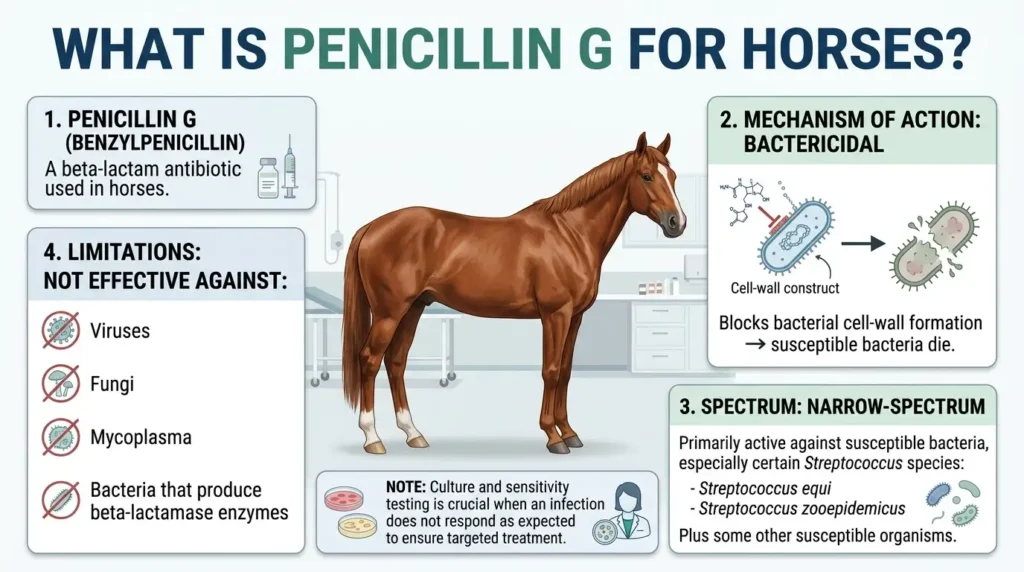
Penicillin G (also known as benzylpenicillin) is one of the oldest antibiotics remaining in use today in horses. It is a beta lactam antibiotic which means it works by killing bacteria, not just slowing their growth (bactericidal, not growth inhibiting). Once that wall can’t be maintained, susceptible bacteria rupture and die.
A narrow spectrum drug. Effective against many gram-positive organisms, most notably Streptococcus equi (causative of strangles) and Streptococcus zooepidemicus, as well as several gram-negative cocci, spirochetes and clostridial organisms. It is not effective against Mycoplasma, bacteria producing beta lactamase enzymes, viruses or fungi and that is why culture and sensitivity testing is important in infections that do not respond as expected.
How Penicillin G Works in Horses
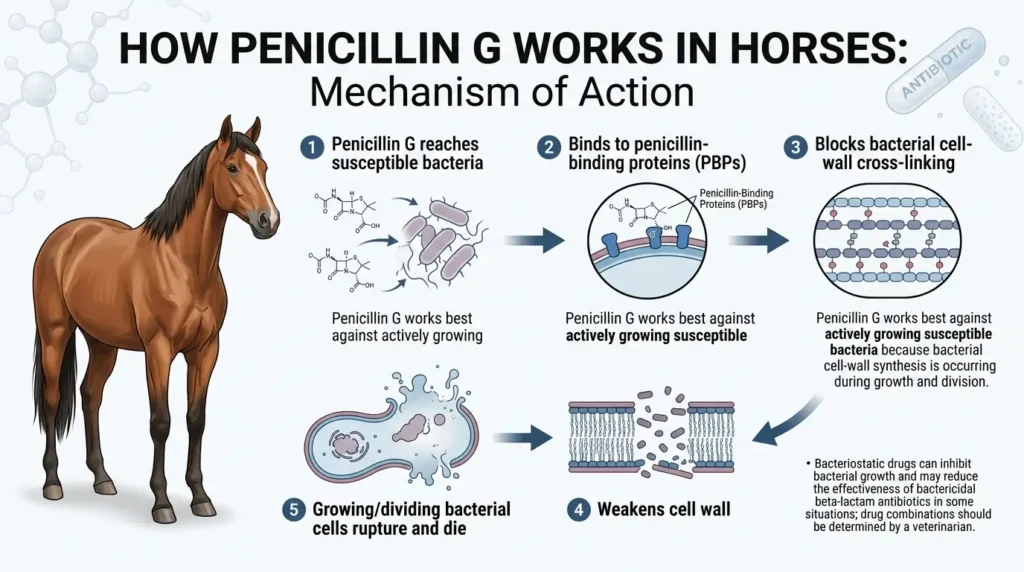
Penicillin G attaches to penicillin-binding proteins found on the bacteria’s cell wall. This prevents cross linking which is the source of the strength of the wall. The wall then fails and the cell bursts as the bacteria attempt to grow and divide.
This is due to the fact that this mechanism requires active bacterial growth, so that penicillin G will be less effective when used in combination with a bacteriostatic drug (one that just slows bacterial growth) — more to be discussed below in the drug interactions section.
The Four Forms of Penicillin G Used in Horses
| Formulation | Absorption Speed | Typical Route | Clinical Role |
| Sodium penicillin G | Fast | IV or IM | Rapid, high blood levels for serious/systemic infections; short-acting, needs frequent redosing |
| Potassium penicillin G | Fast | IV | Same profile as sodium form; must be given slowly and with care in horses with electrolyte sensitivities |
| Procaine penicillin G | Slow, sustained | IM | The most commonly used equine formulation; longer intervals between doses |
Penicillin G Dosage Chart for Horses
| Formulation | Dose | Route | Frequency | Note |
| Sodium penicillin G | 10,000–20,000 U/kg or 20,000–25,000 U/kg | IM | q 6–8 h | Doses up to 44,000 U/kg have been used in refractory cases |
| Potassium penicillin G | 20,000–25,000 U/kg | IV | q 6 h | Doses of up to 44,000 U/kg have been administered in refractory cases. Injectable potassium penicillin G contains a significant amount of potassium (1.7 mEq/million U) and should therefore be used cautiously in horses with HYPP or other susceptible patients. |
| Procaine penicillin G | 22,000–44,000 U/kg | IM | q 12–24 h | |
| Ampicillin sodium | 15–40 mg/kg | IM or IV | q 6 h | 20–40 mg/kg IV, q 6 h for foals |
| Imipenem cilastatin sodium | 10–25 mg/kg | IV | q 6 h | Reserved class, not for empiric treatment |
Here is a simple worked example for a 1000 lb (or about 454kg) horse receiving the clinical procaine dosage of 22,000IU/kg IM q12h with a standard 300,000IU/mL product, which works out to be approximately 33mL per injection twice a day. At the label Penicillin G Dosage For Horses is (3,000 IU/lb, once daily) this same horse would be getting approximately 10 mL, one a day.
It’s not a rounding difference, it’s two completely different protocols, which is why it’s more important to have the formulation and dosing schedule your vet tells you than it is to have the dose per kilogram.
Why the Numbers Differ Between Formulations
This is the most frequent error in penicillin dosage For Horses and therefore should be emphasized. Many procaine penicillin G products have been labeled for a once-daily dosage of 3,000 IU/lb, an established conservative once-daily dosage schedule, based upon labeling dates decades old. Since then, veterinary pharmacology and experience has demonstrated that many infections will respond better to a higher dose, twice a day (about 22,000 IU/kg).
Both protocols are in use today and which one is used depends on the organism, site of infection and severity of illness of the horse and is determined by your veterinarian. Do not make the assumption that “more frequent” or “higher dose” means safer, always follow the prescription you have been given.
What Is Penicillin G Used to Treat in Horses?
Penicillin G is a first line drug for many equine infections, particularly:
- Strangles (Streptococcus equi) – classic indication, plus some guttural pouch carrier treatment, plus local (topical) penicillin, after endoscopic cleanout.
- Respiratory infection due to Streptococcus zooepidemicus
- Wound and soft-tissue infections in which the bacteria are likely to be susceptible is known or expected.
- Clostridial infections such as clostridial myositis, botulism and tetanus
- Vulnerable UTI’s
- Metritis (uterine infection)
- Broad-spectrum combination therapy — penicillin G in combination with an aminoglycoside such as gentamicin is a frequently used first-line combination therapy for serious systemic infections like peritonitis, pleuropneumonia, cholangiohepatitis, sepsis or endocarditis.
- For orthopedic infections (osteomyelitis, septic arthritis), after excluding staphylococcal or Enterobacteriaceae infection by culture
On-Label vs. Off-Label uses
On-label” refers to the product label that has been approved by the FDA for that use, species and route. Procaine penicillin G products are registered for intramuscular applications in horses, cattle, sheep, and swine in North America, and are most often used in the treatment of strangles. Many of the treatments that vets use, such as giving IV sodium/potassium penicillin G or clinical treatment twice daily, and combination therapy is technically off-label (also known as extra-label).
Off-label prescribing is legal and often done in veterinary practice, when it is clinically indicated, one more reason that self-dosing based on a label alone can be wrong.
What Penicillin G Does Not Treat
Penicillin G is not a wide spectrum antibiotic. It is not helpful in general against:
- Beta-lactamase–producing Staphylococcus bacteria
- The majority of Enterobacteriaceae and other gram-negative rods
- Infections that are contained in an abscess or necrotic tissue (poor penetration of penicillin G in these areas)
- Viruses, fungi, Mycoplasma
If a horse does not seem to be improving while on penicillin G, it could be any of these resistant/non-susceptible scenarios — and it’s time to call a vet, not to crank up the dose.
How to Give a Horse Penicillin G (Administration Guide)
Step-by-Step Intramuscular Injection
- Before drawing up the syringe, check with your veterinarian regarding the dosage and product. Look at the label for the concentration (typically either 300,000IU/mL).
- Procaine and benzathine penicillin G are suspensions, not solutions, and will settle between uses; warm to room temp and shake well.
- Clean site of injection and top of vial with alcohol and use a clean, appropriately sized needle (usually 1-1.5 inches long, 16-18 gauge).
- The neck, hip, rump and thigh area are common places for a large muscle group. Try to stay away from large vessels and nerves.
- “Aspirate” before injecting — gently pull back on the plunger. If blood is encountered, remove the needle and select another insertion site—this will prevent an inadvertent intravascular injection of procaine penicillin G, a serious situation.
- Rotate injection sites with each injection to help prevent soreness/swelling.
- Watch the horse for a minimum of 30 minutes post injection for signs of allergic reaction or procaine reaction.
Intravenous Administration (Sodium/Potassium Penicillin G)
IV penicillin Dosage is used only for the aqueous sodium and potassium salts — do not give procaine or benzathine penicillin G intravenously. Potassium penicillin G must be administered slowly (usually over several minutes); rapid IV push has been reported to cause head-shaking, lip-smacking, excess salivation, colic-like signs, agitation, and loose manure. This should only be done by a veterinarian or trained veterinary personnel.
Why Oral Penicillin G Isn’t Used in Horses
Much of oral penicillin G is excreted into the hindgut and little is absorbed into the bloodstream — this can lead to a high concentration of the drug in the hindgut and can cause disruption of the normal flora and predispose to antibiotic-associated colitis. For systemic infections, intramuscular penicillin G is the route of choice for horses.
Benefits of Penicillin G for Horses
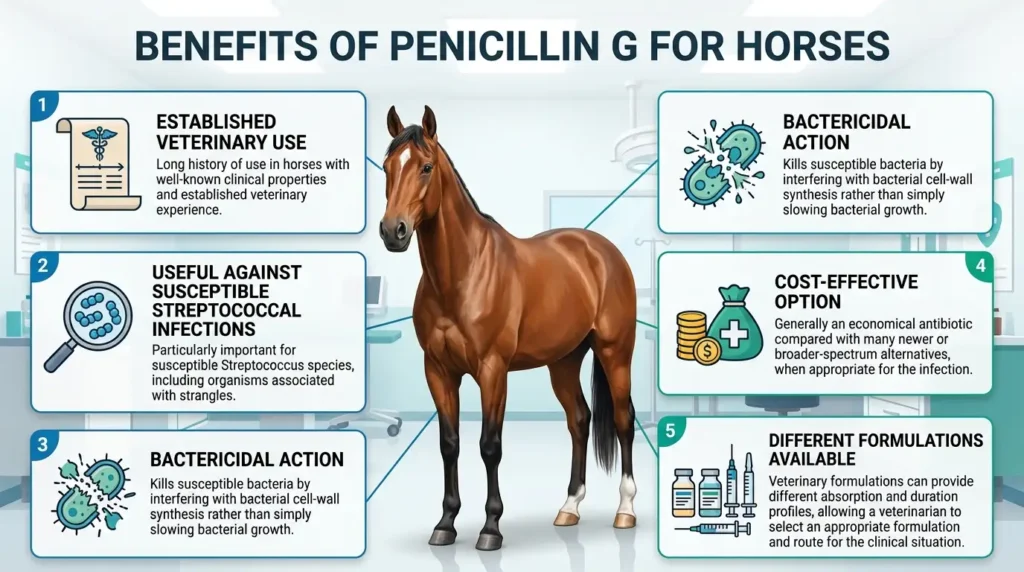
- Easy to administer — long history of use in horses with known effects and convenient for administration.
- Excellent anti-strangles and streptococcal infection activity, one of the most common bacterial infections in horses.
- Bactericidal action — kills susceptible bacteria directly, not just slowing their growth.
- Is not very expensive in comparison to many newer, broad spectrum antibiotics.
- There are several formulations, so that a veterinarian can select the one that will generate the desired absorption curve (fast IV vs. more sustained IM) to match the severity of the horse’s condition.
Side Effects & Risks
Allergic Reactions
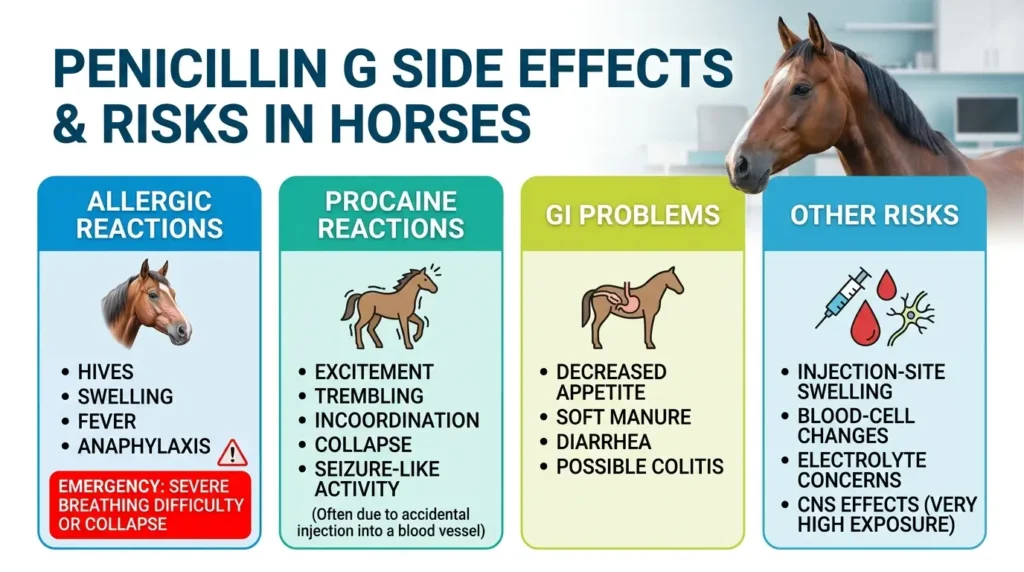
The reactions of hypersensitivity, such as urticaria, swelling of the face or limbs, fever or complete anaphylaxis, are not dose-dependent and can occur even when the drug is correctly dosed. Horses should be monitored for an additional 30 minutes following each injection. Anaphylaxis is considered an emergency and if breathing difficulty, collapse or severe swelling is occurring, call your veterinarian immediately.
Procaine Reactions (The One to Know)
Reactions that are specifically related to the procaine — excitement, trembling, incoordination (ataxia), collapse or seizure-like activity — are more likely to be caused by the accidental injection into a blood vessel than by a true drug allergy. This is why the aspiration step (withdrawing the plunger before injection) is important each and every time.
GI Upset and Colitis Risk
Penicillin Dosage For Horses, as with all antibiotics, can cause disruption of the flora in the horse’s hindgut and cause decreased appetite, soft manure, diarrhea, or, in some instances, colitis. Monitor appetite and manure through treatment; if either becomes significantly different, contact your veterinarian.
Other Reported Effects
- Pain, swelling or abscess at site of injection
- Changes in blood cells (eosinophilia, neutropenia, and thrombocytopenia) — usually on blood tests and not noticeable on the surface.
- Horses with HYPP or other electrolyte sensitive diseases should be considered for electrolyte issues when using potassium penicillin G.
- At very high doses (particularly in the presence of renal dysfunction) CNS effects
Drug Interactions
- Aminoglycosides (e.g., gentamicin) — which are frequently combined for synergistic activity against serious infections, but should never be mixed in the same syringe or IV bag as beta-lactams will inactivate the gentamicin on contact.
- Bacteriostatic antibiotics (tetracyclines, chloramphenicol, erythromycin) — these when used in combination with penicillin G may dampen the effect of penicillin, which requires actively growing bacteria to function.
- Certain other drugs, such as phenylbutazone, salicylates, and other weak organic acids may compete with penicillin for the same elimination pathway in the kidneys and may increase the duration of penicillin in the blood stream.
- Probenecid – intentionally used in certain situations to decrease the renal clearance of penicillin and prolong its effect.
- Sulfonamide antibiotics — the procaine in procaine penicillin G Dosage For Horses is metabolized to a substance (PABA) that may interact with the sulfonamide drugs.
- General incompatibility — penicillin G products are chemically incompatible with a variety of other drugs and IV solutions, and should not be mixed in the same syringe or line without consulting a veterinarian or pharmacist.
Always tell your vet about every medication and supplement your horse is currently receiving before starting penicillin G.
Contraindications & When to Use Caution
At present, penicillin horse dosage should be avoided in horses that are known to be hypersensitive to penicillins or other beta-lactam antibiotics (e.g., cephalosporins). Additional care and more frequent monitoring should be used in horses that have:
- Kidney disease
- Electrolyte abnormalities
- Congestive heart failure
- Severe systemic illness
- Pregnancy or lactation (use if determined to be more beneficial than harmful by the veterinarian; penicillins pass into milk in small amounts and may cross the placenta)
Storage & Handling
Refrigerate procaine and benzathine penicillin G suspensions (usually between 2-8°C or 36-46°F) and avoid freezing. Shake the vial to re-suspend the drug evenly before each use and warm to room temperature. Do not use product if it is discolored, contains particles or is past its expiration date.
Common Mistakes to Avoid
- Estimating weight rather than measuring/taping. Typical dosing mistakes often begin with an incorrect entry of body weight, not an incorrect formula.
- Mixing up the label dose and the clinical dose. These are two valid regimens for the same medication – the incorrect one may result in a suboptimal or excessive dose for the infection.
- Omission of the aspiration step. The one habit that prevents “the most dangerous” procaine reactions.
- Discontinuing treatment once the horse “looks better. Relapse is a major factor in antibiotic resistance and bacteria may remain after the visible signs of the illness have gone away.
- Overfilling the site. If your vet prescribes split doses, do not give large volumes in a single location as this will cause discomfort and swelling.
- Administering procaine penicillin G intravenous (IV). Repeat: Do Not!
Myth vs. Fact
| Myth | Fact |
| “More penicillin works faster and is safer than too little.” | Overdosing doesn’t speed recovery and raises the risk of side effects; the dose should match what your vet has prescribed for your horse’s specific infection and weight. |
| “If the horse looks better, you can stop early.” | Stopping before the prescribed course ends is one of the main drivers of relapse and antibiotic resistance. |
| “All penicillin G products are dosed the same way.” | Sodium, potassium, procaine, and benzathine forms are absorbed at very different rates and are dosed on different schedules. |
| “Oral penicillin is a gentler alternative to injections.” | Oral penicillin G is poorly absorbed in horses and increases the risk of hindgut disturbance and colitis — it isn’t used for systemic infections in this species. |
You May Also Lke to Read:
- Ivermectin Dosage For Horses: Calculator, Chart & Safe Guide
- Omeprazole Dosage For Horses: Calculator, Chart & Safe Guide
FAQs
What is penicillin G used for in horses
It is used primarily as a treatment for bacterial infections resulting from susceptible bacteria including most cases of strangles (Streptococcus equi), respiratory infections caused by Streptococcus zooepidemicus, some wound and soft tissue infections, clostridial infections, and some urinary tract infections, as part of a combination of therapy directed by a veterinarian.
When is the last time a horse got penicillin?
Once a day to as often as every 6 hours, depending on the formulation. The usual dosage of procaine penicillin G is one or two times per day, while aqueous sodium/potassium penicillin G is eliminated rapidly and requires much more frequent administration (every 6 hours).
Is it possible to give a horse too much penicillin?
Yes. There is nothing to be gained from exceeding the prescribed dose and the likelihood of side effects (including CNS effects with very high doses) and drug residues (if the horse is to be used for food production) increase. Never exceed your veterinarian’s dosage directions.
Is penicillin safe for horses?
Despite the fact that Penicillin G dosage is safe to use, when used properly and has been used in equine medicine for decades, it is not risk free – allergic reactions, procaine reactions and gastrointestinal upset are all possible, hence why veterinary supervision and post injection monitoring is important.
Do horses need to be given penicillin by mouth?
No, not in the case of systemic infections. Oral penicillin G is not very well absorbed in the horse bloodstream and has a high concentration in the hind gut which can disrupt the microbiome causing colitis.
How long does penicillin take to work in horses?
Treatment is appropriate and many horses improve in 24-48 hours after treatment, depending on the type of infection, the location and the severity of the infection. If no improvement is seen in that period, consult your veterinarian about reassessing the diagnosis and treatment.
What are the side effects of penicillin G in horses?
Side effects may be allergic reactions (urticaria, swelling, anaphylaxis), pain or swelling at the injection site, gastrointestinal upset or diarrhea, and, with procaine penicillin G, excitement, incoordination or convulsions, typically associated with intravenous injection.
Can procaine penicillin G be given IV?
Procaine penicillin G is designed for use under the skin. Sudden excitement, incoordination, seizure-like activity and death may occur following accidental intravascular injection.
May competition horses be administered penicillin G?
The antibiotic is not normally banned, however procaine (which appears in products containing procaine penicillin G) is a controlled substance under FEI regulations as it is also a local anesthetic. Before competing, check with your governing body about current rules and determine a withdrawal time with your veterinarian.
Which of these two antibiotics is different: procaine or potassium penicillin G?
The fast acting water soluble potassium (and sodium) penicillin G are usually administered intravenously (IV) to achieve a rapid and high level of blood concentration, which is rapidly eliminated. Procaine penicillin G is a longer-acting intramuscular suspension which has lower blood concentration for a longer duration of time and can be given less often.
Do I need a prescription for penicillin G for my horse?
Yes. Horses are prescription (Rx) veterinary products that can only be used by or on the order of a licensed veterinarian.
Final Thoughts
It’s simple, penicillin G Dosage For Horses is still a staple of equine medicine because it is consistently effective against some of the most widely encountered bacterial infections, such as strangles. But it’s also a drug with which the details (what formulation, how administered, how often) really matter, not just in the paperwork.
Label dose versus clinical dose for the same drug can appear remarkably different, and there’s a huge safety concern about giving an IM versus an IV dose of the wrong formulation – it is not a question of technicalities.
As a horse owner, the best use of this article (and the calculator above!) is to use it as a means of first confirming what your veterinarian has previously told you, not in lieu of consulting your vet. If a dose, route, or duration which you have been given does not correspond to any of the above, it is worth a hasty call to your vet before you pick up the syringe.