How Groundwork Can Help Modify Horse Behavior in 7 Calm Steps
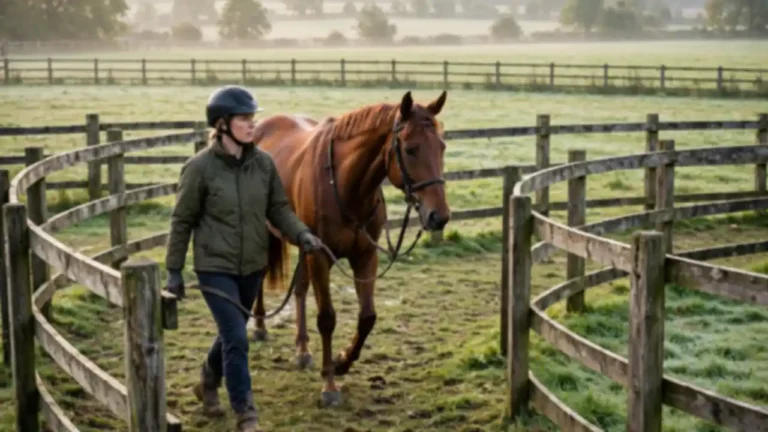
Your horse barges through the gate, pulls on the lead rope, and nips when you reach for the halter. You correct it, and the next day it does the same thing again. Groundwork Can Help Modify Horse Behavior like barging, nipping, and rushing, because it changes what the horse does on the ground before the habit reaches the saddle.
By the end of this guide, you will have a 7-step plan that works on one behaviour at a time. Each step names the habit, gives you one groundwork move to answer it, and tells you the small sign that shows the change is working.
The plan works because a horse repeats what pays off. When barging earns a wait instead of a way through, the horse stops barging. When standing still earns the release of pressure, the horse stands still. Every step takes only a few minutes, and the whole session takes about 20 minutes.
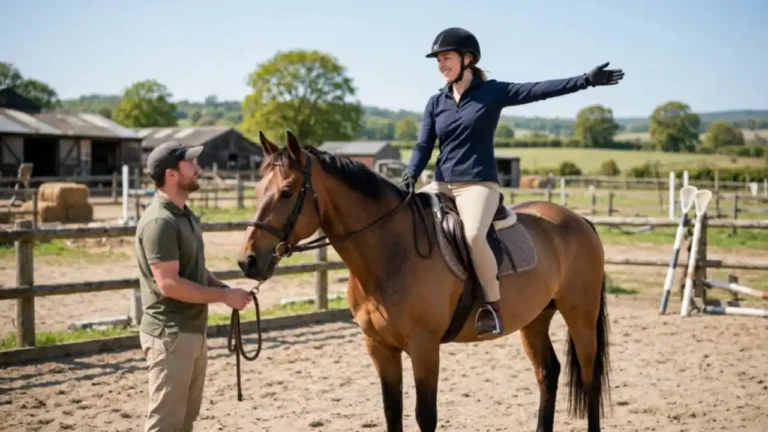
Work in a fenced area with a calm horse, and keep every session short. The basic moves here come from our guide to groundwork exercises for beginners, so learn those first if you have not done groundwork before, then use this guide to aim them at the habits you want to change.
What You Need
- A calm horse that leads in a halter
- A well-fitting halter and lead rope
- A fenced arena, round pen, or paddock
- A training stick or short flag
- A traffic cone or bucket to mark a line
- A riding helmet, fastened
- Gloves to protect your hands
- Sturdy boots with a small heel
- A spare lead rope
- A pocket of small treats for a reward
- A notebook for session notes
- A helper for the first session
At a Glance
- Claim your space before you open the gate
- Ask your horse to stand still for 30 seconds
- Walk out on a loose rope without rushing
- Yield the hindquarters to end crowding
- Redirect a nip with a firm back-up
- Walk past the scary object at a distance
- Finish with a loose-rope walk and a calm stand
Before and After: What Changes
Before
- Horse barges through the gate ahead of you
- Walks past you and pulls on the rope
- Rushes ahead and ignores the stop
- Nips when you reach for the halter
After a few weeks of practice
- Horse waits at the gate until you ask
- Walks at your shoulder on a loose rope
- Stops and stands still on a light ask
- Keeps its mouth to itself and its feet out of your space
Claim Your Space Before You Open the Gate
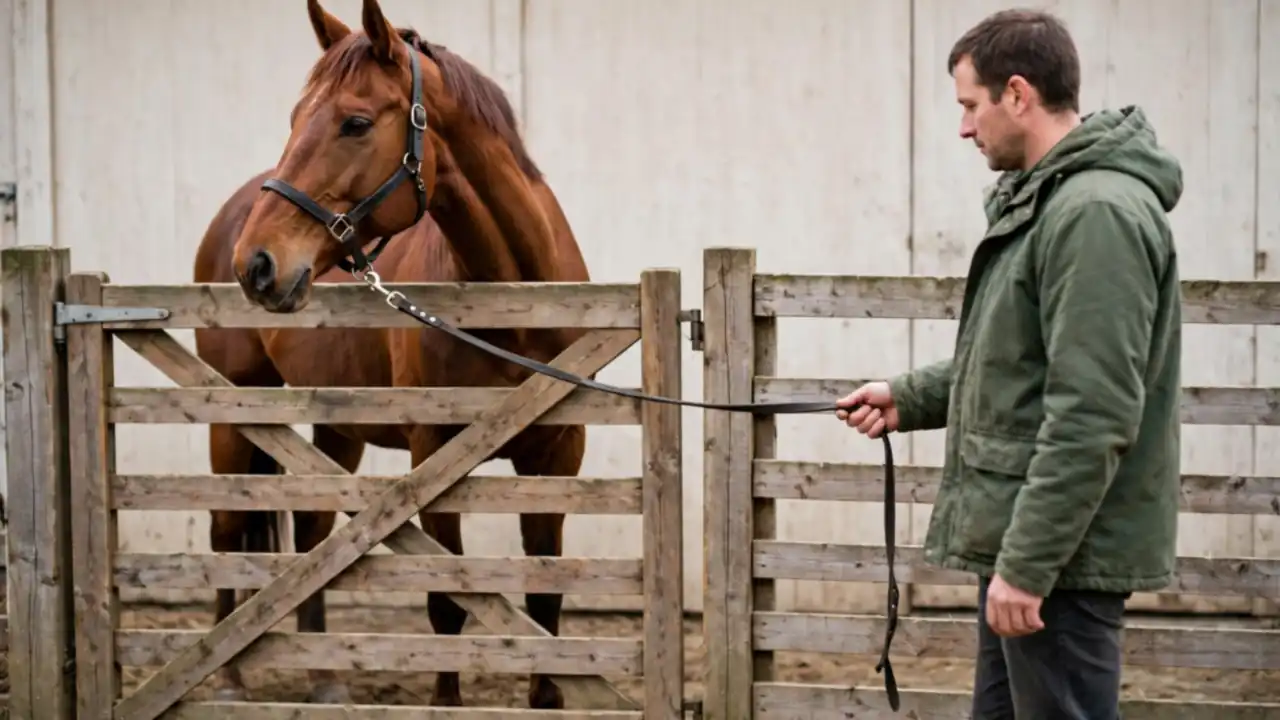
A horse that barges has learned that pushing gets it through the gate first. Stand at the gate with the rope short in your hand and ask the horse to wait. If it steps toward you, step into its space and ask for 2 steps back.
Wait for 10 seconds with the horse standing back from the gate. Open it only when the horse waits, and close it again if it pushes forward. The sign it is working is simple: the horse stops and looks to you before it moves.
Ask Your Horse to Stand Still for 30 Seconds
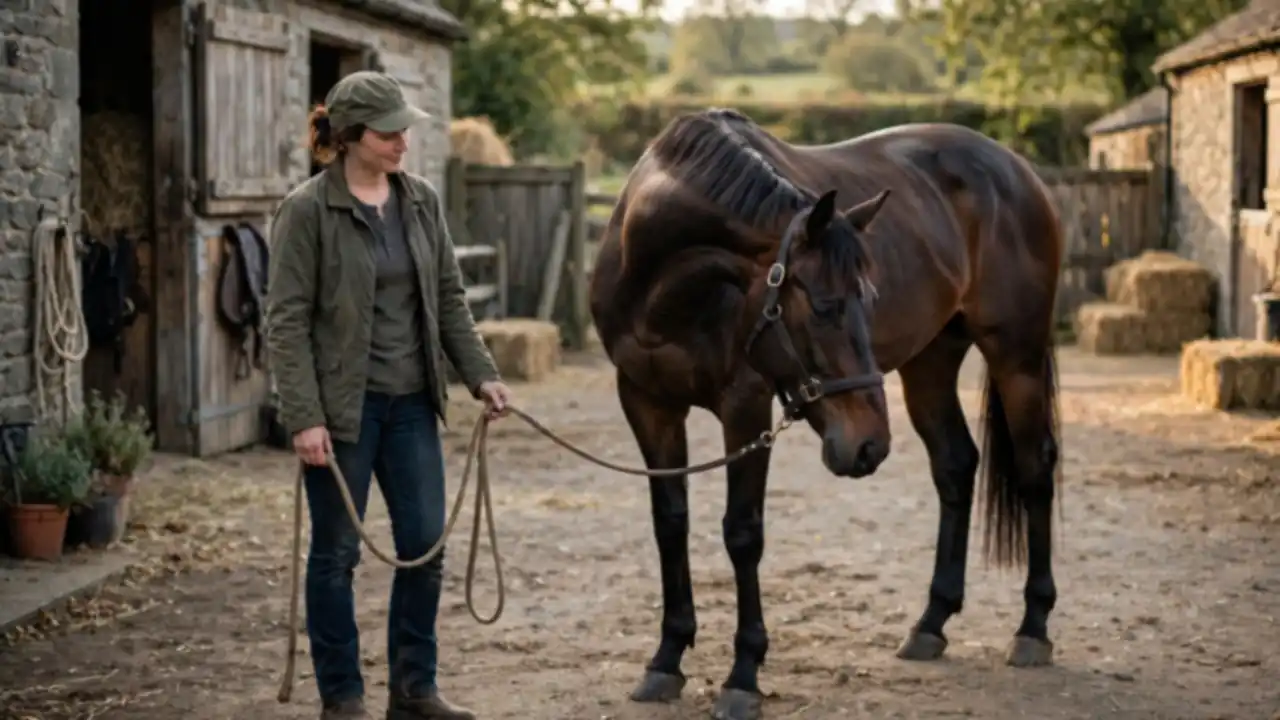
When your horse will not stand, do not hold it in place with the rope. Stand at its shoulder, ask for a square stand with a lift of your hand, and drop the rope to a loose loop.
Wait for 30 seconds. If the horse steps away, bring it back to the same spot and ask again, calmly, without a tug. The sign it is working is a horse that plants all four feet and drops its head a little.
Walk Out on a Loose Rope Without Rushing
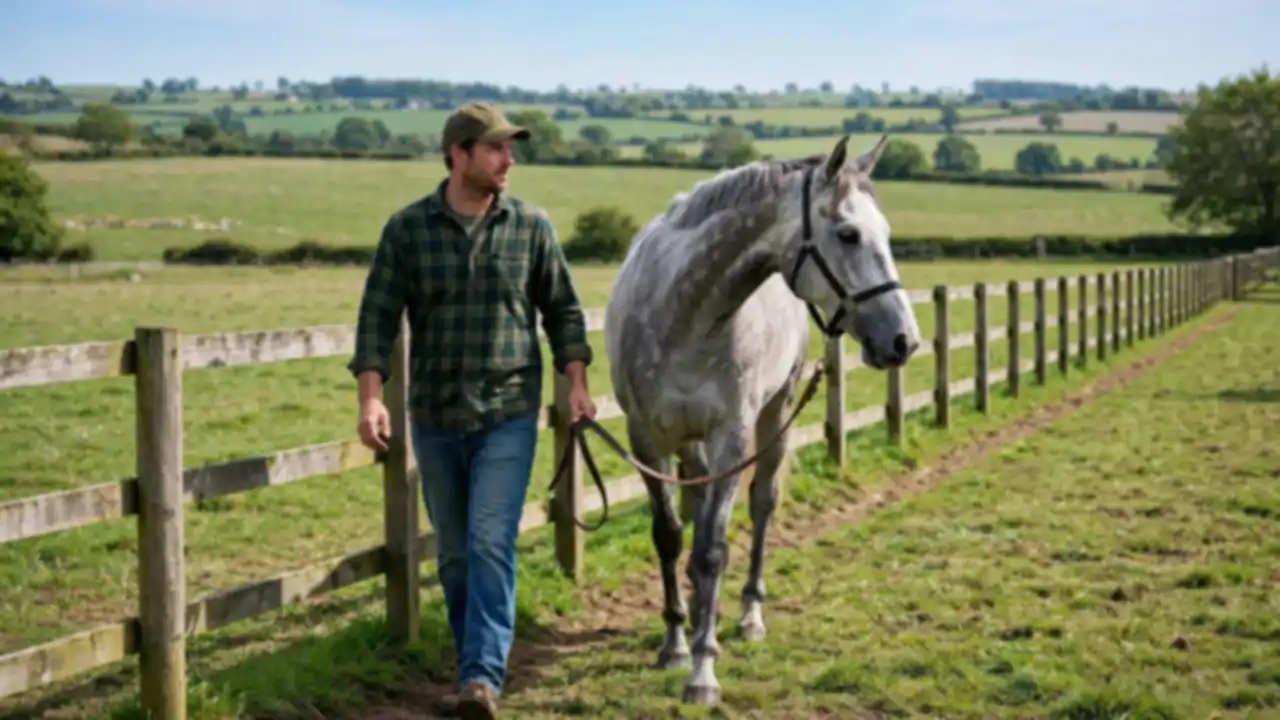
Walk for 2 minutes at a steady pace with the rope loose and the horse’s nose level with your shoulder. The moment the horse surges ahead, stop dead, plant your feet, and wait for 3 seconds.
Turn the horse in a small circle and walk on again, calmly, at the same pace. A rushing horse wants to get somewhere fast, and your job is to make slow the better choice. The sign it is working is a rope that stays loose for the whole walk.
Yield the Hindquarters to End Crowding
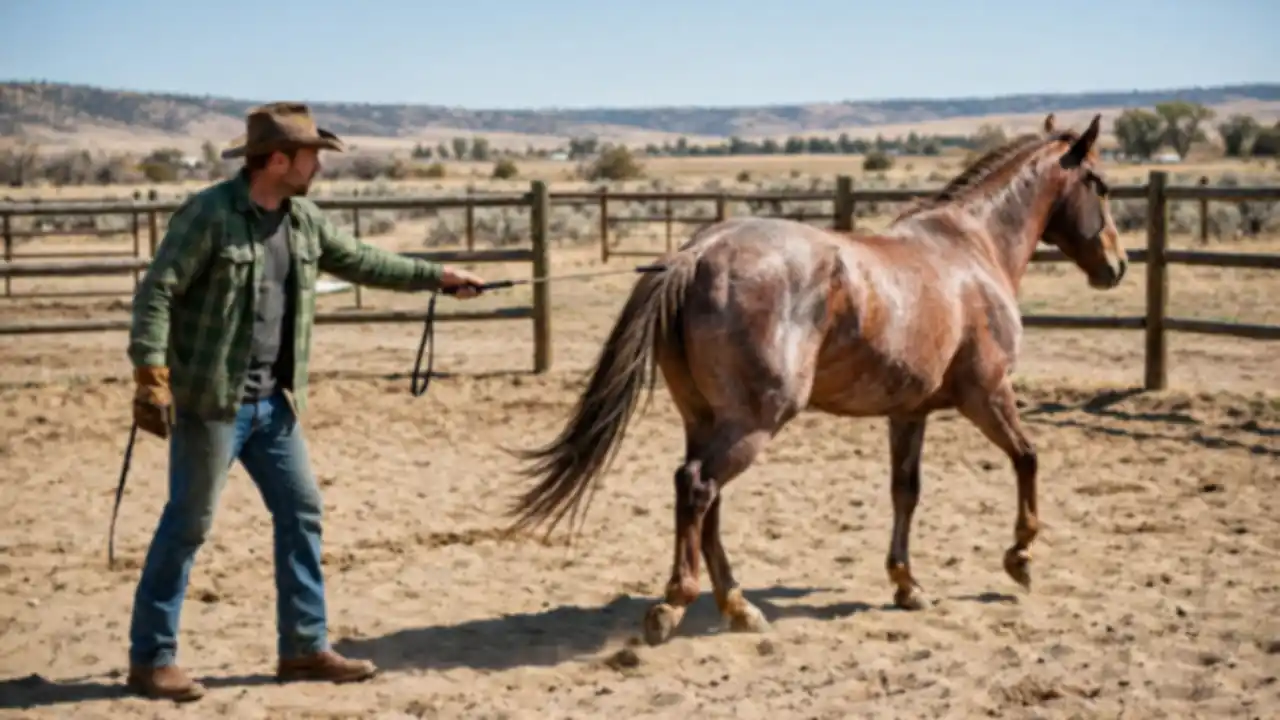
A horse that crowds your space has never been told where the line is. Stand at its shoulder, point the training stick toward its hip, and step toward the hip until the hind feet step away from you.
Ask for 2 steps to the side, then drop your energy and let the horse stand. Repeat 3 times on each side, and practise the move from our guide to groundwork exercises for beginners if the yield feels sticky. The sign it is working is a horse that keeps an arm’s length of space without being pushed.
Redirect a Nip with a Firm Back-Up
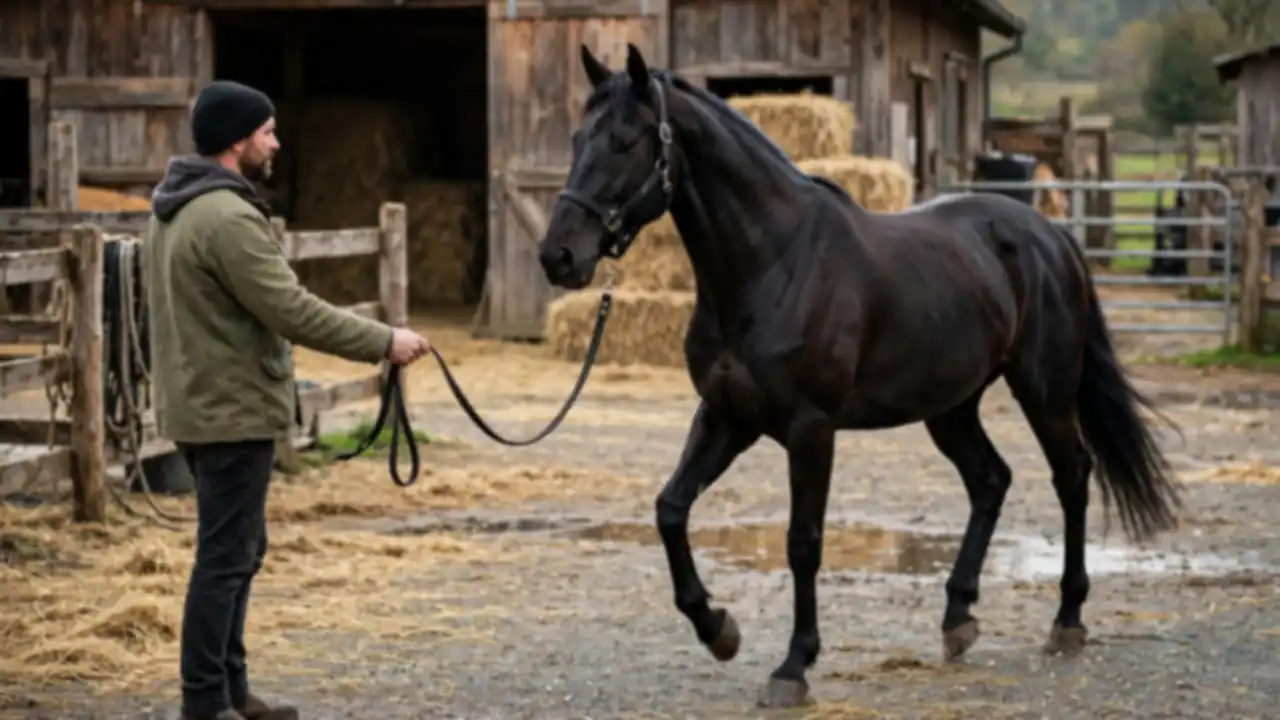
When teeth come near your hand, do not pull away and do not slap the horse. Ask for 4 steps back with a firm wiggle of the lead rope, then stand still and give the horse nothing to nip at.
A nip is a test of space, and backing up answers it in the horse’s own language. Keep your hands out of reach while you work, and keep a horse first aid kit in the barn in case a nip catches skin.
Heads Up: Never strike a horse for nipping. A smack teaches the horse that hands are something to fear, and a frightened horse bites harder next time. If your horse bites hard, rears, or turns its hindquarters toward you, stop the session and ask a professional trainer for help.
Walk Past the Scary Object at a Distance
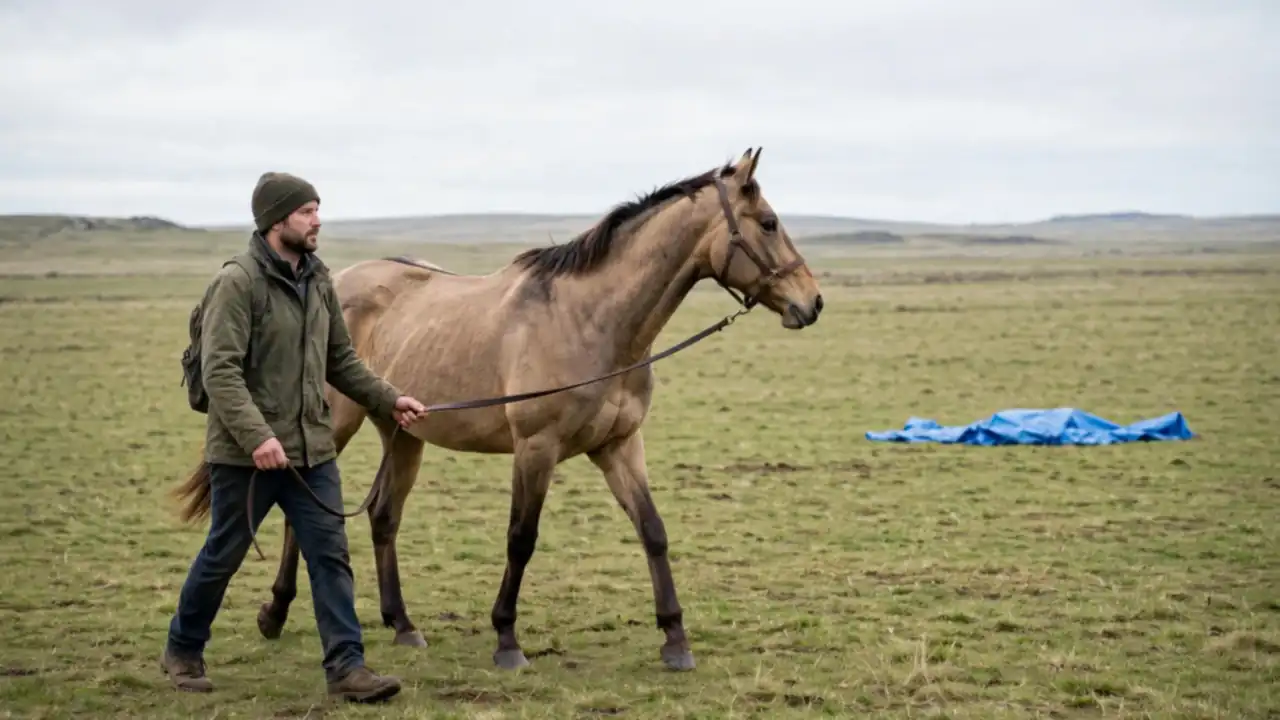
A spooky horse is not being naughty; it is telling you it cannot cope with what it sees. Pick one scary object, a tarp or a flapping bag, and walk toward it until the horse’s head lifts and its feet slow.
Stop at that distance, about 10 metres, and let the horse look for 2 minutes. When it lowers its head and breathes out, walk on past at the same distance. The sign it is working is a horse that looks, snorts once, and walks on without bolting.
Pro Tip: Let the horse look. A horse that is allowed to stare at the scary thing for a minute will walk past it far sooner than a horse that is dragged past with its head held away.
Finish with a Loose-Rope Walk and a Calm Stand
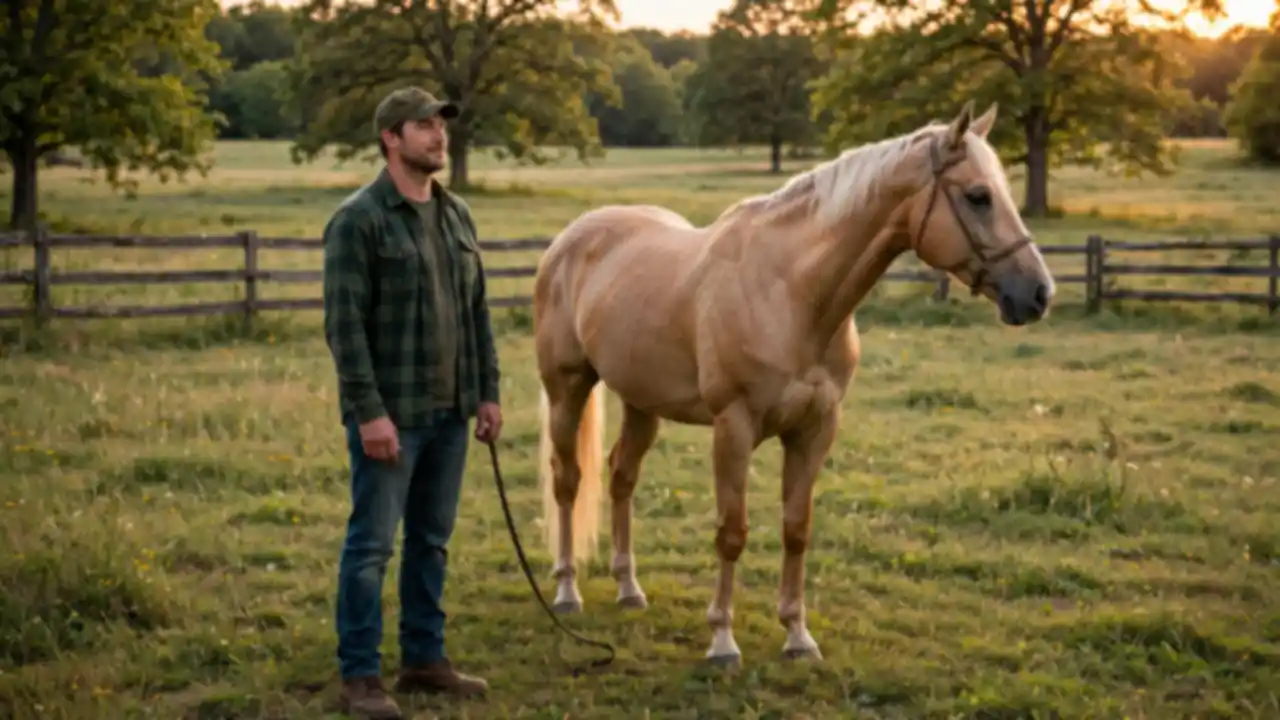
A short loop on a loose rope is the test for the whole session. Walk for 2 minutes with the horse’s nose at your shoulder and no pull on either end. If the horse pulls, stop, ask for a back-up, and walk on again.
End by asking the horse to stand still for 1 minute with the rope looped loose. Write 3 notes before you leave: which behaviour changed most, which needs another session, and how the horse felt. A loose rope at the end of the session is the proof the work paid off.
Common Mistakes to Avoid
Pushing the horse away by the chest — A push teaches the horse to lean into pressure. Step into its space and ask for the hindquarters to move instead, and the horse moves without a fight.
Asking for the whole fix in one session — A habit built over months will not change in 20 minutes. Work on one behaviour at a time, and expect the change to take 2 to 3 weeks of short sessions.
Repeating the ask louder instead of clearer — A louder ask is only more pressure, and a horse tunes it out. Ask once, wait, and only then raise the pressure by one small step.
Ending the session on a bad moment — A session that ends with a fight teaches the horse that work ends in a fight. Always finish on something the horse did right, even if it is only a calm stand.
Frequently Asked Questions
How long before my horse’s behaviour changes? — Small changes show in 2 or 3 sessions. A settled habit takes 2 to 3 weeks of short, calm sessions, 2 or 3 times a week. If nothing changes after 3 weeks, ask a trainer to watch one session.
Can groundwork fix a horse that rears? — No. Rearing is dangerous, and groundwork is for everyday habits like barging, rushing, and nipping. If your horse rears, stop and get a professional trainer before you work with it again.
Should I use treats to change behaviour? — A small treat after the right answer works well, but never feed from your hand if the horse nips. Drop the treat in a bucket instead, so the horse never learns to search your pockets.
Does this work with a young horse? — Yes, and young horses learn fast. Keep sessions to 10 minutes, keep the asks small, and have a helper nearby. The basics in our guide to groundwork exercises for beginners are the right place to start.
What if my horse ignores me completely? — Go back to the basics: stand, lead, and yield the hindquarters, all covered in our guide to groundwork exercises for beginners. Patience is the skill that makes the difference, and our guide to the 20 qualities of a good horse owner covers it.
Quick Reference Card
You need: a calm horse, a halter and lead rope, a fenced area, a training stick or flag, a cone or bucket, a helmet, gloves, and a notebook.
The plan (about 20 minutes a session):
- Claim your space at the gate, ask for 2 steps back, wait 10 seconds
- Ask for a square stand, wait 30 seconds
- Walk out on a loose rope for 2 minutes, stop when the horse rushes
- Yield the hindquarters, 2 steps, 3 times each side
- Redirect a nip with 4 steps back, then stand still
- Walk past the scary object at 10 metres, let the horse look for 2 minutes
- Finish with a loose-rope loop of 2 minutes and a calm stand for 1 minute
You now know how Groundwork Can Help Modify Horse Behavior, one calm step at a time.
Your horse waits at the gate, walks on a loose rope, and stands still when you ask.
Work on one behaviour at a time, and keep every session short and calm.
For the next step in your horse’s training, see how to build muscle on a horse and shape a strong topline.
Save this guide on Pinterest so it is waiting for you at the barn.