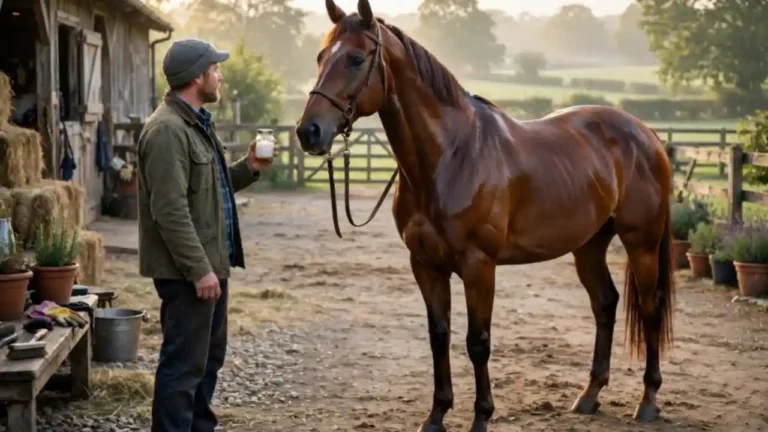
Feed Your Horse Well with a Simple Forage-First Daily Routine
You stand in the feed room with a scoop in your hand, and you wonder if you are giving too much, too little, or the wrong thing. This guide shows you how to Feed Your Horse with a simple daily routine that keeps him healthy, calm, and in good condition.
A horse fed the right way holds his weight, keeps a shiny coat, and stays steady in his work. A horse fed the wrong way loses weight, gets fizzy, or ends up with colic. The difference is rarely the feed itself. It is the amount, the timing, and the order you feed it in.
The method here starts with forage, adds fresh water, and only then measures the hard feed. You will weigh your horse, work out the daily amount, and feed little and often on a set schedule. The whole routine takes about 30 minutes a day, and the skill level is beginner.
If your horse is in hard work and needs to build muscle, the feeding changes a little. Our guide shows how to build muscle on a horse with a hay-first plan, and this guide covers the daily routine that sits underneath it.
What You Need
- Weigh tape
- Feed scoop and kitchen scales
- Hay net
- Water bucket
- Feed bin with a tight lid
- Good hay or haylage
- Hard feed (balancer or mix)
- Salt lick
- Notebook and pen
- Feed chart for the wall
At a Glance
- Weigh your horse and work out the daily amount
- Choose forage first and fill the hay net
- Check the water before you touch the feed
- Measure the hard feed with a scoop
- Feed little and often on a set schedule
- Change the feed slowly over two weeks
- Check your horse and the feed bin every day
Before and After: What Changes
Before
- Feed guessed by eye from an unmarked scoop
- One big meal, then nothing until tomorrow
- Water topped up when someone remembers
- Feed changes made in a single day
After one week of the routine
- Every meal weighed, with a chart on the wall
- Two to three small meals at set times
- Clean water checked before every feed
- New feed introduced over 7 to 14 days
Weigh Your Horse and Work Out the Daily Amount
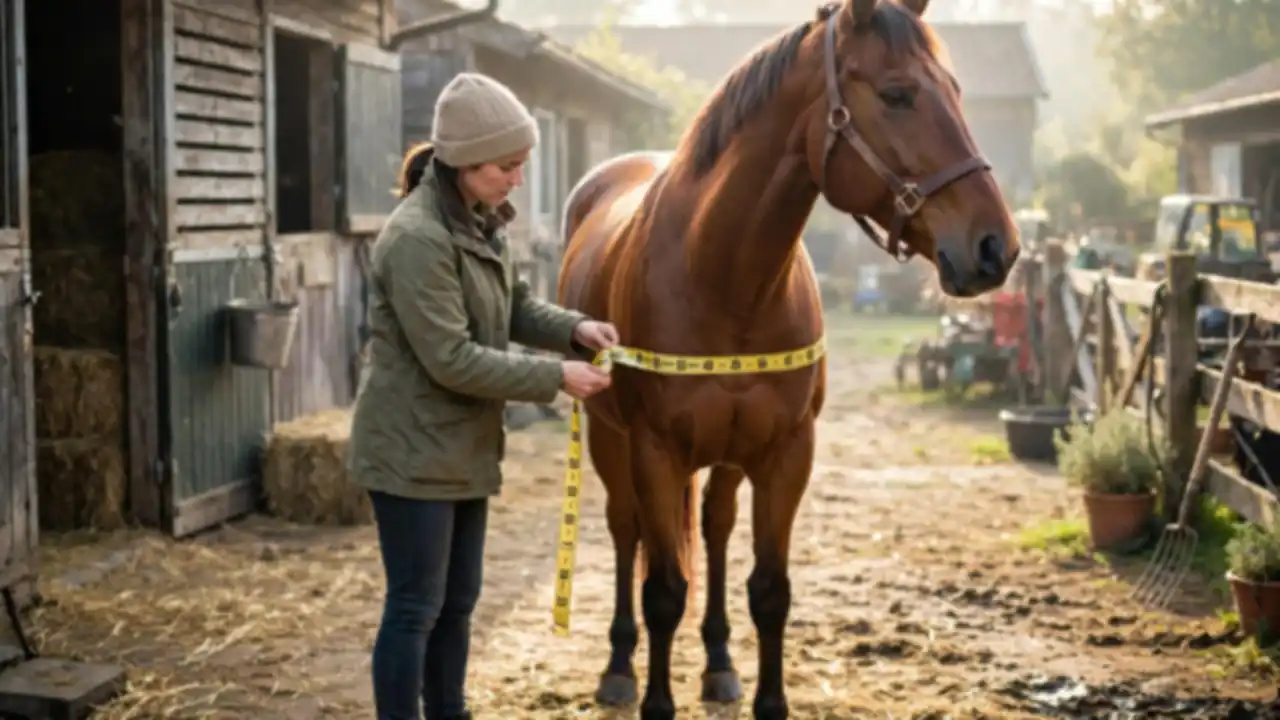
A 500 kg horse needs about 7.5 to 10 kg of forage a day, and you cannot guess that from looking at him. Run a weigh tape around his girth, behind the front legs, and read the weight in kilograms.
Write the weight in a notebook, then work out 1.5 to 2% of it for the daily forage amount. A horse in light work sits at the low end, and a horse in hard work sits at the high end. Weigh him again every two weeks, because the tape keeps you honest.
Choose Forage First and Fill the Hay Net
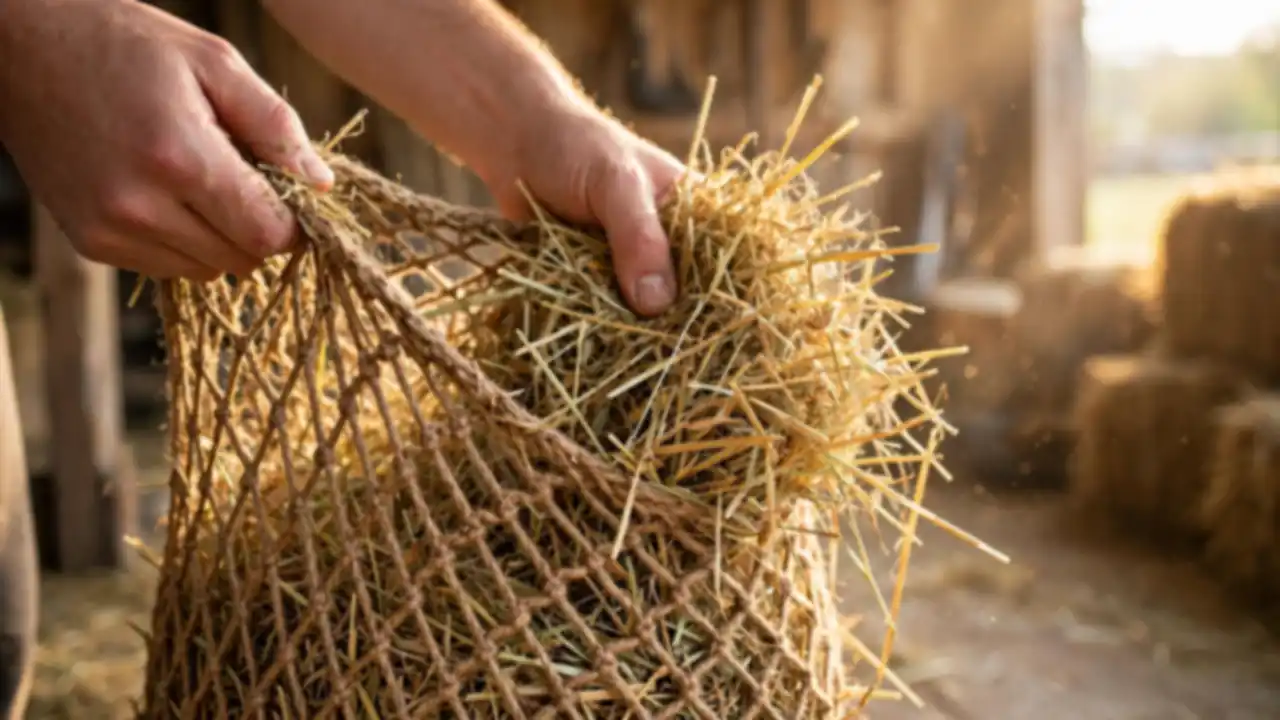
Hay is the base of the diet, and hard feed is only the top-up. Pick clean hay that smells sweet, with no dust, mould, or damp patches, and fill the hay net before you touch the feed bin.
Soak dusty hay in clean water for 20 minutes if your horse coughs, and throw away any bale that smells musty. A small-holed hay net slows a greedy horse down, and it keeps the hay off the floor where it picks up dirt.
Check the Water Before You Touch the Feed

A horse drinks 20 to 40 litres of water a day, and he will not eat well when he is thirsty. Tip the bucket out, scrub it, and refill it with clean water before you feed.
Water that sits in the sun grows green slime, and a slimy bucket puts a horse off drinking. In cold weather, break the ice twice a day, because a horse will not drink enough through a frozen crust.
Measure the Hard Feed with a Scoop
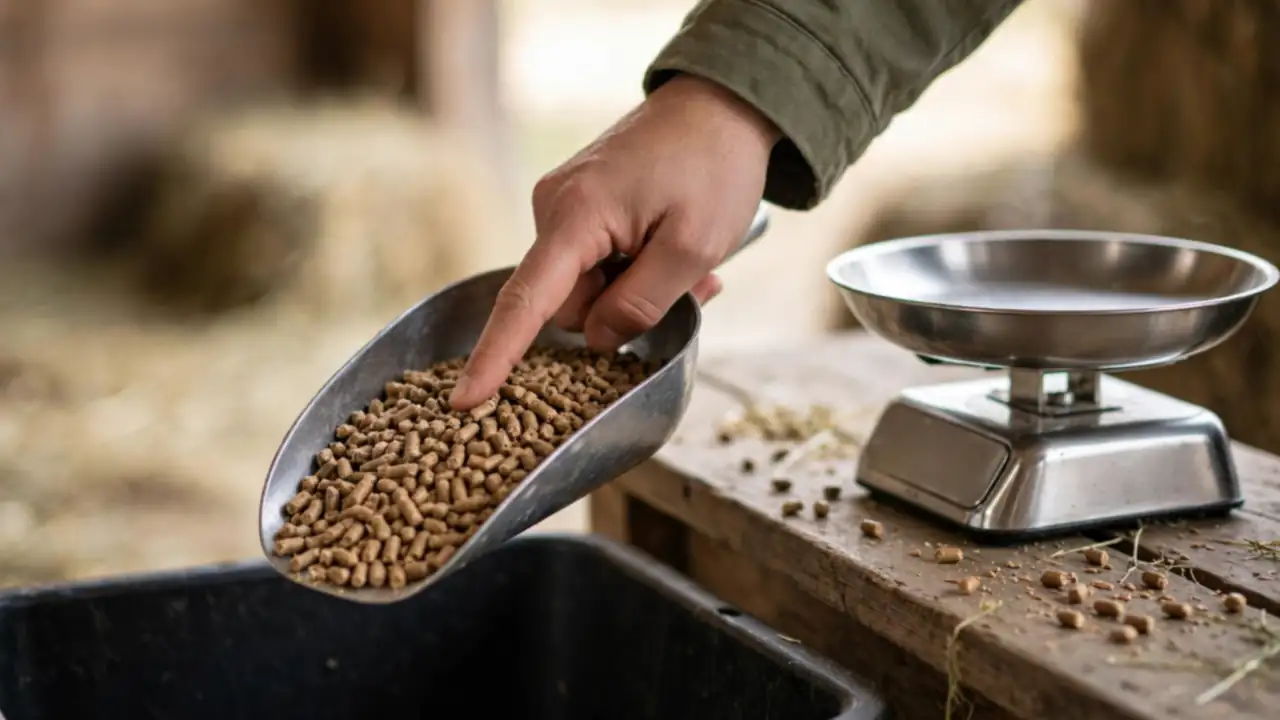
A scoop is not a measure until you weigh it. Fill your scoop with the feed you use, tip it onto kitchen scales, and write the weight on the scoop with a marker pen.
Most horses need no more than 2 kg of hard feed in one meal, so split the daily amount across the day. Count in scoops of 1 kg, and a level scoop beats a heaped one.
Feed Little and Often on a Set Schedule
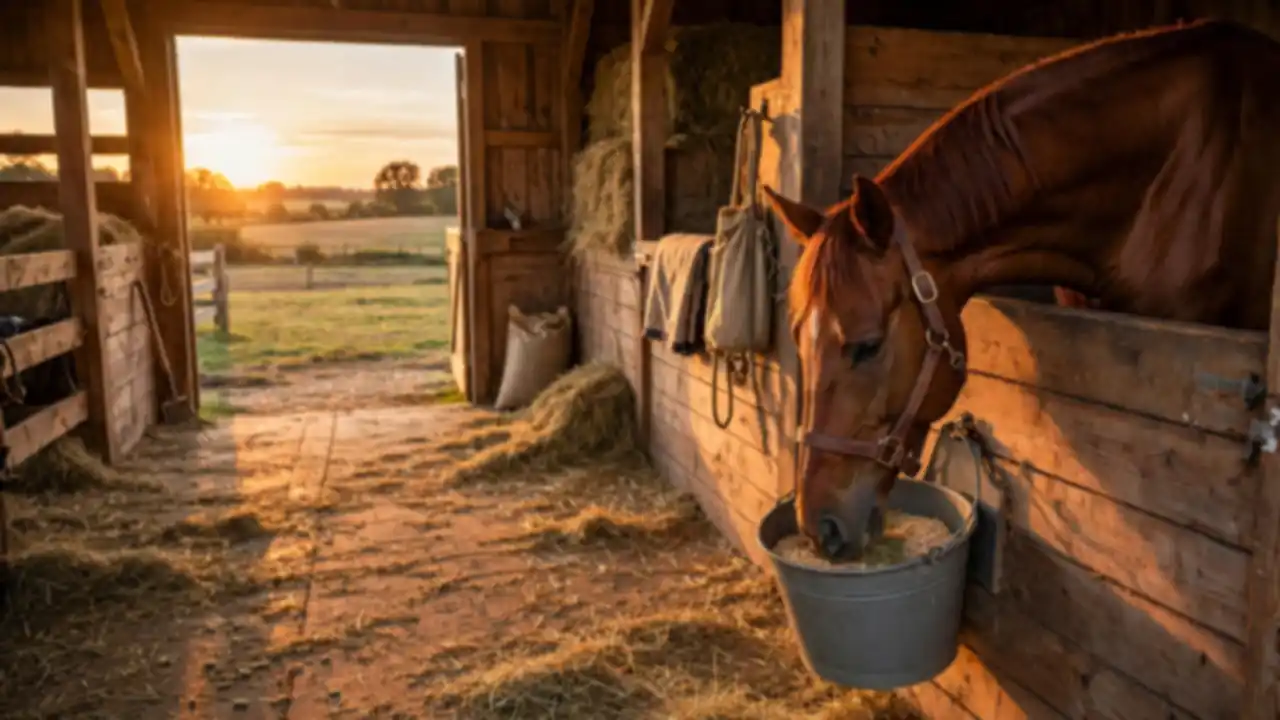
Two to three small meals a day suit a horse far better than one big one. A horse’s stomach is small, and a big meal passes through far too fast to do much good.
Feed at the same times each day, with at least 4 hours between meals, and leave an hour after hard feed before you ride. A horse that knows when his feed comes stays calmer, and his gut keeps a steady rhythm.
Pro Tip: Keep a feeding chart on the feed room wall with the horse’s name, the amount per meal, and the time of each feed. Anyone who feeds in your place can follow it, and nothing gets doubled by mistake.
Change the Feed Slowly Over Two Weeks
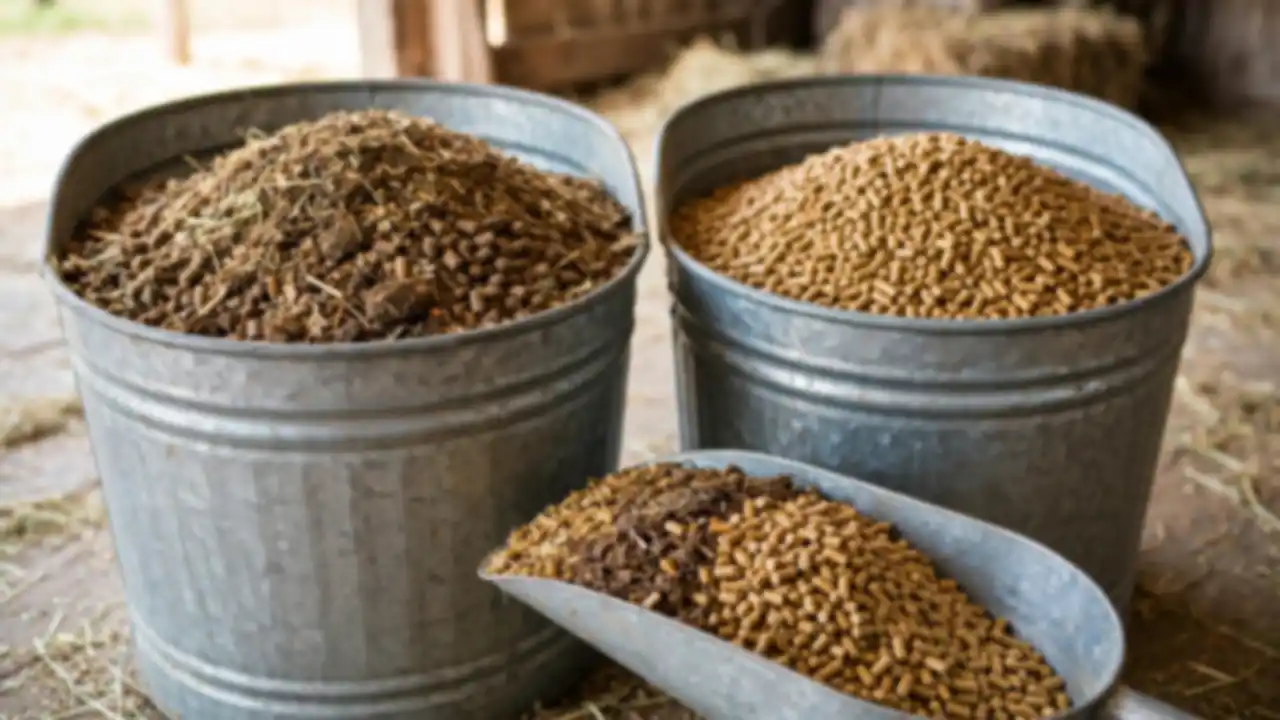
A sudden change in feed can bring on colic, so never swap a feed in one day. Mix a little of the new feed into the old, and raise the new share a little more each day.
Take 7 to 14 days to finish the change, and watch the droppings while you do it. Loose droppings mean you are moving too fast, so hold the mix where it is for two more days.
Heads Up: A horse that goes off his feed, or passes loose droppings after a feed change, needs the old feed back and a vet call if it does not settle in a day. Never push through a feed change when the horse is telling you it is wrong.
Check Your Horse and the Feed Bin Every Day
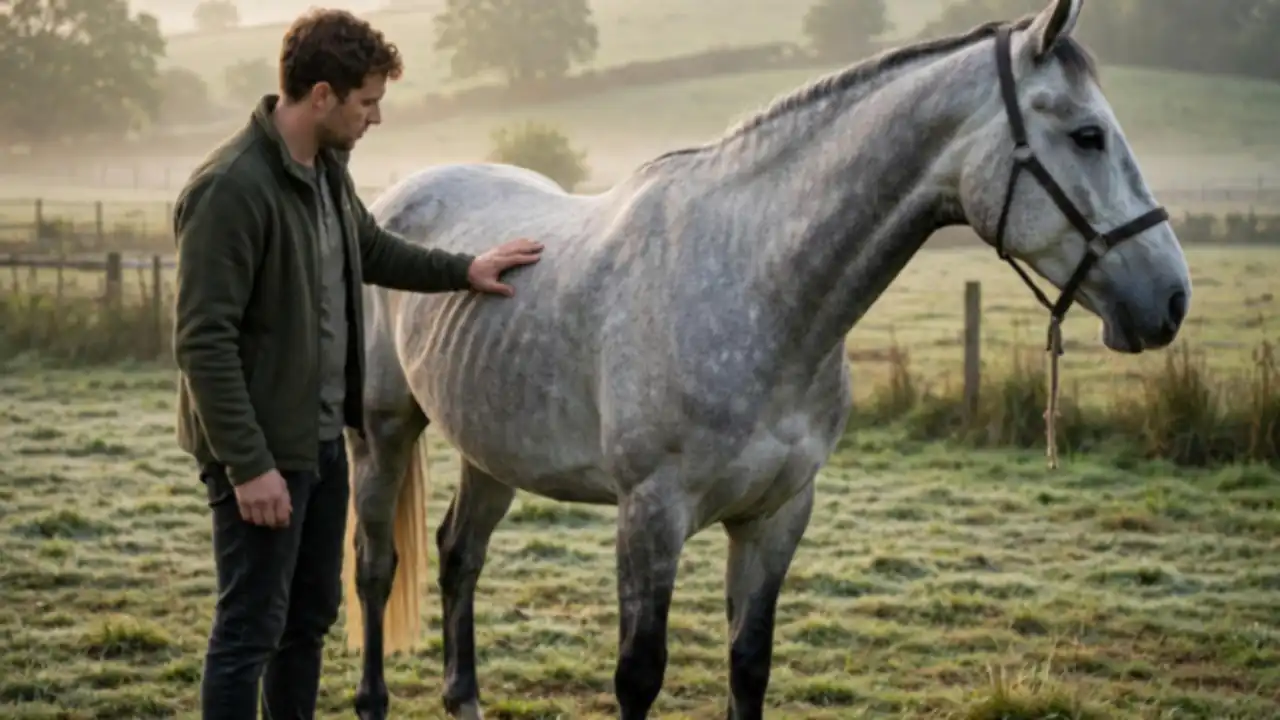
Run your hand over his ribs each morning. You should feel them under a thin layer of fat, not see them standing out.
Look at what he left in the manger, and check the feed bin lid is on tight. A horse that leaves feed, or a bin that rats have got into, is a warning. Our guide to colic signs in horses explains the feed check in full, and it is worth reading before you need it.
Keep a horse first aid kit in the barn, so a cut can be dealt with at once.
Common Mistakes to Avoid
Feeding by eye instead of by weight — A scoop looks the same whether it holds 1 kg or 2 kg. Weigh the scoop once, and the guesswork stops.
Skipping the forage and loading hard feed — Hard feed alone cannot replace hay. A horse with too little forage chews wood, cribs, and loses condition.
Feeding right before riding — A full stomach and hard work do not mix. Leave an hour after hard feed before you ride.
Changing feed in one day — A sudden swap upsets the gut. Take 7 to 14 days, and watch the droppings.
Frequently Asked Questions
How much hay should my horse eat each day?
About 1.5 to 2% of his body weight in forage a day. A 500 kg horse needs roughly 7.5 to 10 kg of hay or haylage.
How many meals a day does a horse need?
Two to three small meals, with at least 4 hours between them. Forage should be available for most of the day.
Can I feed my horse straight after riding?
Wait until he has cooled down and his breathing is back to normal, usually about 30 minutes. Offer water first, then feed.
My horse leaves his hard feed. What should I do?
Check the feed is fresh, the bucket is clean, and his teeth are not sore. A horse that leaves feed two days running needs a vet check.
Do horses need salt?
Yes. A salt lick in the stall covers most horses in light work. A horse in hard work or hot weather may need loose salt in the feed, so ask your vet how much.
Quick Reference Card
You need: weigh tape, feed scoop, kitchen scales, hay net, water bucket, feed bin with a tight lid, hay or haylage, hard feed, salt lick, notebook.
The routine (about 30 minutes a day):
- Weigh the horse and work out 1.5 to 2% of body weight for daily forage
- Choose clean forage first and fill the hay net
- Scrub and refill the water bucket before feeding
- Measure hard feed with a weighed scoop, no more than 2 kg per meal
- Feed two to three small meals at set times, 4 hours apart
- Change feed slowly over 7 to 14 days
- Check ribs, left feed and the feed bin every day
You can now Feed Your Horse with a simple routine that covers the whole day, from the first hay net to the last check of the feed bin.
Your horse has forage in front of him, clean water, and meals he can digest, and you know exactly how much he is getting.
Keep the chart on the wall, weigh him every two weeks, and the routine will look after itself.
Good feeding is only part of the job, and our guide to the 20 qualities of a good horse owner covers the rest of the daily routine.
Save this guide on Pinterest so it is waiting for you the next time you mix a feed.