Identify Horse Coat Colors with a Simple Chart Method Any Beginner Can Use
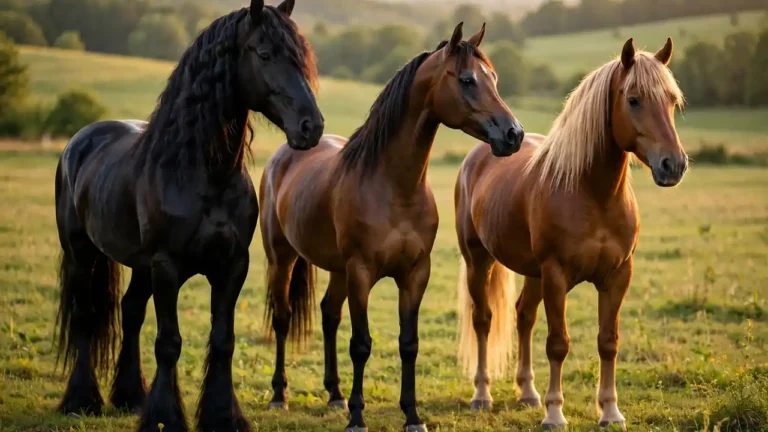
You are standing at the fence, and someone says, “Bring in the bay.” Three brown horses look back at you. One is reddish, one is dark, one has a black mane, and you have no idea which one is meant to come in.
Naming a horse’s colour is a real skill, and it follows a set order. This guide teaches you to read Horse Coat Colors in that order: body colour first, then the points, then patterns and markings.
The method works because nearly every colour is a pair: a body colour plus a point colour. Learn the few body shades, learn what the points tell you, and the long colour charts shrink into a handful of clear choices.
By the end, you will be able to walk up to an unfamiliar horse and give its full colour name in about 5 minutes, the way a vet, a seller, or a registration form would write it.
If you are still choosing your first horse, the best horse breed for beginners guide is a good companion read. More guides like this one live in our horse breeds and colors collection.
What You Need
- This chart method, in the order given below
- A horse you can see in daylight, outdoors if possible
- A phone, for photos you can study later
- A notebook or notes app for the colour and markings
- The horse’s papers or passport, if it has them, to check your answer
At a Glance
- Start with the body colour in good light
- Check the points: mane, tail, and lower legs
- Separate black from dark brown at the muzzle
- Spot gray by the white hairs and the face
- Name the dilute colours: palomino, buckskin, and dun
- Read white patterns: pinto, roan, and appaloosa
- Finish with face and leg markings
Before and After: What Changes
Before
- Every brown horse is “the brown one”
- Bay and chestnut blur into one colour
- A gray horse gets called white
- Sale ads and vet forms use words you cannot match to a horse
After
- You name the colour in the right order, every time
- Points tell you bay from chestnut at a glance
- You describe a horse the way its papers do
- Colour charts and breed guides make sense on first read
Start Your Horse Coat Colors Check with the Body Colour in Good Light
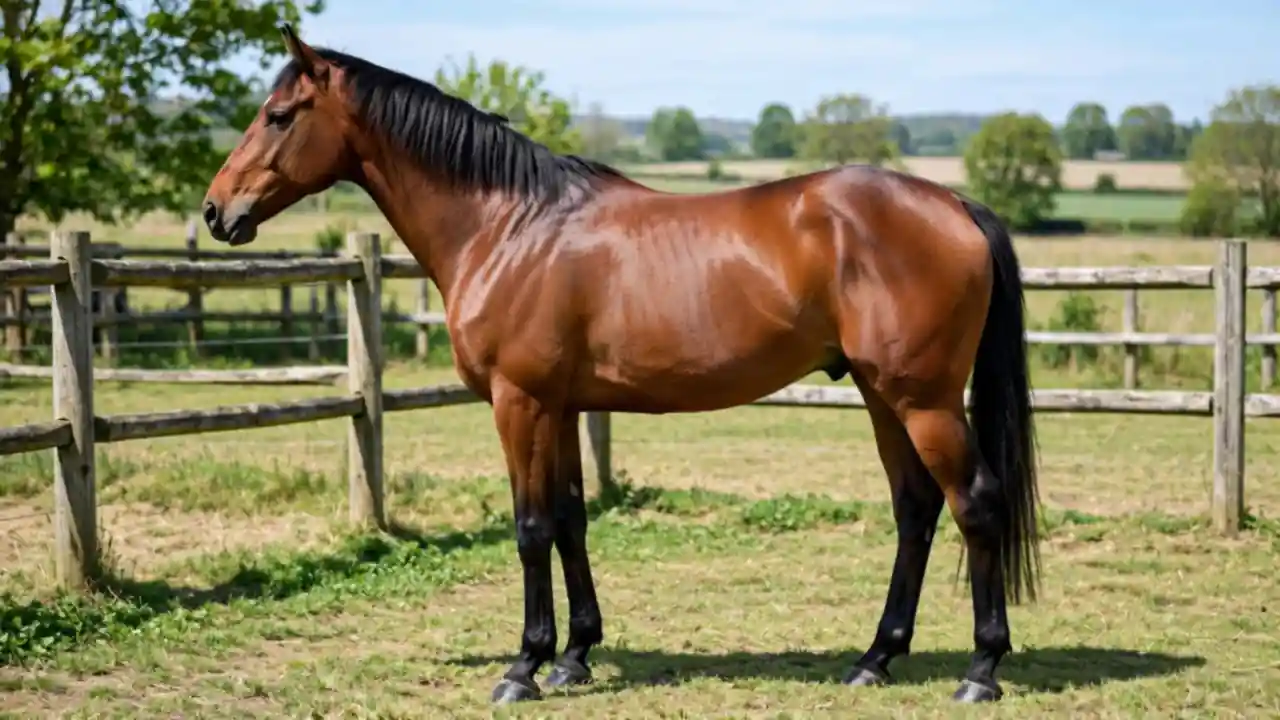
Stand back about 10 feet and look at the main body colour in daylight. Barn light and dusk both warm colours up and can turn a black horse brown in your eyes, so walk the horse outside if you can.
Sort the body into one broad group: red, brown, black, gold, or pale. Do not name the colour yet. Mud on the legs, dust on the back, and a sun-faded coat all mislead, so read the colour on the shoulder and the neck, where the coat stays cleanest and truest.
Check the Points to Separate Bay from Chestnut
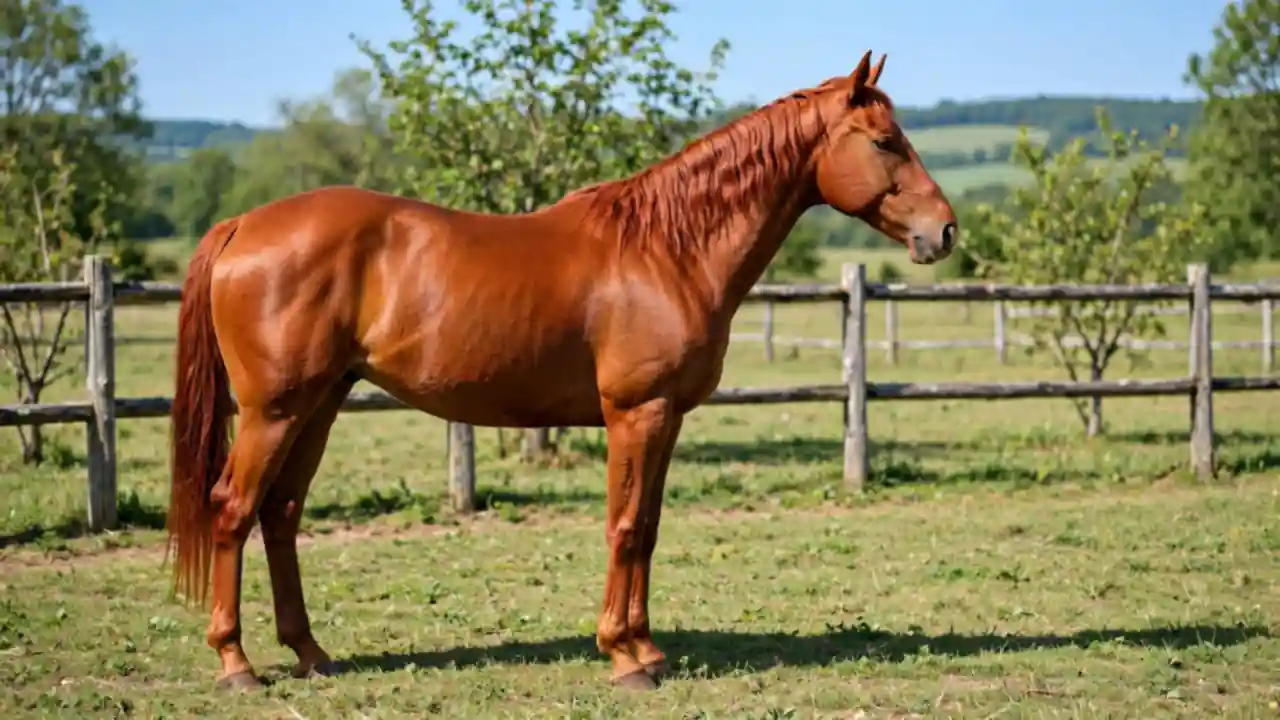
Look at the points next: the mane, the tail, and the lower legs. Black points on a brown or red-brown body mean the horse is a bay. Points the same colour as the body, with no black anywhere, mean the horse is a chestnut or sorrel.
This one check settles the most common mix-up in horse colours. Bay bodies range from light tan-brown to a deep mahogany that looks almost black, yet the points stay black through the whole range. Chestnut bodies range from pale gold-red to dark liver, and the points match the body through that whole range too.
Pro Tip: When the body colour sits between two names, let the points decide. Riders argue over shades of brown for years; the mane, tail, and legs give the answer in seconds.
Separate Black from Dark Brown at the Muzzle
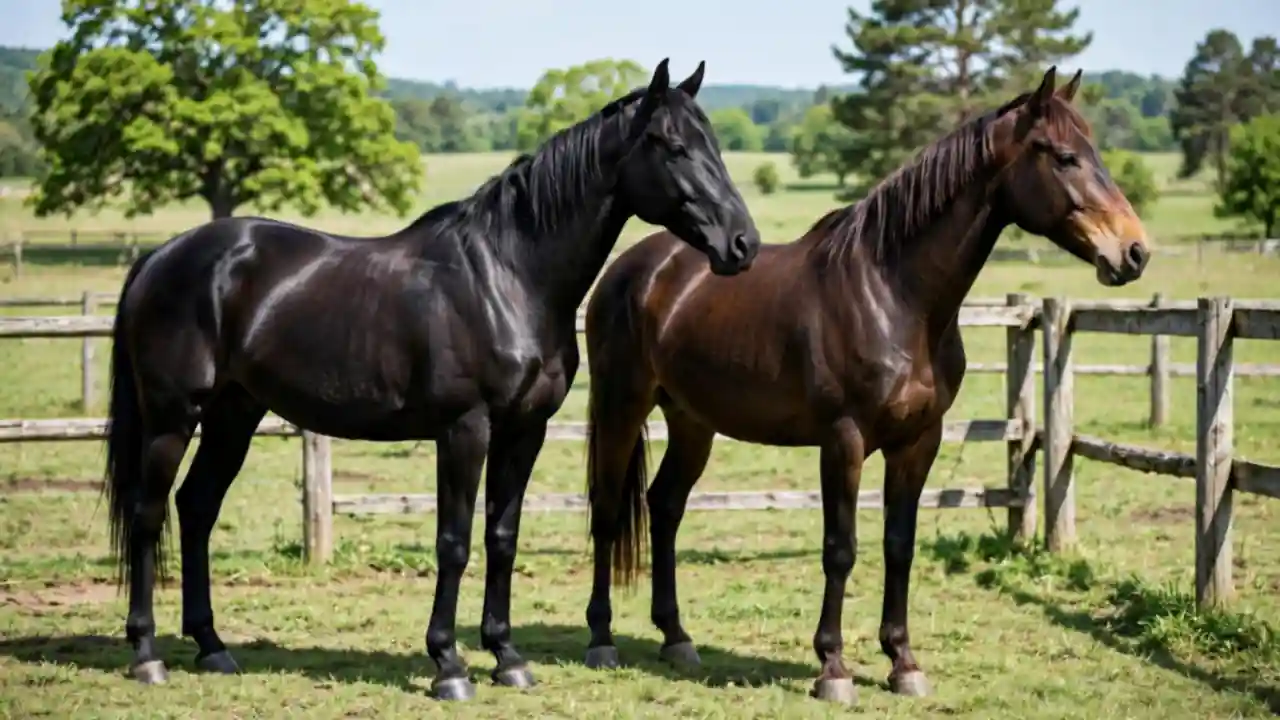
Move in close and look at the muzzle and the skin around the eyes. A true black horse is black there too, with no tan or reddish hairs softening the face.
A dark brown horse gives itself away in those same spots: the muzzle, the flanks, and the skin around the eyes carry lighter, tan-brown hairs. Check the muzzle first, because it is the clearest test. Sun and sweat fade black coats toward brown in summer, so a faded black still reads black on the muzzle while a brown horse never does.
Spot Gray by the White Hairs and the Face
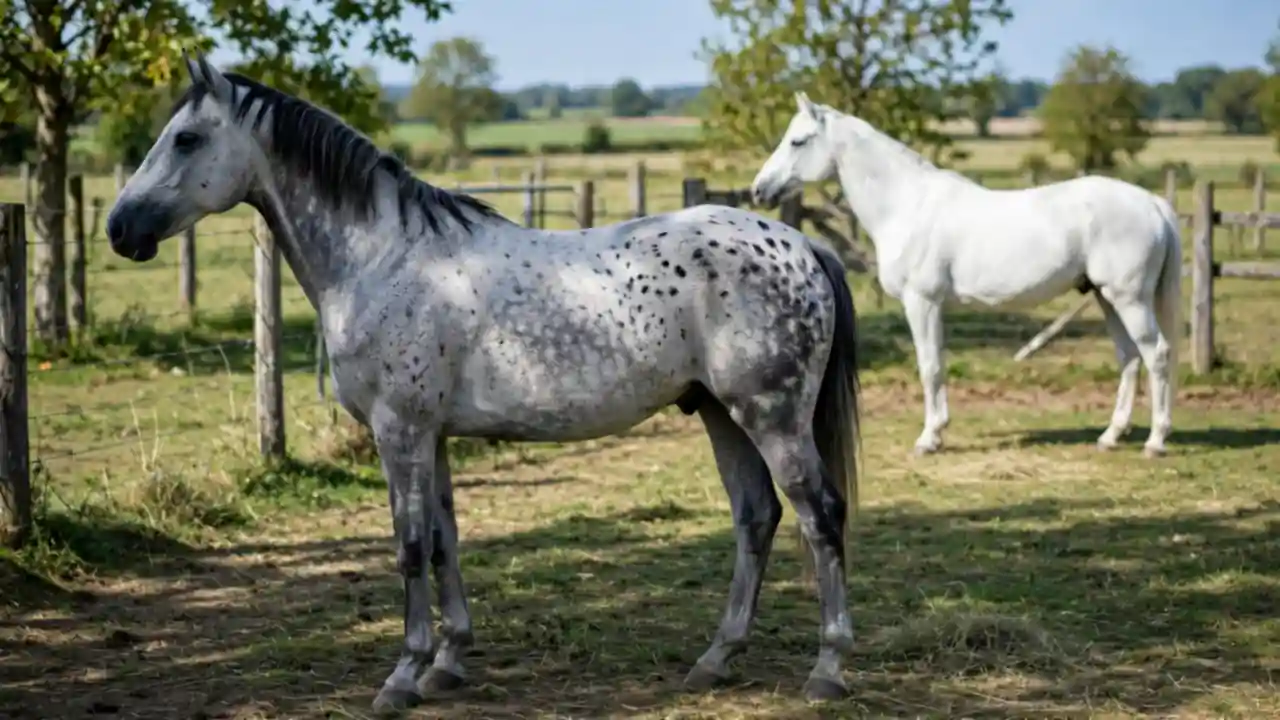
Look for white hairs mixed into the coat, starting on the face. Gray horses are born a normal colour, often black, bay, or chestnut, and white hairs spread through the coat year by year as the horse ages.
The face lightens first, so a dark-bodied horse with a pale, frosting face is a young gray on its way to white. This is why most “white” horses are in fact grays: a true white horse is born white with pink skin, and it is rare. A flea-bitten gray, covered in tiny dark speckles, is the final stage many grays reach.
Name the Dilute Colours: Palomino, Buckskin, and Dun
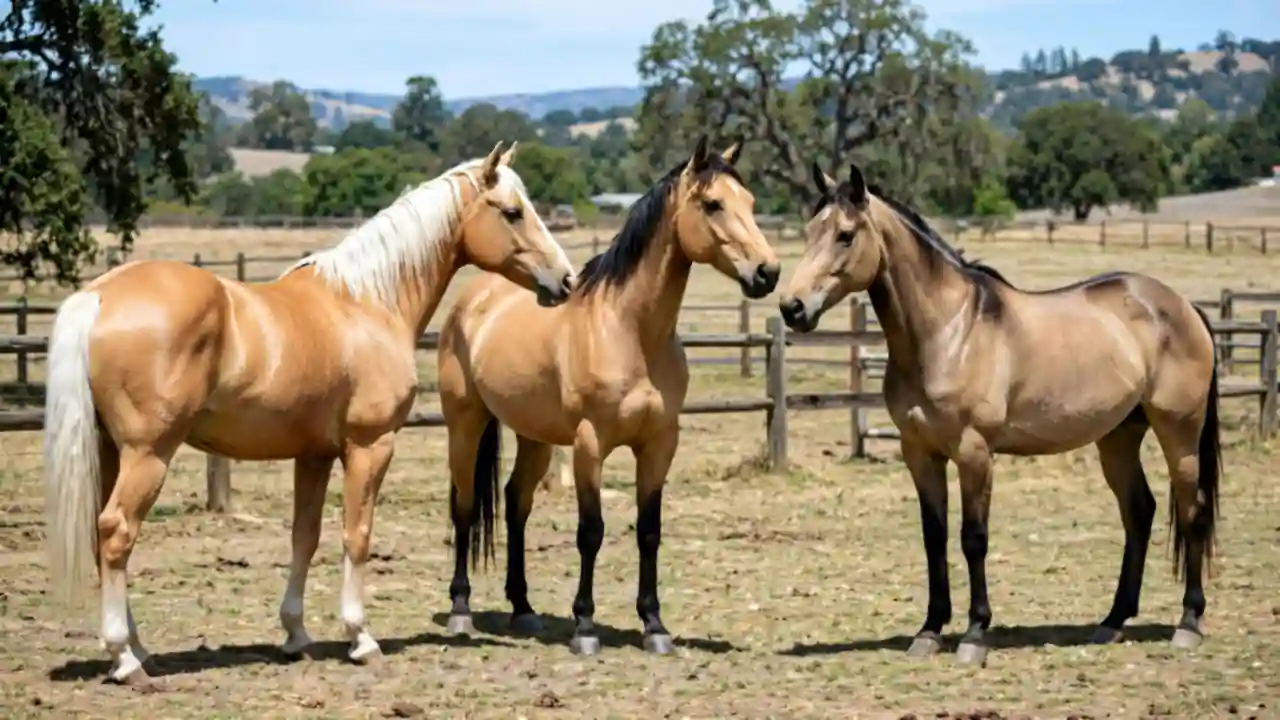
Gold and tan bodies belong to the dilute colours, where a gene has lightened the base coat. A golden body with a white or flaxen mane and tail is a palomino.
Keep the points rule in hand: a tan-gold body with black points is a buckskin, dilute bay. A dun carries the same tan range but adds a dark stripe down the middle of the back, often with faint stripes on the legs. That back stripe is the deciding test between buckskin and dun. Extension guides on dilute horse coat colors cover the genes behind them.
Read White Patterns: Pinto, Roan, and Appaloosa
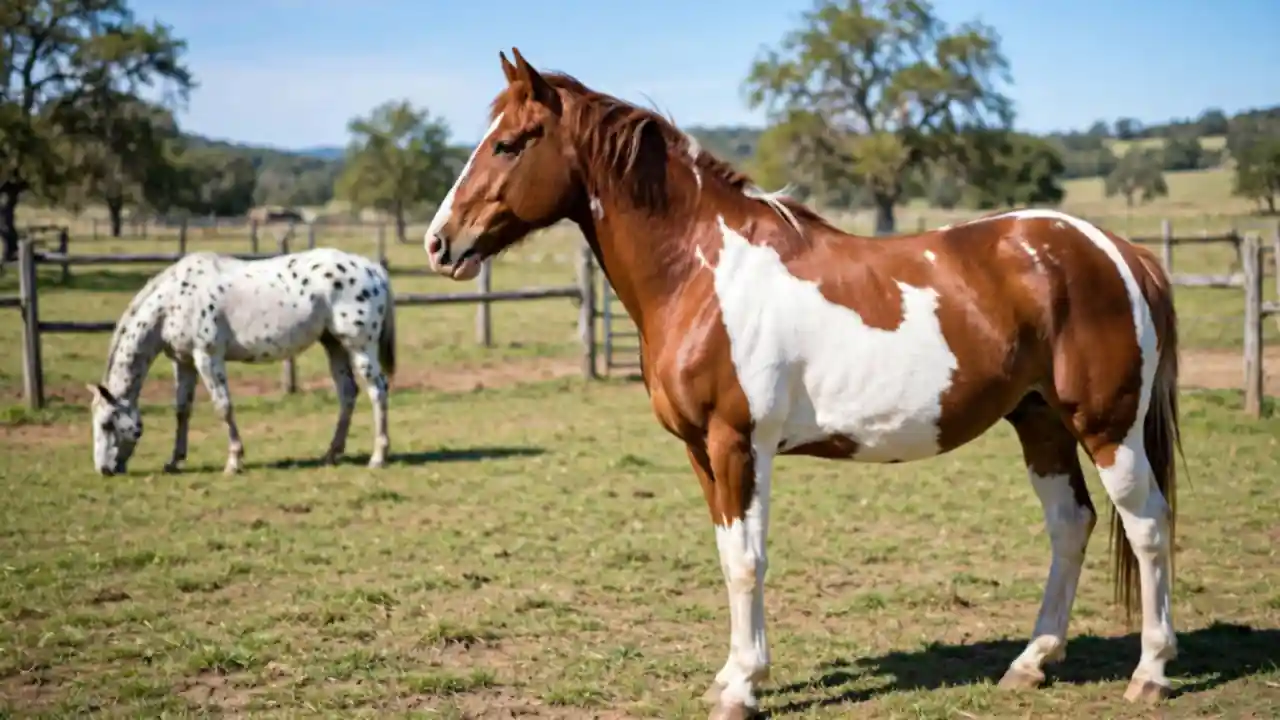
Patterns sit on top of the base colour, so name the base first, then the pattern. Large, clear patches of white over a coloured body make a pinto. Tobiano patches look smooth-edged and cross the back; overo patches look jagged.
Two patterns fool beginners. A roan carries white hairs mixed evenly through the coat, yet the head and legs stay solid and dark, which separates it from a gray. An appaloosa shows spots, a full leopard pattern or a white blanket over the hips, often with mottled skin and striped hooves.
Finish with Face and Leg Markings for the Full Description
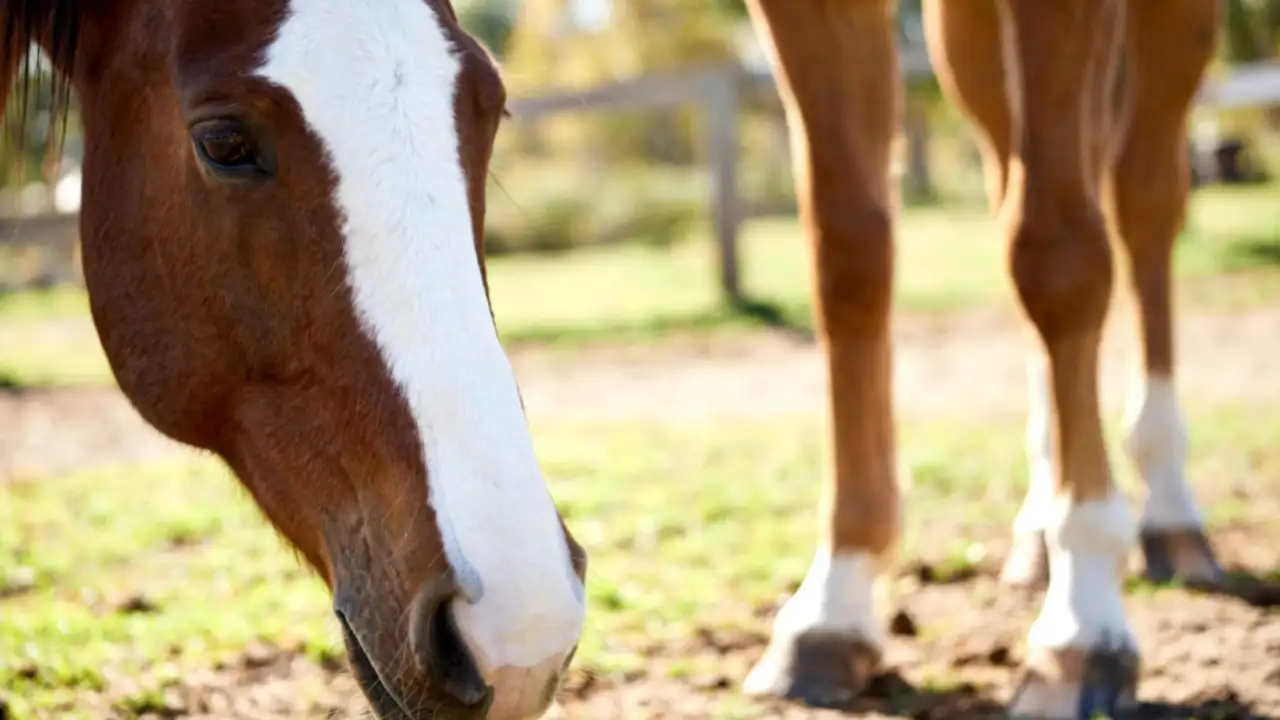
Write down the white markings last, face first. A wide white strip down the face is a blaze, a small one between the eyes is a star, a narrow line is a strip, and white on the muzzle is a snip.
Then read the legs from the hoof up: a coronet band, a pastern, a sock, or a stocking. Pair colour with markings for the full description, for example “dark bay, star, two hind socks.” Records that clear are one of the qualities of a good horse owner, and they are how vets and passports tell look-alike horses apart.
Common Mistakes to Avoid
Calling every brown horse brown
Brown is a real colour, yet most “brown” horses are bay or chestnut in disguise. Run the points check before you settle on a name.
Naming the colour from the body alone
Body shade overlaps between colours. Bay and chestnut, buckskin and dun, black and brown: each pair is settled by the points, the muzzle, or the back stripe, not by the body.
Calling a gray horse white
Nearly every white-looking horse is a gray that has lightened with age. True white horses are born white with pink skin and are rare.
Judging colour in the barn or at dusk
Yellow barn light and low sun shift every shade warmer. Name colours in daylight, and check a faded summer coat against the muzzle and the neck.
Frequently Asked Questions
Do foals change colour as they grow?
Yes. Foals are often born a shade lighter or duller than their adult colour, and the first foal coat sheds out over the first months. Gray foals can be born any colour and lighten for years.
What is the difference between chestnut and sorrel?
They are the same red colour family. Sorrel is the word many Western riders and some breeds use for a lighter, brighter red, while chestnut covers the whole red range in most other settings.
Can a horse’s colour change with age or season?
Gray horses lighten every year. Other coats can fade in strong sun, darken in winter, or look different clipped, yet the colour name stays the same; the points and muzzle still give the true answer.
Does coat colour affect a horse’s health?
Colour on its own does not set a horse’s health, but a few links are worth knowing: gray horses are watched more closely for skin lumps as they age, and pink skin around the eyes and muzzle burns more easily in strong sun. Your vet can flag what matters for your horse.
How is a horse’s colour written on its papers?
Registration papers and passports record the base colour, then markings, whorls, and any brand. Writing your horse’s colour the same way, in the same order as this guide, keeps your records matching the official ones.
Quick Reference Card
The order: body colour, then points, then patterns, then markings.
The chart:
- Red-brown body + black points = bay
- Red body + matching points = chestnut / sorrel
- Black body + black muzzle = black; tan muzzle = dark brown
- White hairs spreading, face pale = gray
- Gold body + white mane = palomino; tan body + black points = buckskin; add a back stripe = dun
- Big white patches = pinto; even white mix, dark head = roan; spots = appaloosa
- Markings: star, strip, blaze, snip; coronet, pastern, sock, stocking
You now have a clear order for reading Horse Coat Colors on any horse you meet.
Body first, points second, patterns and markings last, and the chart in your head does the rest.
Try it on three horses at your barn this week and check your answers against their papers.
Save this guide on Pinterest so the chart is in your pocket next time someone says, “Bring in the bay.”