Toltrazuril Dosage For Horses: Calculator, Chart & Safety Guide
Toltrazuril Dosage Calculator For Horses
You have likely ended up here after a late night internet search of how much toltrazuril do I give a 1,100 lb horse after your horse has been diagnosed with, or is being tested with, Equine Protozoal Myeloencephalitis (EPM). This is the concise, direct answer, and then the big picture.
Quick answer: Toltrazuril doses of 5 mg/kg to 10 mg/kg once a day have been used in published equine research, usually during a period of about 28 days, with the FDA-approved metabolite ponazuril (Marquis®) taking a fixed dose of 5 mg/kg/day over 28 days (or 15 mg/kg/day loading dose then 5 mg/kg/day). Toltrazuril itself is not approved by the FDA to be used in the United States in horses, all doses that you read online, including in this guide, are either compounded products, patent applications, or research published in the literature, not an FDA label. This is not in lieu of your veterinarian.
Key Takeaways
- Ponazuril (Marquis ®) is a toltrazuril-family drug that is the only toltrazuril-family drug approved by the FDA to treat EPM in horses. Toltrazuril is the parent compound of ponazuril.
- Toltrazuril doses in horses are 2.5-10 mg/kg/day with 5-7.5 mg/kg/day being most frequently reported in EPM.
- A 10-day toxicity test showed that even 50 mg/kg/day (5-10x the clinical dose under study) produced mild side effects in the majority of horses – a mild toxicity in a study is not synonymous with a safe dose at home.
- Toltrazuril has not been approved by the FDA in horses; any horse preparation is a compounded or imported preparation, and federal law limits the prescription-level drug such as this to veterinary supervision.
- Dose error is not only an efficacy issue – under- or overdose, or premature discontinuation, can enable the parasite to survive or recur.
What Is Toltrazuril?
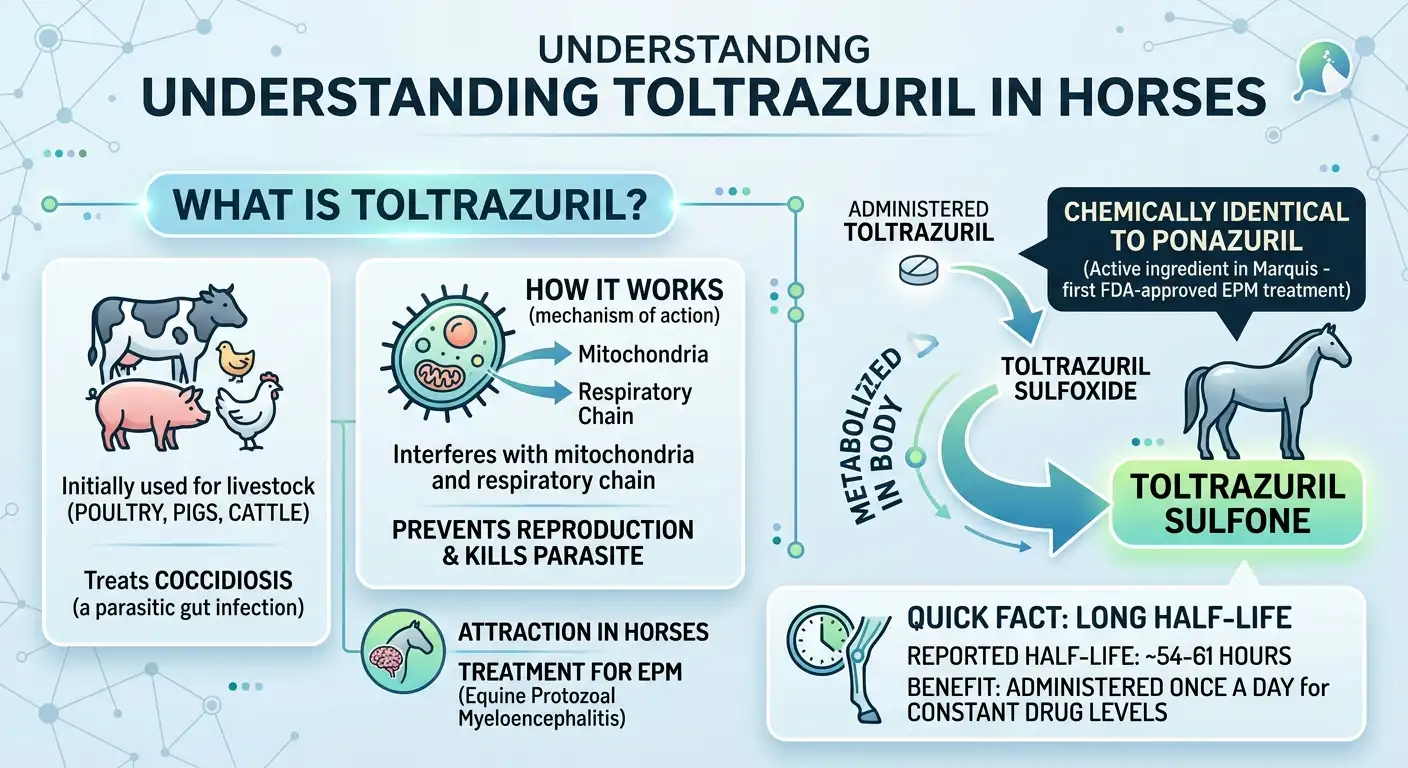
Toltrazuril for horses dosage is a triazinetrione antiprotozoal medication initially used to treat coccidiosis (a parasitic gut infection) in poultry, pigs and cattle. It acts by interfering with the mitochondria and respiratory chain of a parasite, preventing its reproduction and killing it in the end.
Toltrazuril has attracted interest in horses because it is the parent drug of ponazuril – the active ingredient in Marquis, the first FDA-approved treatment of EPM. Once absorbed, toltrazuril is metabolized in the body first to toltrazuril sulfoxide, then to toltrazuril sulfone which is chemically identical to ponazuril. That is, when a horse is administered toltrazuril, its body transforms a significant amount of it to the identical active molecule as the one in the FDA approved product.
Quick fact: Toltrazuril has a long half-life in horses – it has been reported to have a half-life of about 54-61 hours in various studies, thus explaining why it could be administered once a day and still have constant drug levels.
What Is Toltrazuril Used For in Horses?
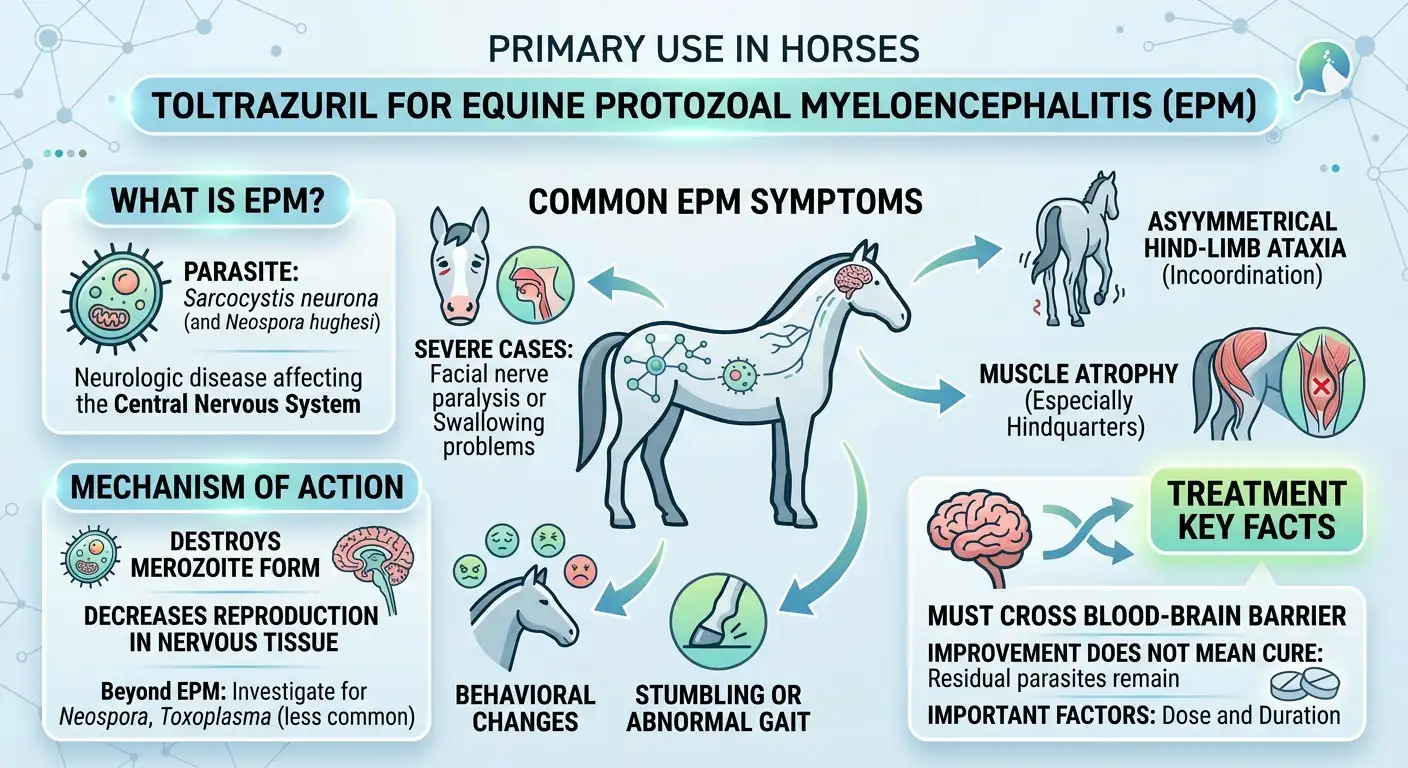
Tolktrazuril is mostly sought out by horse owners to treat Equine Protozoal Myeloencephalitis (EPM), a neurologic disease due to protozoan parasite Sarcocystis neurona (and less frequently Neospora hughesi). EPM influences the central nervous system of the horse and may lead to:
- Asymmetrical hind-limb ataxia (incoordination)
- Atrophy of muscle, particularly of the hindquarters.
- Stumbling or abnormal gait.
- Facial nerve paralysis or swallowing problems (in severe cases)
- Behavioral changes
Toltrazuril and its metabolite ponazuril act by destroying the merozoite form of the parasite, and decreasing the ability of the parasite to reproduce in the nervous tissue of the horse. Since the drug must cross the blood-brain barrier to get to the site of infection, dose and duration are important – even with an apparent improvement, residual parasite activity remains in the central nervous system.
Beyond EPM, toltrazuril and other triazine derivatives have also been investigated against other apicomplexan parasites (Neospora, Toxoplasma), but EPM is the most common cause of its use in horses.
Toltrazuril vs. Ponazuril: What’s the Real Difference?
This is the one most vital difference that competitor articles brush over, and thus in simple terms it is here.
| Toltrazuril | Ponazuril (Marquis®) | |
| FDA-approved for horses? | No | Yes (approved 2001) |
| Relationship | Parent compound | Primary active metabolite of toltrazuril |
| Typical studied/label dose | 5–10 mg/kg/day (research range) | 5 mg/kg/day for 28 days, or 15 mg/kg loading dose + 5 mg/kg x 4 days |
| Source | Compounded pharmacies, imported/gray-market powders and pastes | Licensed manufacturer (Boehringer Ingelheim), veterinary prescription |
| Dosing accuracy tools | Depends entirely on the compounder/seller | Calibrated syringe with a weight-marked dosing ring |
| Regulatory oversight | Not evaluated by the FDA for safety/efficacy in horses | FDA safety and efficacy data on file |
| Typical monthly cost | Often marketed as a cheaper alternative | $250–$1,500+ per month depending on formulation |
Summary: since toltrazuril is transformed into ponazuril within the body of the horse, sellers tend to sell it as the same, but at a lower price. They are pharmacologically very similar – but only ponazuril has undergone the FDA approval process, which confirms the quality, potency, and safety data of the manufacturing process in horses. That is not a marketing technicality, that is a meaningful difference.
Is Toltrazuril FDA-Approved for Horses?
No. Three treatments have been approved by the FDA in the United States to treat EPM in horses:
- Ponazuril (Marquis 15% w/w) oral paste.
- Diclazuril (Protazil®) – pelleted top-dress.
- Sulfadiazine/pyrimethamine (ReBalance®) – oral suspension.
Toltrazuril for horses medication itself is not FDA approved to use in any equine use. Compounded, imported, or formulated products sold as toltrazuril for horses are not subject to the usual new-animal-drug approval process. It does not necessarily imply unsafe, but it does imply that the dosing data provided (including in this article) is based on published studies and patents, and the quality/potency of formulations may change depending on the supplier.
Many of the antiprotozoal drugs in this category are also limited by federal law to use by or on the order of a licensed veterinarian. Any toltrazuril or ponazuril product that is administered to an actual horse must first be discussed with your vet, not only to be legally correct, but also to ensure the safety of your horse.
Toltrazuril Dosage Chart for Horses (Research-Based Reference)
The following table is an overview of dosing that has been actually used in published horse studies and patent filings – not a general recommendation. Always ensure that you are giving the right concentration of a product and the dose prescribed by your vet.
| Horse Body Weight | 5 mg/kg/day | 7.5 mg/kg/day | 10 mg/kg/day |
| 800 lb (363 kg) | 1,815 mg | 2,723 mg | 3,630 mg |
| 1,000 lb (454 kg) | 2,270 mg | 3,405 mg | 4,540 mg |
| 1,100 lb (499 kg) | 2,495 mg | 3,743 mg | 4,990 mg |
| 1,200 lb (544 kg) | 2,720 mg | 4,080 mg | 5,440 mg |
| 1,400 lb (635 kg) | 3,175 mg | 4,763 mg | 6,350 mg |
Numbers are mathematical calculations (weight x mg/kg) presented as a reference, but not a prescription. The actual volume to administer is determined by the concentration of the particular product you have (e.g., a 150 mg/mL or 5% suspension) and that calculation should be verified by your veterinarian or pharmacist.
What the research actually shows about dosing
- A blood-brain-barrier trial of horses was done using 2.5, 5.0 and 7.5 mg/kg/day over 10 days, with higher doses producing higher concentrations in cerebrospinal fluid (CSF) – the part of the body where EPM actually causes its damage.
- In another clinical dose-response study of ponazuril (the metabolite), 5 mg/kg and 10 mg/kg during 28 days yielded comparable clinical response and the FDA eventually accepted the 5mg/kg/28 days regimen as the labeled dose of Marquis 28 days.
- The patent literature outlining toltrazuril treatment regimens in the treatment of EPM cites a wider range of 5-15 mg/kg/day, with a common equine dose of about 10 mg/kg, in a treatment course of one to six months, depending on the severity and response.
- A 10-day safety trial in toltrazuril specifically in horses used 50 mg/kg/day – which the researchers characterized as approximately 5-10 times the clinical dose – that is, the clinical dose that those researchers were referring to was within the 5-10 mg/kg range above.
Practical translation: the majority of believable equine sources are around 5-10 mg/kg/day, typically over a period of approximately 28 days, although there are off-label regimens of longer treatment in cases of relapsing or severe illnesses. No one correct number fits all horses – disease severity, response to treatment and clinical judgment of your veterinarian all come into play.
How Is Toltrazuril Given to Horses?
Horse toltrazuril medication is sold as an oral paste or suspension, administered once per day, usually incorporated into feed or administered by oral syringe (like dewormers). Some practical observations based on the literature of the research and products:
- Take it every day at the same time. Regular dosing schedules allow to keep the levels of drugs in the blood and CSF constant, which is important when the drug must accumulate in the nervous system.
- Shake liquid suspensions thoroughly prior to dosing – active ingredient may settle and an undispersed dose may not deliver the amount of drug required.
- Do not divide or miss doses without instructions. Since the objective is to maintain a drug level to eliminate a CNS parasite, intermittent administration can compromise the treatment despite the overall amount being within a reasonable range per month.
- Finish the entire course. The reason why studies dosing 28 days straight were structured around that time is because it is one of the most frequent reasons behind relapse; the horse looks better.
Benefits of Toltrazuril Treatment
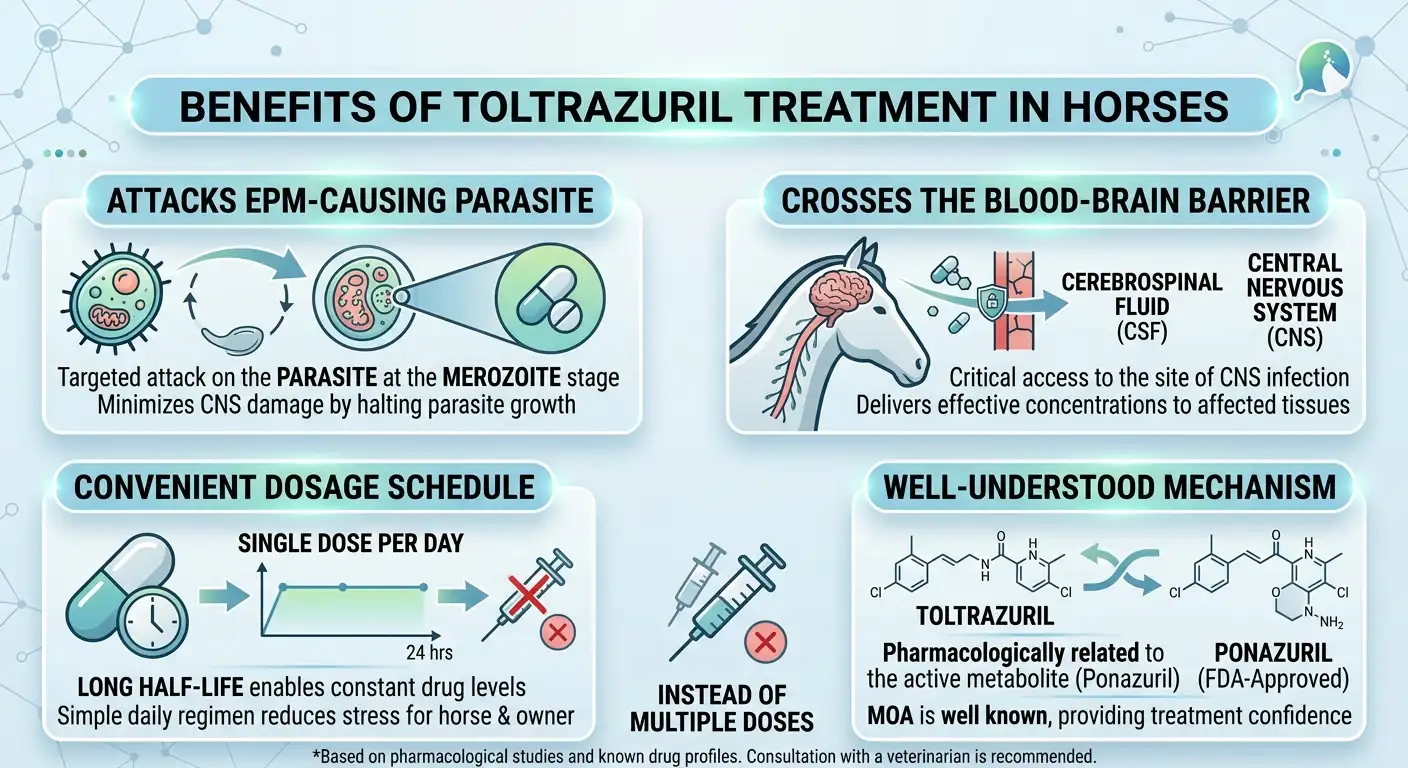
- Attacks the parasite that causes EPM (Sarcocystis neurona) at the merozoite stage of life.
- Diffuses across blood-brain barrier to cerebrospinal fluid, which is critical as EPM is a CNS disease.
- Long half-life enables a single dose per day instead of several doses per day.
- Pharmacologically related to an FDA-approved drug (ponazuril) and therefore its mechanism of action is well known despite the parent molecule not being approved separately in horses.
Side Effects and Risks
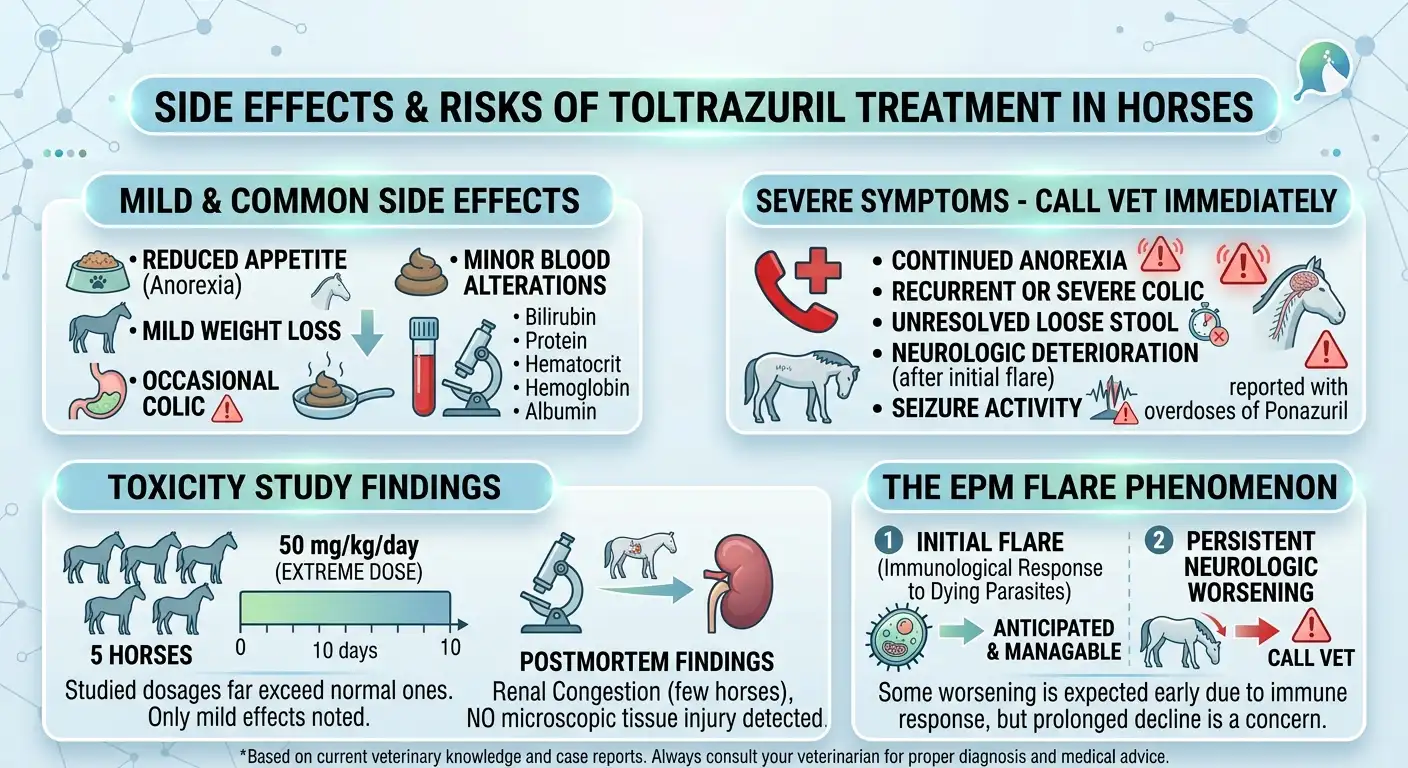
According to published toxicity data and veterinary case reports, the side effects at the doses studied are usually mild:
- Reduced appetite (anorexia)
- Mild weight loss
- Occasional colic
- Sool or diarrhea that is loose.
- Minor alterations in blood (bilirubin, protein, hematocrit, hemoglobin, albumin)
In the most elaborate published toxicity study, five horses fed with 50 mg/kg/day during ten days (far exceeding the normal clinical dosages) exhibited only mild clinical effects, one horse having colic. Postmortem test detected renal (kidney) congestion in a few horses but no microscopic tissue injury due to the drug.
Symptoms of a more severe issue – call your vet right away in case you notice:
- Continued anorexia.
- Colic: recurrent or severe episodes of colic.
- Stool that is not resolving in a day or two.
- Any neurologic deterioration after the first, sometimes-anticipated early, flare, some EPM horses exhibit as the immune system responds to the dying parasites.
- Seizure activity (reported with severe overdoses of the corresponding compound ponazuril)
Overdose: What Happens If a Horse Gets Too Much?
In animal toxicity (rodents, poultry) the acute lethal dose of toltrazuril was extraordinarily high -100 times higher than the therapeutic dose. In horses in particular, 5-10 times the clinical dose that was being studied only had mild effects after 10 days, and no horse was killed in the study. With that said, wide margin of safety in a small research study does not give one a green light to make guesses on dosing.
An overdose is a waste of an expensive, unregulated product and the extreme overdose effects that have been reported with the triazine analogues include loose stool, weight loss, loss of appetite and seizures. In case of an overdose, call your veterinarian or an animal poison control center immediately.
Drug Interactions and Precautions
Published information on toltrazuril drug interactions in horses is sparse, which in itself is a significant safety consideration – an unapproved drug with limited interaction information should be given particular caution when a horse is on other drugs. What should be flagged and is common sense:
- NSAIDs (e.g., flunixin, phenylbutazone) are usually administered in conjunction with EPM treatment to help reduce inflammation, especially in the first week, but must be administered and observed by a vet, not applied over the top.
- Corticosteroids or DMSO are sometimes used by veterinarians for horses with significant CNS inflammation, again under professional supervision.
- There were no toltrazuril-drug interactions studies identified in the veterinary literature of horses, and this should be treated as an information gap, rather than as a sign that there are no interactions.
- Pregnant or breeding mares: the safety of pregnant or lactating mares has not been determined with the FDA-approved ponazuril product, much less toltrazuril. Only the veterinary consideration of risk and benefit should be used to treat this population.
- Competition or racing horses: toltrazuril, ponazuril and other antiprotozoal drugs may be found on drug tests. When your horse races or competes under the medication regulations of a governing body, be sure to check the withdrawal times and permissibility with your veterinarian and the governing body before you dose, this is entirely another question to medical safety.
Toltrazuril vs. FDA-Approved EPM Treatments: Cost & Practical Comparison
| Factor | Toltrazuril (compounded) | Ponazuril / Marquis® | Diclazuril / Protazil® |
| FDA status | Not approved for horses | Approved | Approved |
| Dosing tool | Varies by supplier | Calibrated syringe by weight | Pre-measured top-dress packets |
| Typical monthly cost | Often marketed as lower-cost | ~$800–$1,200+ for a full course | Varies, often comparable to Marquis |
| Quality assurance | Depends on compounder/seller | Manufacturer-controlled | Manufacturer-controlled |
| Veterinary prescription needed | Recommended/required for legal, safe use | Required | Required |
Cost amounts are based on the ranges reported in veterinary and industry publications and may differ greatly by location, vendor and horse weight – always ask them to quote you the current price.
Myth vs. Fact
Myth: “Toltrazuril is identical to ponazuril, the dosage is similar.
Fact: Toltrazuril is metabolized to the active form of ponazuril in the body of the horse, but they are not literally the same product and toltrazuril has not undergone equine specific FDA testing. Doses are not equal but related.
Myth: When a small study indicated that there was no death at high doses, home dosing is safe.
Fact: A small safety trial on five horses informs you that the drug has a reasonable margin of safety – it does not justify an amateur who gets out the calculator and injects an unregulated drug into a patient without veterinary supervision.
Myth: Toltrazuril is a full-cure in all horses with EPM.
Fact: Clinical trial information on the corresponding drug ponazuril indicated approximately 62% of the horses treated were successful – significant, but not universal. Certain horses require second line, another medication or supportive treatment.
You May Also Like to Read:
- Sulfadiazine-Trimethoprim Dosage For Horses: Calculator, Chart & Safe Guide
- Psyllium Husk Dosage for Horses: Calculator, Chart & Complete Feeding Guide
FAQs
What is toltrazuril used for in horses?
Toltrazuril dosage is also used off-label to treat Equine Protozoal Myeloencephalitis (EPM), a neurologic illness due to the parasite Sarcocystis neurona. It acts by destroying the parasite and reducing its capacity to multiply in the nervous system of the horse.
Is toltrazuril the same as ponazuril?
No, they are very similar. The parent compound is called toltrazuril, and after being absorbed into the horse, it is converted into toltrazuril sulfone, chemically identical to ponazuril which is the FDA-approved active ingredient in Marquis.
What is the dose of toltrazuril that I need to administer to my horse?
There’s no universal dose. The most common published equine research used 5-10 mg/kg/day, usually 28 days, but the correct dose of your horse is determined by the concentration of the product used, the severity of the disease, and the evaluation of your veterinarian. This is an educational rather than a prescriptive article.
Is toltrazuril FDA-approved for horses?
No. Ponazuril (Marquis 2), diclazuril (Protazil 2), and sulfadiazine/pyrimethamine (ReBalance 2) are the only FDA-approved products to treat EPM in horses in the U.S. Toltrazuril products in horses are compounded or unapproved preparations.
What is the duration of toltrazuril treatment of EPM?
The majority of published protocols involve approximately 28 days of daily therapy, but off-label regimens last one to six months based on the severity of the disease and the response of the horse.
What are the side effects of toltrazuril in horses?
Side effects are typically mild: loss of appetite, mild weight loss, colic (occasionally), and loose stool. As well, mild bloodwork changes have been reported. Serious reactions are not common at clinical doses studied but must be reported to your vet.
Is toltrazuril administerable in the long term?
Longer courses longer than 28 days have been reported in patent literature and in off-label use in relapsing cases, but there is limited long-term safety data specific to horses. Vet-directed long-term usage should be monitored with periodic bloodwork.
Does toltrazuril overdose in horses?
Toxicity data indicate a relatively broad margin of safety – even doses 5-10 times the normal clinical dose had only mild effects in a small study group. Nevertheless, the symptoms of overdose reported with related compounds are loss of appetite, loss of weight, loose stool and seizures in extreme cases. Call your vet in case of an overdose.
Is toltrazuril safe for pregnant mares?
Toltrazuril or the FDA-approved ponazuril product have not been shown to be safe in pregnant or lactating mares. The application in this population should only occur under veterinary direction.
Does toltrazuril have interactions with other drugs?
There is scanty published interaction information on horses. EPM treatment is sometimes combined with NSAIDs, corticosteroids or DMSO to treat inflammation, although combinations should be administered by your veterinarian, not overlaid.
What’s the difference between toltrazuril, ponazuril, and diclazuril?
The three are all members of the triazine/triazitetraine antiprotozoal family and have similar parasites. Ponazuril (Marquis 2) and diclazuril (Protazil 2) have been FDA-approved in horses, specifically as equine EPM; their parent/relative toltrazuril is more frequently used in livestock and poultry and is used off-label in horses.
Final Thoughts
EPM is terrifying because it puts the battle in the nervous system of your horse, and it is difficult to reverse an error as with most equine illnesses. Toltrazuril horse dosage is not without real pharmacological rationale – it is the parent drug of an FDA-approved EPM drug, crosses into the CNS, and published studies have indicated a fairly broad margin of safety at the doses studied.
That is not pharmacologically promising and safe to dose yourself off a site, particularly when it comes to a compound that has never undergone equine-specific FDA consideration.
When you are considering toltrazuril as a treatment in your horse, the larger dosage chart is not what you need, but a phone call to your veterinarian with the exact weight of your horse, the concentration of the product you are looking at, and the diagnosis you are dealing with. Use the research in this guide to pose better questions, not to substitute that conversation.