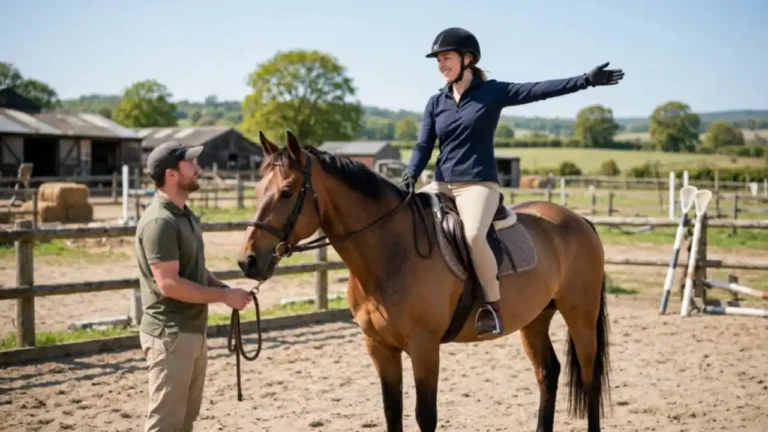
Do Groundwork Exercises for Beginners to Build Trust and Control on the Ground
You clip the lead rope on and your horse walks past you, crowds your shoulder, and stops only when it feels like it. You pull, the horse plants its feet, and the whole outing turns into a tug of war before you have even left the yard.
Groundwork Exercises for Beginners fix that from the ground, before you ever sit in the saddle. They are short in-hand exercises that teach your horse to move when you ask, stop when you ask, and stand quietly beside you.
The exercises work because a horse learns respect on the ground first. A horse that yields its hindquarters, backs up on a light ask, and walks at your shoulder is a horse that will listen under saddle too. Each exercise takes only a few minutes, and none of them needs a round pen or fancy kit.
By the end of this guide, you will have a full groundwork routine that takes about 20 minutes a session and fits into any yard visit. Every step is beginner level, and every one is done on the ground, in hand, with a halter and lead rope.
Work through the routine in a fenced area with a calm, steady horse, and pair it once or twice a week with the off-horse horse rider workout for strength between rides.
What You Need
- A calm horse that leads in a halter
- A well-fitting halter and lead rope
- A fenced arena, round pen, or paddock
- A training stick or short flag
- A riding helmet, fastened
- Gloves to protect your hands
- Sturdy boots with a small heel
- A pocket of small treats for a reward
- A notebook for session notes
- A helper for the first session
- Fresh water nearby
- Ten minutes of quiet time before you start
At a Glance
- Stand beside your horse and set the space
- Lead your horse forward at a steady walk
- Ask your horse to yield its hindquarters
- Back your horse up with light pressure
- Desensitise your horse to the rope and flag
- Send your horse around you on a lunge circle
- End with a calm stand and a short review
Before and After: What Changes
Before
- Horse crowds your shoulder and walks past you
- Stops and starts feel like a tug of war
- Horse plants its feet and ignores the rope
- You feel nervous leading in open spaces
After a few weeks of practice
- Horse walks at your shoulder, on a loose rope
- Stops and starts happen on a light ask
- Horse yields and backs up when you ask
- You lead with calm, clear body language
Stand Beside Your Horse and Set the Space
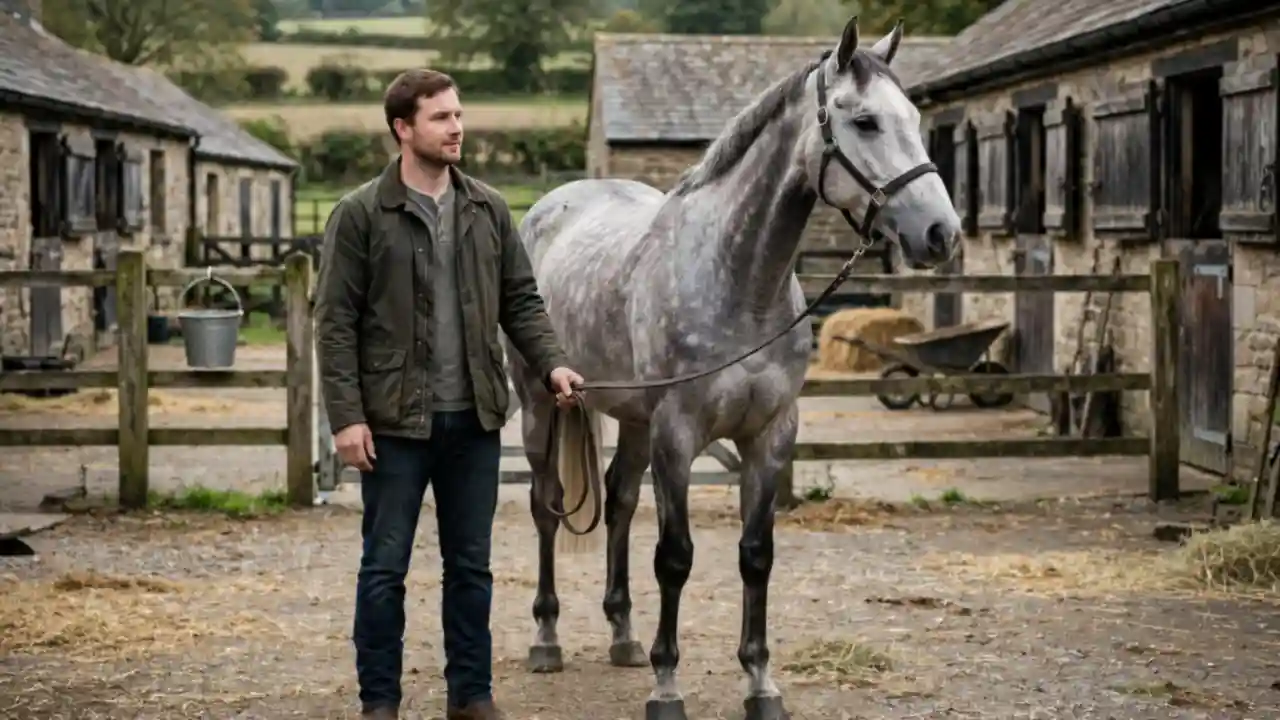
Stand at your horse’s left shoulder, facing the same way the horse faces, with about an arm’s length of space between you. Hold the lead rope in your left hand, close to the clip, and keep the spare rope coiled in your right hand.
Stand still for 30 seconds and breathe. Your horse should stand still too. If it steps toward you, push its shoulder away with your elbow and step into its space until it moves back. This first minute sets the rule for the whole session: your space is yours, and the horse waits for your ask.
Lead Your Horse Forward at a Steady Walk
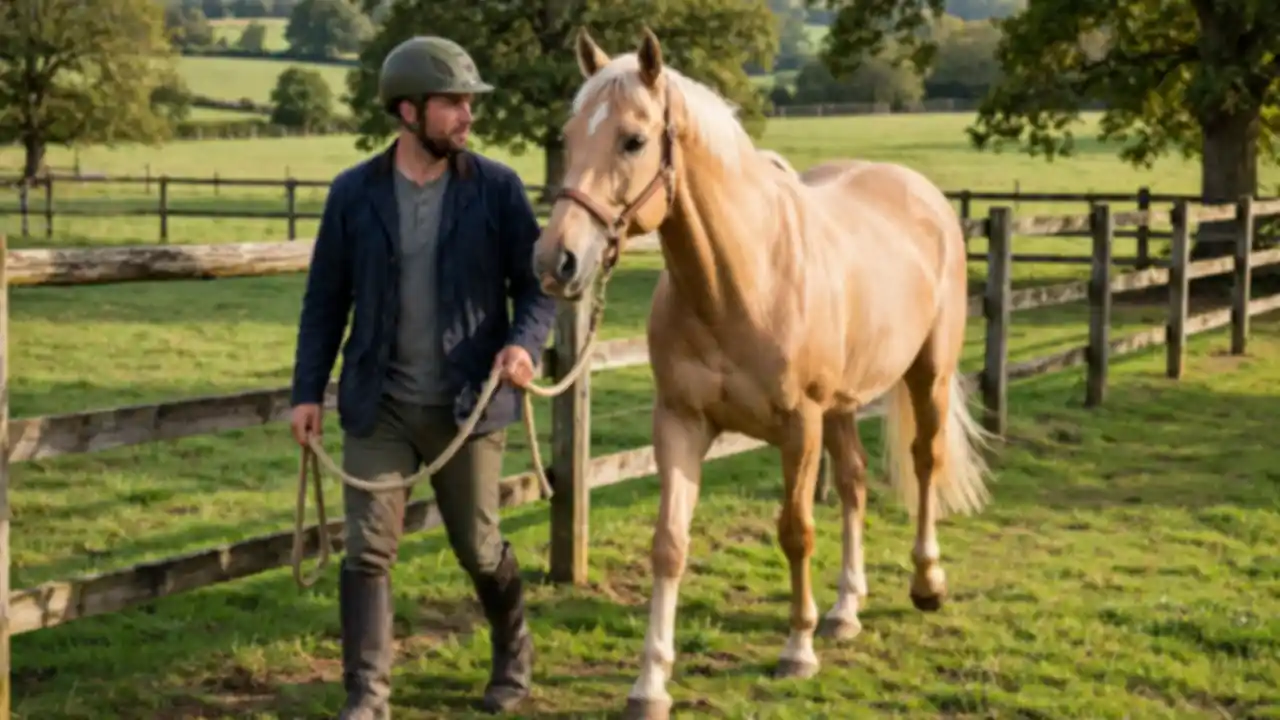
Step forward with energy and ask your horse to walk with you, not ahead of you. Keep the rope loose with a soft bend in it, and keep the horse’s nose level with your shoulder as you walk a straight line down the fence.
Walk for 2 minutes, then stop. Plant your feet, lift your hand slightly, and say “whoa” once. Wait for 3 seconds. A horse that stops beside you instead of walking past you has understood the first lesson of leading. If the horse surges ahead, turn it in a small circle and try again, calmly.
Ask Your Horse to Yield Its Hindquarters
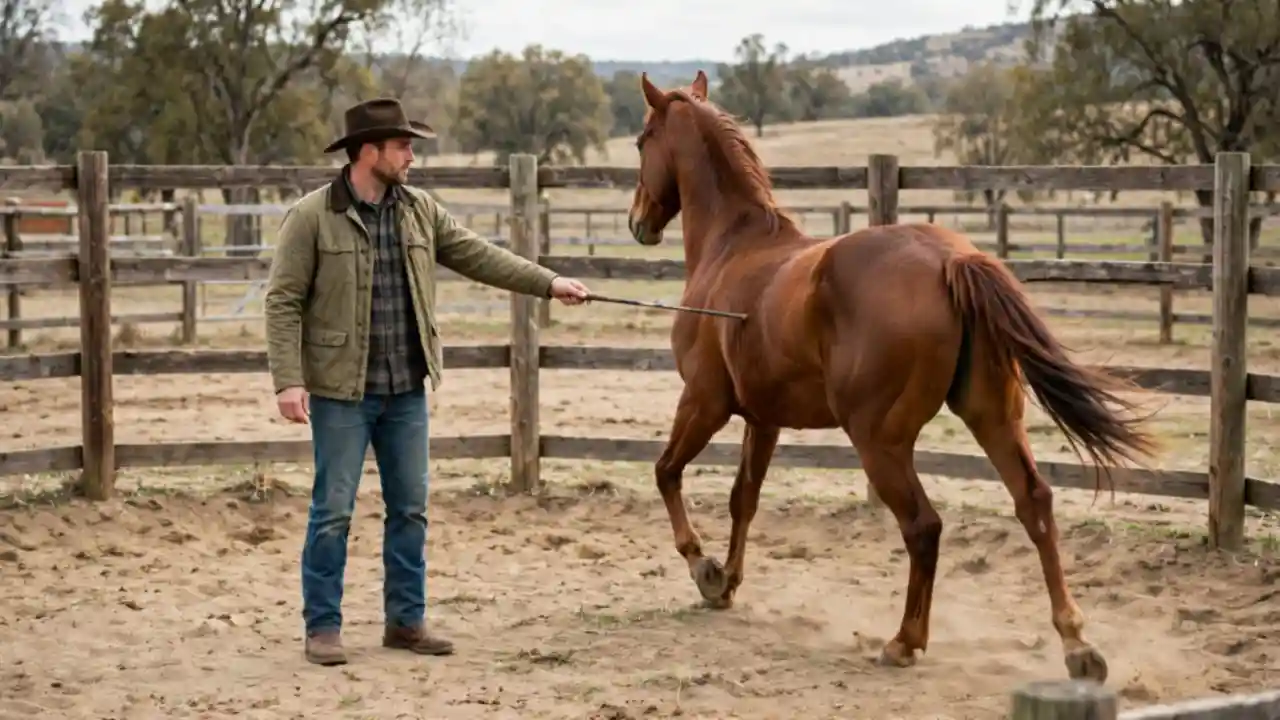
Stand at the horse’s shoulder and point the training stick toward its hip. Step toward the hip with purpose, as if you mean to walk through it, and keep the pressure on until the hind feet step away from you.
Ask for 2 steps to the side, then drop your energy and let it stand. Repeat 3 times on each side. The hindquarters are the horse’s engine, and a horse that moves them away on a light ask has given you the steering. A soft eye and lowered head show the horse is listening, not going through the motions.
Back Your Horse Up with Light Pressure
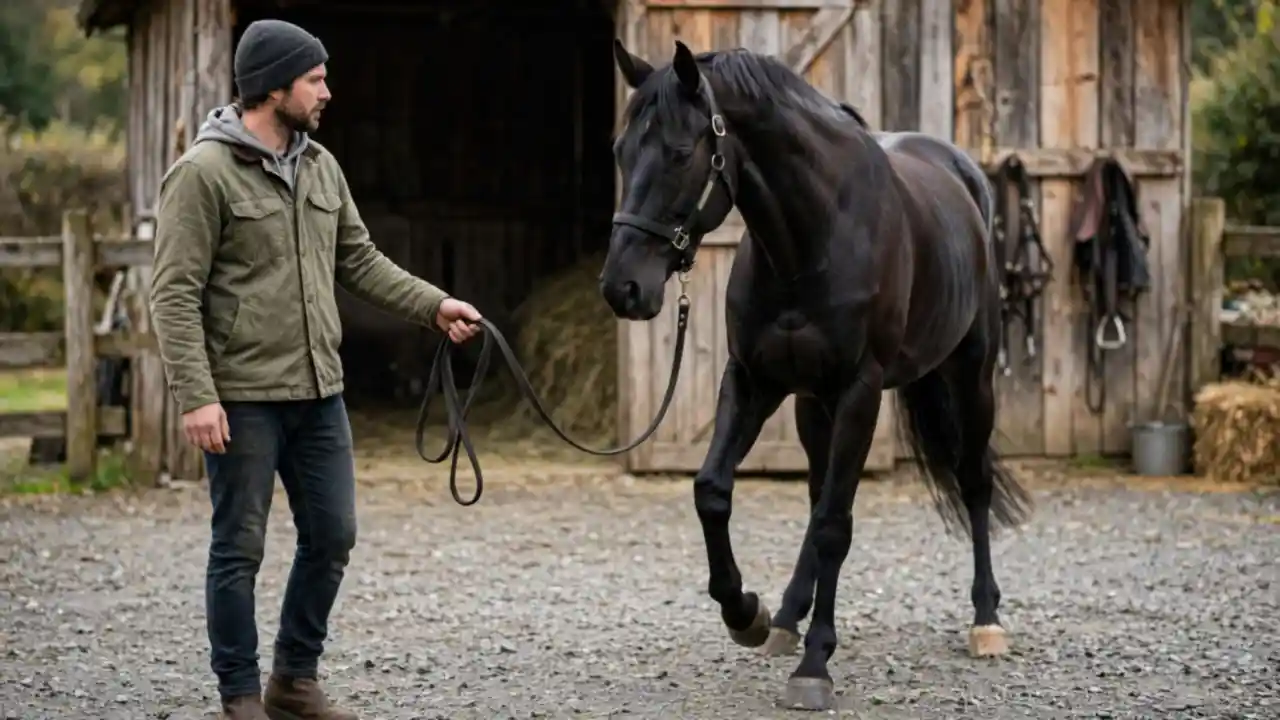
Face your horse, stand a stride in front of it, and wiggle the lead rope gently from side to side. Keep the wiggle small at first. The moment the horse shifts its weight backward, stop the wiggle and stand still.
Ask for 4 steps back, then praise the horse with a quiet word and a scratch on the forehead. Build up the ask in 3 stages: a look, a wiggle, and only then a firmer swing of the rope. A horse that backs up on a look alone has learned to read your smallest signal.
Desensitise Your Horse to the Rope and Flag
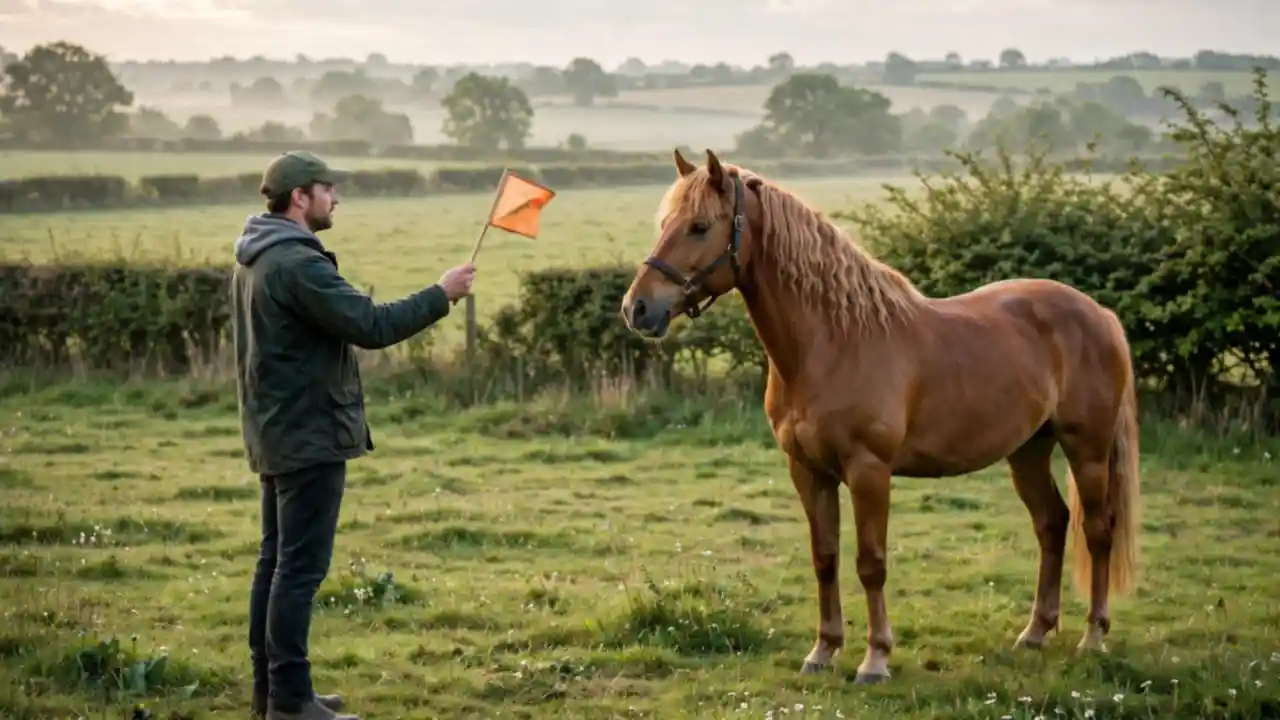
Stand at your horse’s shoulder and swing the flag in a slow rhythm near the horse’s legs. Keep the rhythm steady and watch the feet. The aim is a horse that stands still while the flag moves, not one that runs from it.
Work for 2 minutes on each side, starting low and lifting the flag higher only when the horse stays calm. If the horse moves its feet, follow and keep the rhythm going until it stops, then drop the flag. The release is the reward: the horse learns that standing still makes the scary thing stop.
Pro Tip: Keep the flag moving in a steady beat, like a metronome, instead of waving it in sudden bursts. Horses settle faster with a rhythm they can predict, and a calm horse learns in half the time of a worried one.
Send Your Horse Around You on a Lunge Circle
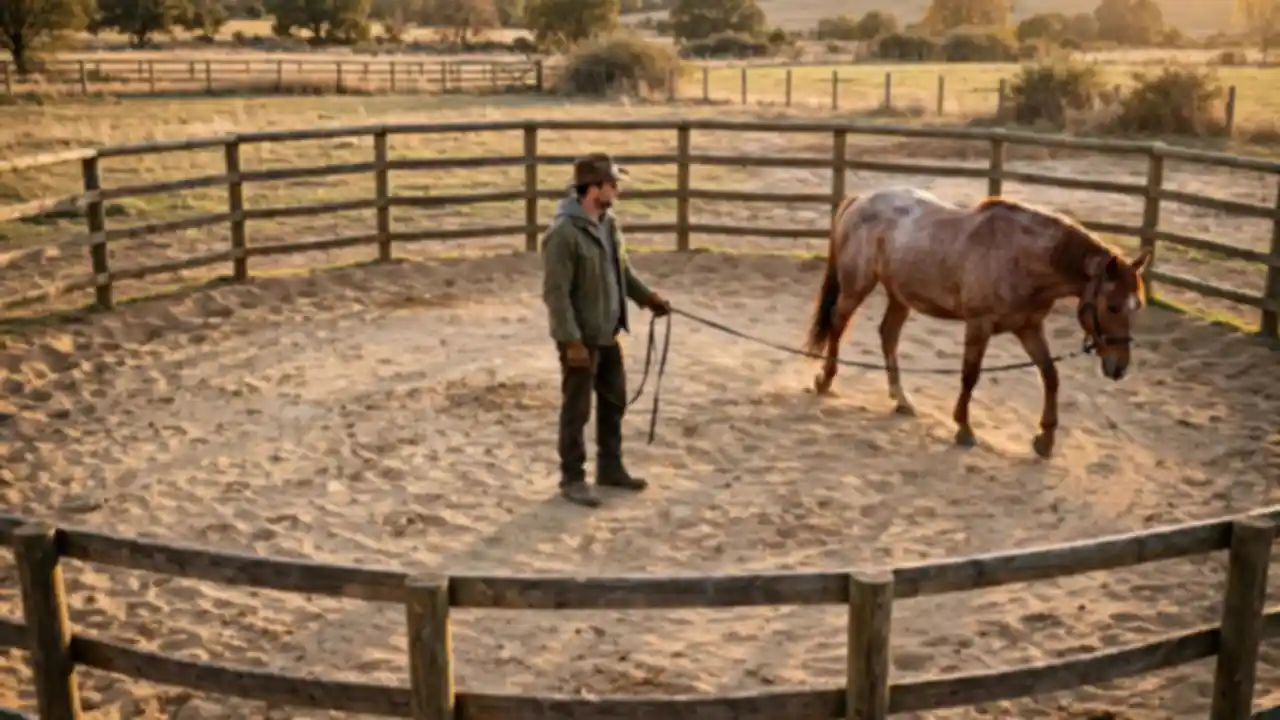
Stand in the centre of the pen with the lunge line in one hand and the training stick in the other. Point the stick behind the horse’s drive line, at its hip, and ask it to walk out onto a 10 metre circle around you.
Keep the horse walking for 2 circles each way, then ask it to halt and face you. Change direction by stepping toward the shoulder and sending it the other way. Short walk circles are enough; the aim is a horse that moves out on your ask and comes back when invited in.
Heads Up: Never wrap the lunge line around your hand, and never lunge in an open field for a first session. A horse that spooks can pull the line tight in a second, so keep the line folded in your hand and work in a fenced pen with a helper nearby.
End with a Calm Stand and a Short Review
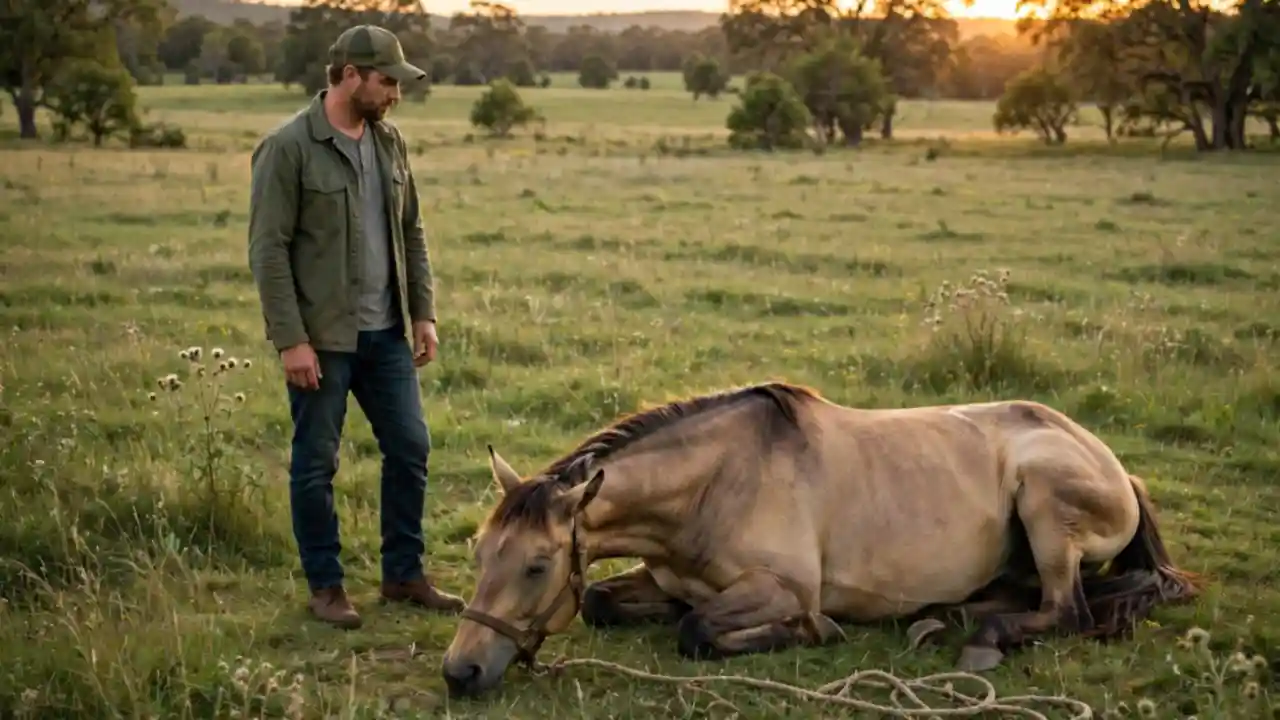
Bring your horse back to your shoulder, ask it to stand square, and drop the rope to a loose loop. Stand together for 1 minute with no ask at all. A session that ends in stillness teaches the horse that calm is the reward for work.
Write 3 notes before you leave: what went well, what needs another session, and how the horse felt. Steady groundwork like this also builds the trust that carries into the saddle, as our guide to the rider exercises for equestrians shows from the rider’s side.
Common Mistakes to Avoid
- Pulling harder when the horse plants its feet. A pull turns into a tug of war, and a 500 kilo horse will win it. Step toward the hindquarters instead, or turn the horse in a small circle, and the feet will move without a fight.
- Skipping the stand and rushing to the walk. Step 1 sets the space for the whole session. A horse that never learns to stand still beside you will not walk politely either, so give the first minute its full time.
- Chasing a scared horse with the flag. Desensitising works by rhythm and release, not by pressure. If the horse moves, follow calmly and keep the flag low until the feet stop, then drop it at once.
- Trying to lunge at the trot in week one. Walk circles build the habit of moving out and coming back. Trot work on the lunge comes only when the walk circle is calm in both directions, and it is a later step, not a starting one.
Frequently Asked Questions
How often should I do groundwork?
Two or three short sessions a week is plenty. Groundwork fits into any yard visit, and short, calm sessions teach faster than one long, tiring one.
Can I do groundwork with any horse?
Use a calm horse that already leads in a halter. A young, fresh, or nervous horse needs a helper nearby and shorter sessions, and you should ask your trainer before starting. If you are still choosing a first horse, read about the best horse breed for beginners before you buy.
Do I need a round pen?
No. Every step here works in a fenced arena or a quiet paddock corner. A round pen helps for lunging, but a small fenced area does the same job for a beginner.
Does groundwork help my horse’s topline?
Yes, in a small way. Yielding, backing up, and walking out on a circle all ask the horse to step under and lift its back. For a full muscle plan, see our guide on how to build muscle on a horse and shape a strong topline.
What if my horse will not back up at all?
Go back to Step 3 and ask for the hindquarters to yield first. A horse that will move its hind end will back up soon after, and the guide to the qualities of a good horse owner covers the patience that makes the difference.
Quick Reference Card
You need: a calm horse, a halter and lead rope, a fenced area, a training stick or flag, a helmet, gloves, and a notebook.
The routine (about 20 minutes):
- Stand at the shoulder and set the space, 30 seconds
- Lead forward at a steady walk, 2 minutes, stop on a light ask
- Yield the hindquarters, 2 steps, 3 times each side
- Back up with light pressure, 4 steps, in 3 stages
- Desensitise with the rope and flag, 2 minutes each side
- Lunge on a 10 metre circle, 2 circles each way at the walk
- End with a calm stand for 1 minute and write 3 notes
You now have a full set of Groundwork Exercises for Beginners that fits into any yard visit.
Your horse walks at your shoulder, yields when you ask, and stands quietly beside you.
Run the routine on your next two or three yard visits, and note which exercise feels hardest; that one deserves an extra round.
Save this guide on Pinterest so it is waiting for you at the barn.