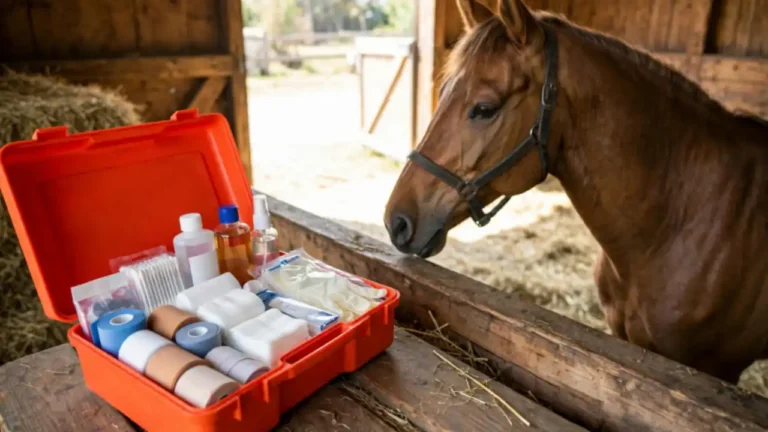
Spot Colic Signs in Horses Early with a Calm 10 Minute Check
Your horse was fine at breakfast. By lunch he is standing in the corner of the stall, dull, quiet, and not touching his hay. Nothing looks broken, nothing is bleeding, and yet something is clearly wrong.
That quiet change is how trouble often starts. Learning to spot Colic Signs in Horses early, and knowing which checks to run in the first minutes, gives your vet a head start and gives your horse a better chance.
Colic is belly pain, and horses cannot tell you where it hurts. They show it in a pattern instead: behavior shifts, appetite drops, the belly gets watched and kicked at, and the normal sounds and outputs of the gut change.
This guide walks you through a calm check that takes about 10 minutes. You will read the signs in order, take the basic numbers, and know what to report when you call.
Reading your horse well is one of the qualities of a good horse owner, and it is a learnable skill. More guides like this one live in our horse health and first aid collection.
What You Need
- A halter and lead rope
- A phone, for timing, notes, and the vet call
- A watch or phone timer for pulse and breathing counts
- A horse thermometer, if you own one
- A stethoscope, if you own one (your ear works too)
- Your vet’s number saved in your phone
At a Glance
- Watch his behavior for restlessness and pawing
- Check whether he has left feed or hay
- Look for flank watching and belly kicking
- Judge rolling and getting up again and again
- Read sweating, breathing, and pulse
- Count manure piles and check his water
- Call your vet and walk him slowly while you wait
Before and After: What Changes
Before
- A dull horse gets left “to see how he goes”
- Signs get noticed one by one, hours apart
- The vet gets a call with no numbers to report
- Rolling gets mistaken for a happy horse
After
- You run the same 7 checks in about 10 minutes
- Signs get read as one pattern, not odd moments
- Your vet hears pulse, breathing, and manure counts
- Help starts moving while the problem is still early
Step 1: Watch His Behavior for Restlessness and Pawing
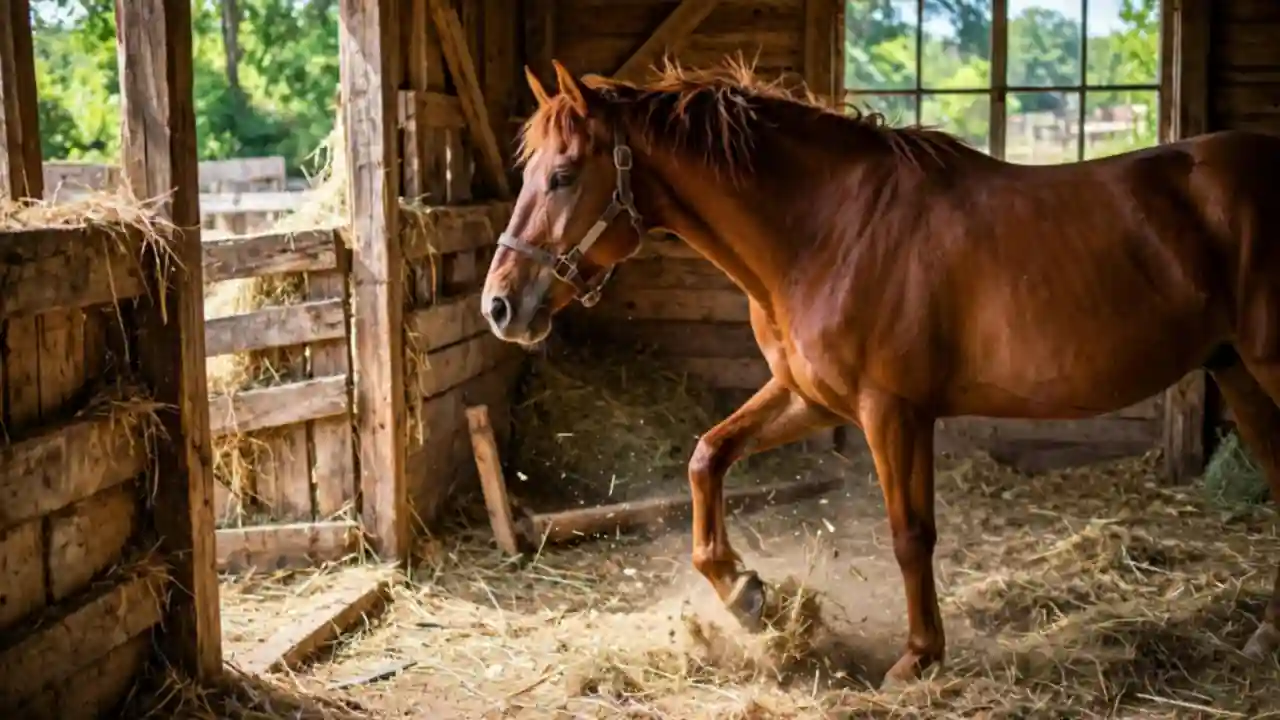
Stand where he can see you and watch for 2 minutes before you touch him. A horse in belly pain often cannot settle: he paws the ground, shifts his weight, lies down and gets up, or keeps turning in the stall.
Compare him with his normal self, because the change matters more than any single move. A horse that usually naps after lunch and is now circling is telling you something. Note the time you first saw the change; your vet will ask when it started, and ‘about an hour ago’ helps more than a guess.
Step 2: Check Whether He Has Left Feed or Hay
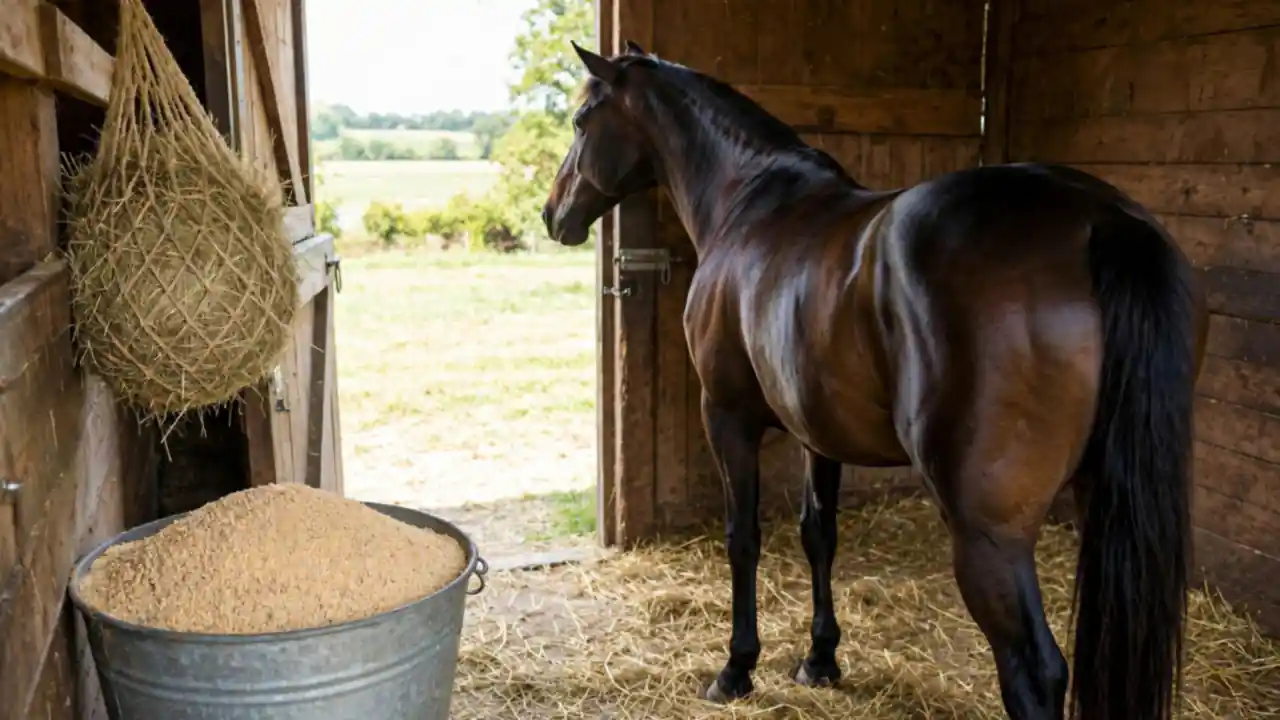
Look at the feed bucket and the hay. A horse that has walked away from a meal he normally finishes, or that picks at hay and drops it, is showing one of the earliest and most reliable signs.
Check his water bucket level too, and think back over the last 12 hours: feed changes, a new bale of hay, hard work, or a long trailer ride all belong in your notes. Foam or drool at the mouth on its own is not a colic sign; our guide to why do horses foam at the mouth explains that one.
Step 3: Look for Flank Watching and Belly Kicking
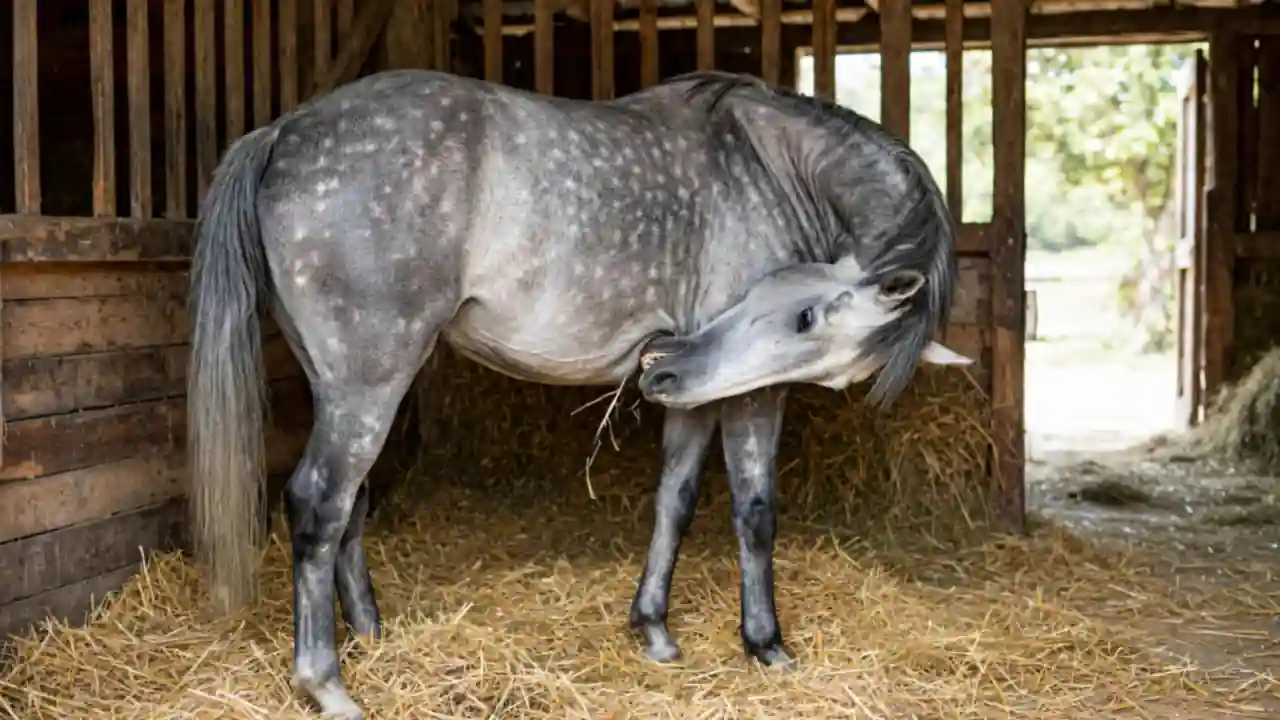
Watch where his head goes. A horse with belly pain turns and looks at his flank, sometimes again and again, and may nip at his side or kick up at his belly with a hind leg.
He is pointing at the problem the only way he can. Note which side he watches and how often: a look every few minutes is mild interest, while repeated looking, nipping, and kicking inside 10 minutes marks pain that is building. Stay clear of the hind legs while you watch; a kind horse can kick without meaning to hurt you when pain spikes.
Step 4: Judge Rolling and Getting Up Again and Again
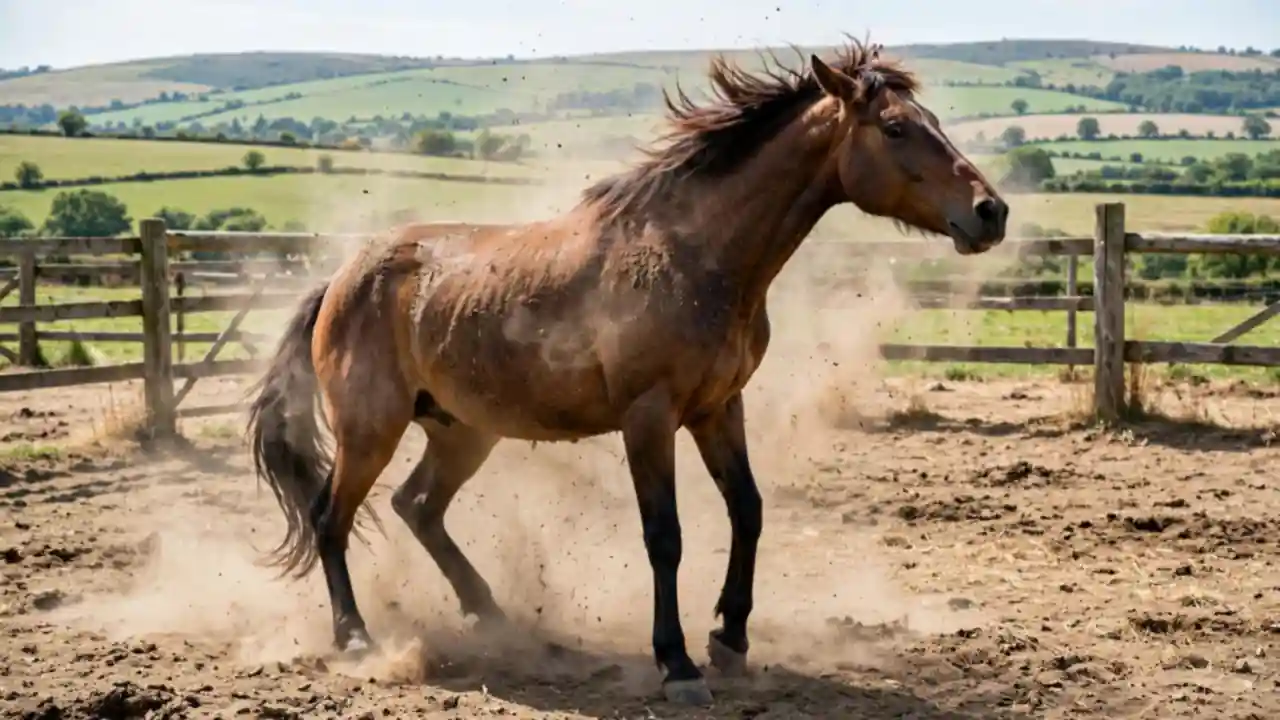
One roll after a ride, followed by a shake, a graze, and a deep sigh, is horse behavior as usual. Rolling that repeats is different. Each return to the ground, and each stiff, slow climb back to his feet, is the pain showing again.
Count the cycles. Down and up 3 or more times in a short spell is a strong pain pattern. Getting up and rolling straight back down, or a horse that will not stay up, is a reason to call the vet at once, not a reason to finish your list.
Step 5: Read Sweating, Breathing, and Pulse
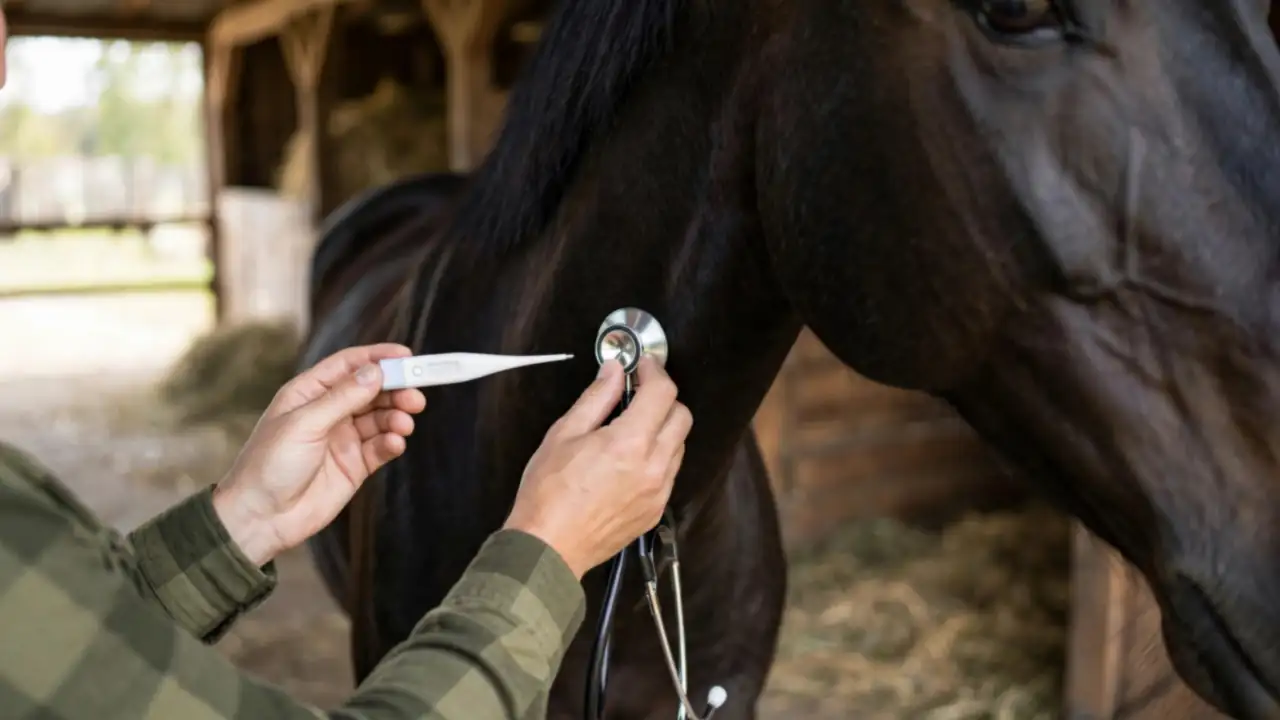
Run a flat hand over his neck and shoulder. Sweat on a horse standing still in a cool barn, or patchy sweat around the ears and under the belly, is a strong warning sign. Note the weather and the work first, so you can rule out heat.
Then take two numbers. Count breaths by watching the flank rise for 15 seconds and multiply by four: a resting horse breathes about 8 to 16 times a minute. Find the pulse under the jaw, beside the cheekbone: a resting pulse runs about 28 to 44 beats a minute. Count both again after a few minutes to see whether they are settling or climbing.
Step 6: Count Manure Piles and Check His Water
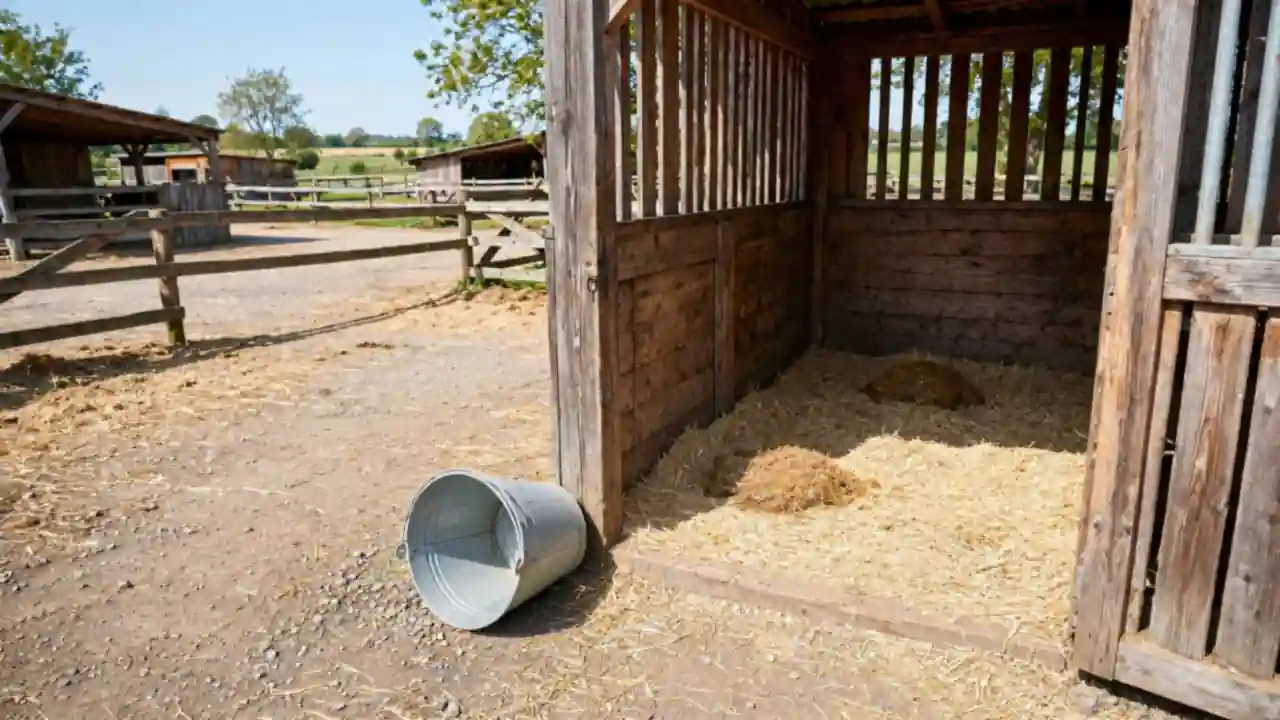
Count the manure piles in the stall and note when the last fresh one appeared. A horse passes manure often through the day, so very few piles over 6 to 8 hours, or piles that are small, hard, and dry, say the gut has slowed.
Check the water too: a full bucket that should be half empty says he has stopped drinking. Listen at his flank for gut sounds on both sides. Quiet or absent sounds on a horse showing the earlier signs matter; a working gut gurgles and rumbles.
Step 7: Call Your Vet and Walk Him Slowly While You Wait

Make the call now. Report in this order: when the signs started, what you saw in Steps 1 to 4, his pulse and breathing numbers, and the manure and water picture from Step 6.
While you wait, walk him slowly for 10 to 15 minutes, then rest him; walking can ease mild gas pain and stops most rolling. Offer small sips of water, but no feed yet. Give no pain relief or other medicine unless your vet tells you to: it can mask the signs the vet needs to read, as any veterinary guide to colic confirms.
Heads Up: Some signs mean call the vet now, not after the full check: violent rolling or thrashing, a pulse climbing past 60 beats a minute, dark red or purple gums, or a horse that will not get up. Run Steps 5 and 7 only, and make the call.
Troubleshooting: If This Happens, Try This
If he seems brighter after 30 minutes of walking
Keep watching him every 30 minutes for the next few hours, hold his feed, and still tell your vet what happened. Mild episodes can return, and a horse that settles once can dip again.
If he keeps trying to roll while you walk him
Keep him moving gently and keep yourself out of reach of his legs. Tell the vet the rolling will not stop; that detail moves the case up the list.
If you cannot reach your vet
Call the practice’s emergency line, a neighbouring equine vet, or the nearest equine hospital, and keep walking and noting signs while you work through the list. Do not wait in silence with a horse whose signs are building.
If the signs fade and he starts eating
Offer a small, sloppy, wet feed only if your vet agrees, watch him for the rest of the day, and write down the whole episode. A first mild episode is the best teacher you will get for spotting the next one early.
Frequently Asked Questions
How fast can colic become serious?
Some cases stay mild and settle with walking. Others turn within a few hours. That spread is the whole reason for running this check early and calling while the signs are still small.
Should I stop a colicking horse from rolling?
A horse that rolls hard can twist a gut or hurt himself on walls and fencing. Gentle walking is the standard way to keep him up and moving. If he goes down in a safe open space and rolls once, let him, then get him up and walking again.
Can I give my horse pain relief from my own kit?
Not before you speak to your vet. Pain relief can hide how bad the case is and change what the vet finds on arrival. Call first, describe the signs, and give only what the vet names, at the dose the vet sets.
What will the vet do when they arrive?
Expect a hands-on exam: pulse, breathing, gut sounds, gum colour, and often a rectal exam and a stomach tube to check for build-up. Your notes on timing, numbers, manure, and water speed that work up a great deal.
How can I lower the chance of colic?
Keep feed times and feed types steady, change feeds over a week or more, keep clean water always in reach, stay current on dental care and worming with your vet’s plan, and watch horses more closely after travel, hard work, or weather swings.
Quick Reference Card
You need: halter and lead rope, phone, timer, thermometer and stethoscope if you own them, vet’s number saved.
The 10 minute check:
- Behavior: restless, pawing, up and down
- Appetite: feed or hay left, water level down or untouched
- Belly watching: flank looks, nipping, kicking at the belly
- Rolling: 3 or more down-and-up cycles means strong pain
- Signs: breathing 8 to 16 a minute, pulse 28 to 44 a minute at rest
- Output: few or dry manure piles over 6 to 8 hours, gut sounds quiet
- Act: call the vet, report the numbers, walk slowly 10 to 15 minutes
You now know how to read Colic Signs in Horses as one clear pattern.
Run the same 7 checks in the same order, and small changes stop hiding in a busy day.
Keep your vet’s number saved in your phone, and share this check with anyone who feeds or mucks out for you.
Save this guide on Pinterest so it is there on the day you need it.